
The Drable Medical Equipment (DME) industry offers tremendous opportunities for healthcare entrepreneurs and providers looking to serve Medicare beneficiaries. However, many new suppliers discover a critical requirement only after starting the enrollment process: you must be DME accredited to bill Medicare.
Failing to obtain accreditation can delay your Medicare enrollment, prevent reimbursements, and create costly compliance issues. Whether you’re launching a new DME company or expanding an existing healthcare business, understanding accreditation requirements is essential for long-term success.
At All State DME Consultants, we help DME suppliers across the United States navigate accreditation, compliance, licensing, and Medicare enrollment requirements with confidence. Our goal is to simplify the process and help businesses become fully Medicare-compliant as efficiently as possible.
In this guide, we’ll explain why accreditation matters, how the process works, common mistakes suppliers make, and how professional consulting can help you avoid delays.
What Is DME Accreditation?
DME accreditation is a formal evaluation process conducted by a Medicare-approved accrediting organization. The purpose is to ensure that Durable Medical Equipment, Prosthetics, Orthotics, and Supplies (DMEPOS) suppliers meet established quality and operational standards.
Accreditation verifies that a supplier:
- Operates legally and ethically
- Maintains patient safety standards
- Follows Medicare regulations
- Implements quality improvement programs
- Properly documents patient records
- Maintains compliant business practices
Accreditation is not simply a certification—it serves as proof that a supplier can provide safe, effective, and compliant healthcare services.
For most suppliers seeking Medicare reimbursement, accreditation is mandatory.
Why Medicare Requires DME Accreditation
The Centers for Medicare & Medicaid Services (CMS) implemented accreditation requirements to improve patient care and reduce fraud within the DMEPOS industry.
Several factors influenced this decision.
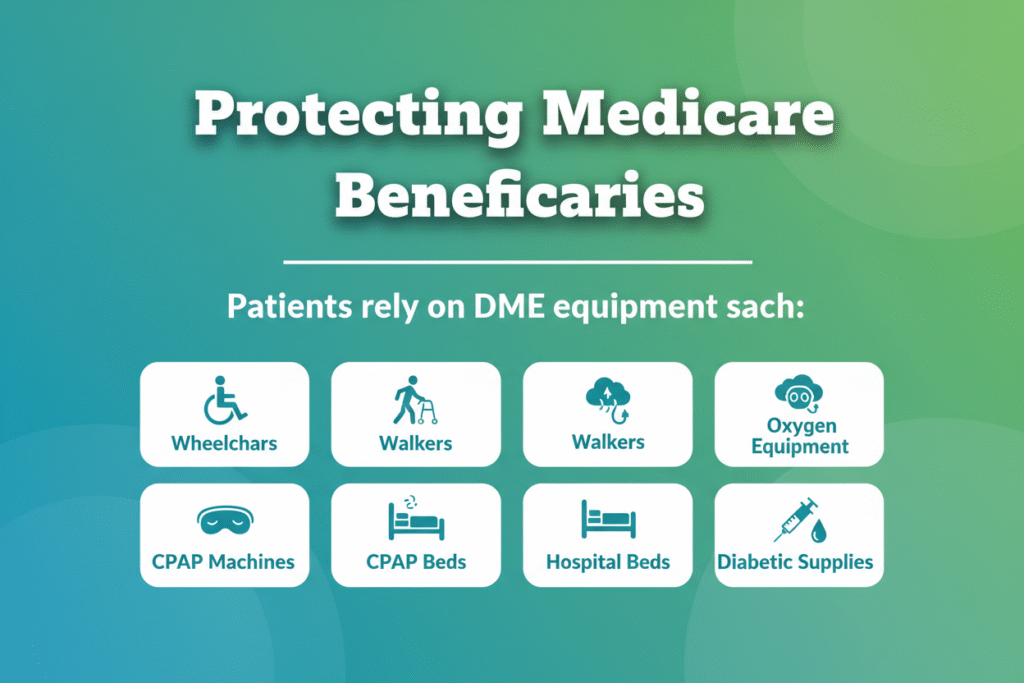
Accreditation ensures suppliers can safely provide and support these essential products.
Reducing Fraud and Abuse
Healthcare fraud costs billions of dollars annually. CMS uses accreditation standards to verify that suppliers meet strict operational requirements before receiving Medicare billing privileges.
Improving Quality Standards
Accreditation creates consistency across the industry by establishing minimum quality benchmarks that every supplier must follow.
Enhancing Accountability
Accredited suppliers must maintain policies, procedures, and documentation systems that demonstrate compliance with federal requirements.
Can You Bill Medicare Without DME Accreditation?
In most cases, no.
Medicare generally requires DMEPOS suppliers to obtain accreditation before Medicare enrollment can be completed.
Without accreditation, suppliers may experience:
- Enrollment application denials
- Delayed approvals
- Reimbursement restrictions
- Compliance violations
- Lost revenue opportunities
Many business owners mistakenly believe that obtaining a business license alone is enough to begin billing Medicare. Unfortunately, accreditation is often a separate and mandatory requirement.
Understanding DME Accredited for Medicare Requirements
Becoming DME Accredited for Medicare involves much more than filling out paperwork.
Suppliers must demonstrate compliance across several operational areas.
Business Operations
CMS expects suppliers to operate legitimate healthcare businesses.
Requirements often include:
- Legal business registration
- Employer Identification Number (EIN)
- State licensing
- Liability insurance
- Physical business location
Policy and Procedure Manuals
Accreditation organizations review written policies covering:
- Patient rights
- Equipment delivery
- Complaint management
- Emergency preparedness
- Infection control
- Quality assurance
Employee Training
Staff members must understand compliance procedures and patient service requirements.
Training records are often reviewed during surveys.
Patient Documentation
Accredited suppliers must maintain accurate and organized records for equipment delivery, service requests, and patient interactions.
Quality Improvement Programs
Suppliers are expected to continually evaluate and improve business operations and patient satisfaction.
The DME Accreditation Process Step-by-Step
Many suppliers find accreditation overwhelming because they don’t understand the process.
Here’s a simplified overview.
Step 1: Assess Business Readiness
Evaluate current operations and identify compliance gaps.
Questions to consider include:
- Do you have all required licenses?
- Are your policies up to date?
- Is your staff properly trained?
Step 2: Prepare Documentation
Develop documentation required by accrediting organizations.
Examples include:
- Policy manuals
- Employee records
- Quality improvement plans
- Compliance programs
Step 3: Choose an Accrediting Organization
CMS recognizes several accrediting organizations.
Each organization evaluates suppliers using approved standards.
Step 4: Submit Application
The supplier submits accreditation materials and supporting documentation.
Step 5: Survey and Inspection
A surveyor reviews:
- Business operations
- Documentation
- Compliance systems
- Physical facilities
Step 6: Correct Deficiencies
If issues are identified, corrective action may be required before accreditation is granted.
Step 7: Receive Accreditation
Once compliance is verified, accreditation is awarded.
The supplier can then proceed with Medicare enrollment requirements.
Common Challenges Suppliers Face
Accreditation can be complex, especially for new businesses.
Several challenges occur repeatedly.
Incomplete Documentation
Many applications are delayed because required policies or records are missing.
Lack of Compliance Knowledge
Healthcare regulations can be difficult to interpret without professional guidance.
Poor Survey Preparation
Unprepared businesses often struggle during accreditation inspections.
Time Constraints
Business owners frequently underestimate the time required to prepare for accreditation.
Medicare Enrollment Delays
Errors during accreditation often create downstream problems with Medicare enrollment.
Benefits of DME Accredited Services
Professional DME Accredited services help suppliers navigate accreditation more efficiently.
Benefits include:
Faster Preparation
Experienced consultants know exactly what accrediting organizations expect.
Reduced Risk
Professional guidance helps avoid costly mistakes.
Improved Compliance
Experts ensure policies and procedures align with current regulations.
Better Survey Outcomes
Proper preparation significantly improves accreditation success rates.
Long-Term Support
Accreditation is not a one-time event. Ongoing compliance remains essential.
Why Accreditation Is a Smart Business Investment
Some business owners view accreditation as an expense.
In reality, it provides substantial long-term value.
Benefits include:
- Medicare billing eligibility
- Increased credibility
- Stronger referral relationships
- Better patient trust
- Reduced compliance risk
- Enhanced operational efficiency
Accreditation can also help differentiate your company from competitors who may not maintain the same standards.
Industry Growth and Market Opportunity
The DME industry continues to expand rapidly.
Several factors contribute to this growth:
Aging Population
Millions of Americans reach Medicare eligibility each year, increasing demand for DME products.
Growth in Home Healthcare
Patients increasingly receive treatment and monitoring at home.
Chronic Disease Management
Conditions such as diabetes, sleep apnea, and respiratory disorders require ongoing medical equipment support.
Technological Advancements
Modern DME equipment continues to improve patient outcomes and quality of life.
As demand grows, suppliers who achieve accreditation and Medicare compliance position themselves for long-term success.
How All State DME Consultants Helps Suppliers Succeed
At All State DME Consultants, we specialize in helping suppliers navigate every stage of the accreditation process.
Our services include:
Accreditation Consulting
We guide suppliers through accreditation requirements and preparation.
Policy Development
We assist with creating compliant policies and procedures.
Medicare Enrollment Support
We help align accreditation efforts with Medicare enrollment goals.
Compliance Readiness Assessments
Our team identifies potential gaps before survey inspections occur.
Ongoing Compliance Assistance
We support businesses long after accreditation approval.
By working with experienced professionals, suppliers can reduce delays, avoid common mistakes, and accelerate their path to Medicare billing.
Conclusion
If you plan to serve Medicare beneficiaries, understanding one critical fact is essential: you must be DME accredited to bill Medicare.
Accreditation is more than a regulatory requirement—it demonstrates your commitment to quality care, patient safety, and operational excellence. Without accreditation, suppliers risk enrollment delays, reimbursement challenges, and compliance issues that can hinder business growth.
The accreditation process can be complex, but you don’t have to navigate it alone.
All State DME Consultants provides expert support, DME Accredited services, compliance guidance, policy development, and Medicare enrollment assistance designed to help suppliers achieve accreditation with confidence.
Ready to become DME Accredited for Medicare?
Contact All State DME Consultants today and take the first step toward building a compliant, successful, and Medicare-ready DME business.
Frequently Asked Questions (FAQs)
Q1. Is DME accreditation mandatory for Medicare billing?
Yes. Most DMEPOS suppliers must obtain accreditation from a CMS-approved organization before receiving Medicare billing privileges.
Q2. How long does DME accreditation take?
The process varies but often takes several weeks to several months depending on preparedness and documentation quality.
Q3. What does DME Accredited mean?
It means a supplier has successfully met quality and compliance standards established by a Medicare-approved accrediting body.
Q4. What are DME Accredited services?
These services help suppliers prepare for accreditation, compliance reviews, surveys, and Medicare enrollment.
Q5. Can a new DME company apply for accreditation?
Yes. New DME businesses should begin accreditation preparation before Medicare enrollment.
Q6. Why should I use a consultant for accreditation?
Consultants help reduce delays, improve compliance, and increase the likelihood of a successful accreditation outcome.