
Starting a Durable Medical Equipment (DME) business requires more than selecting products, finding suppliers, and attracting customers. Businesses planning to enter the Medicare market must establish strong compliance practices, maintain accurate records, and prepare for regulatory reviews before beginning operations.
An audit-ready DME business is built on organized documentation, reliable billing procedures, employee training, and consistent quality management. Preparing these systems early can help reduce compliance risks, prevent billing errors, and support long-term business growth.
Why Audit Readiness Matters for DME Businesses
Medicare compliance is an essential part of operating a successful DMEPOS business in the United States. Suppliers must meet applicable Medicare supplier standards, maintain required accreditation, and follow documentation requirements.
Without proper preparation, missing patient records, inaccurate claims, and incomplete delivery documentation can create serious problems during audits.
Building an audit-ready operation from the beginning helps DME suppliers:
- Reduce Medicare billing and documentation errors.
- Maintain accurate patient and equipment records.
- Prepare for accreditation surveys and compliance reviews.
- Improve operational accountability.
- Protect Medicare billing privileges.
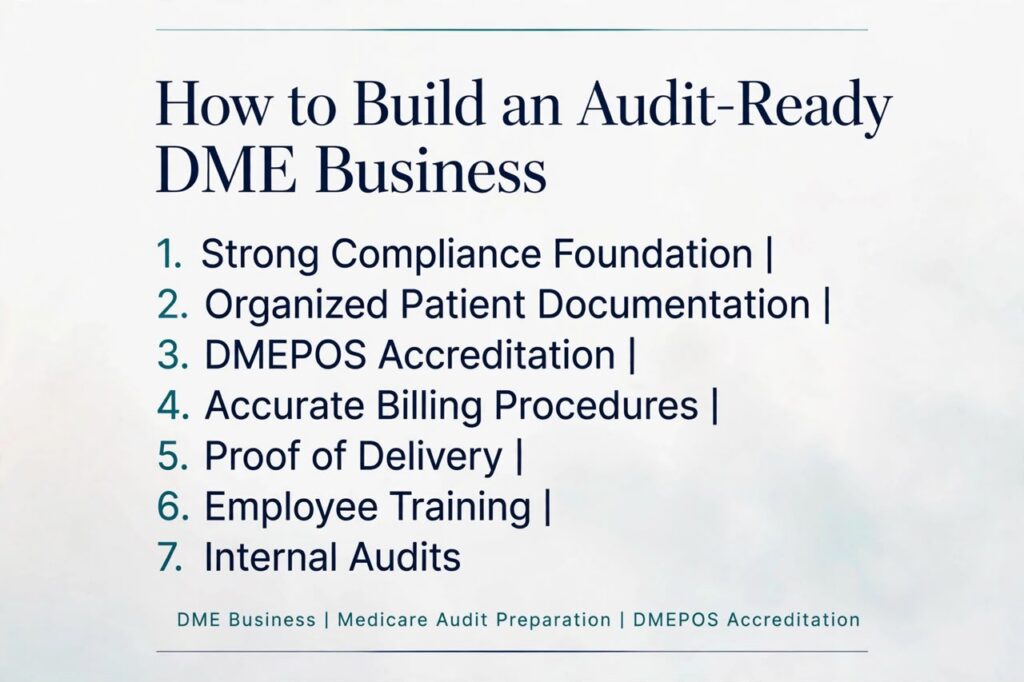
1. Establish a Strong Compliance Foundation
Before applying for Medicare enrollment, establish written policies and procedures that explain how your business operates.
Your compliance program should address patient intake, order verification, billing, equipment delivery, record management, and complaint resolution.
Create a compliance manual that includes employee responsibilities, reporting procedures, internal review processes, and corrective action guidelines.
A clearly documented compliance structure makes it easier to identify operational weaknesses before they become regulatory problems.
2. Organize Patient Documentation and Medical Records
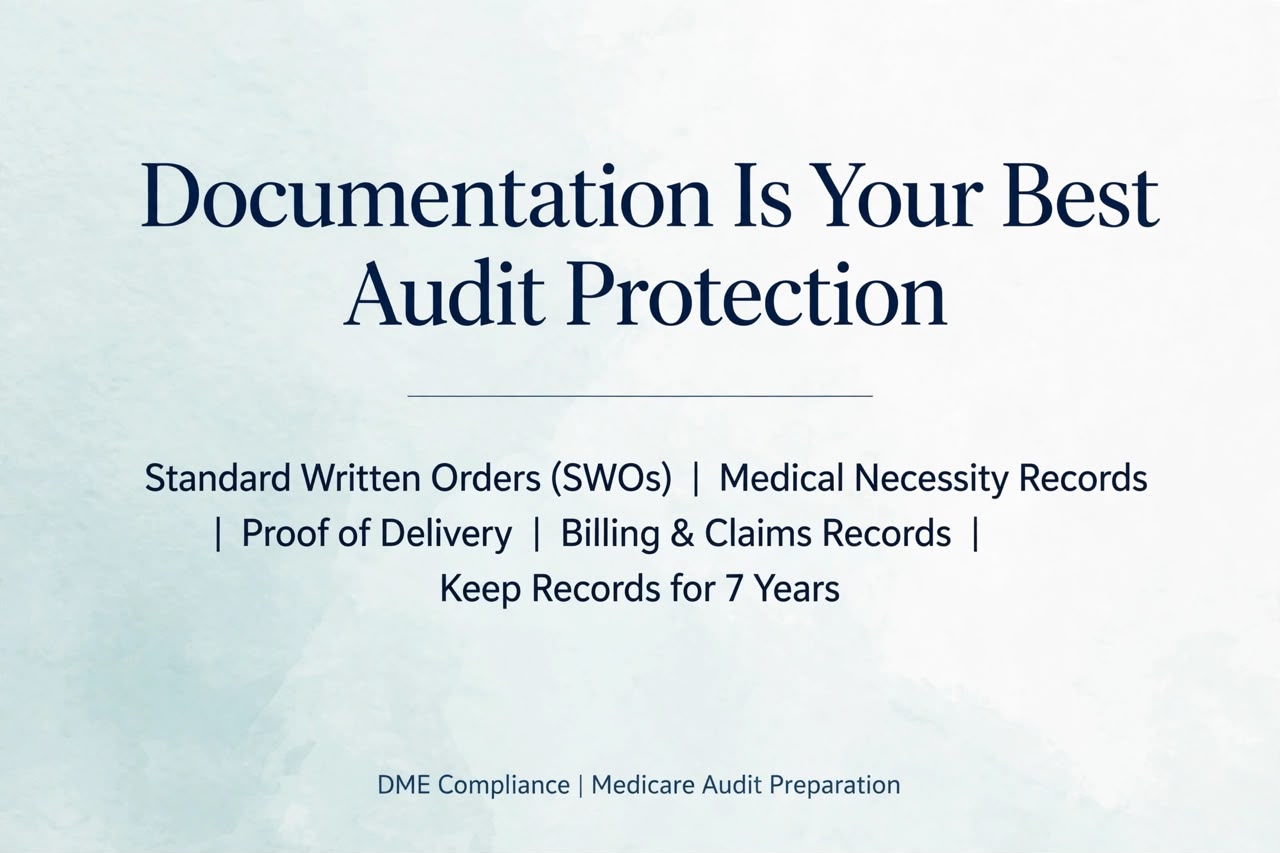
Documentation is one of the most important areas of DME audit preparation. Medicare reviewers may request records to verify that supplied equipment meets coverage and medical necessity requirements.
Maintain organized patient files containing applicable documentation, such as:
- Standard Written Orders (SWOs).
- Treating practitioner information.
- Medical records supporting medical necessity.
- Relevant prior authorization documentation, when required.
- Proof of delivery.
- Claims and billing records.
DME suppliers should also review the applicable Local Coverage Determination (LCD) and related policy articles for product-specific documentation requirements.
Medicare documentation generally must be retained for seven years from the date of service, subject to applicable requirements.
3. Prepare for DMEPOS Accreditation Requirements
Accreditation is an important part of Medicare supplier enrollment for businesses that are not exempt.
A CMS-approved accreditation organization evaluates whether a supplier meets applicable DMEPOS quality standards.
Prepare by organizing:
- Written operational policies.
- Employee training records.
- Equipment maintenance procedures.
- Patient complaint procedures.
- Quality improvement documentation.
- Financial management records.
Accreditation preparation should be an ongoing process rather than a last-minute activity before a survey.
4. Develop Accurate Billing and Claims Procedures
Incorrect billing can create payment delays, claim denials, and potential audit concerns.
Establish a consistent billing workflow that verifies patient eligibility, product coverage, documentation completeness, coding accuracy, and applicable billing rules before claims are submitted.
Your billing team should understand HCPCS coding, modifiers, payer requirements, and documentation rules relevant to the equipment being supplied.
Conduct regular internal claim reviews to identify errors and correct them before submission.
5. Maintain Proof of Delivery and Equipment Records
Every DME supplier should have a reliable process for tracking equipment from inventory to the beneficiary.
Maintain delivery documentation that supports the actual item provided, the beneficiary who received it, and the applicable delivery date.
Inventory management should also connect equipment records with purchasing documents, invoices, serial numbers where applicable, and patient transactions.
These records help demonstrate operational accountability during an audit.
6. Train Employees on Compliance Responsibilities
Even well-designed compliance policies can fail if employees do not understand them.
Provide regular training on patient privacy, documentation standards, billing procedures, equipment handling, and complaint management.
Maintain training attendance records, job descriptions, and applicable employee qualifications.
Assign clear responsibilities so every team member understands their role in maintaining Medicare compliance.
7. Conduct Internal Audits Before Medicare Reviews
Do not wait for an official audit to discover documentation problems.
Develop a routine internal audit process that reviews a sample of patient files, claims, delivery records, employee documentation, and operational policies.
Track identified issues, assign corrective actions, and document the results.
An effective internal audit program helps management identify weaknesses and improve compliance before external reviewers identify them.
Build Long-Term Audit Readiness Into Your DME Business
An audit-ready DME business is not created overnight. It requires consistent documentation, trained employees, accurate billing systems, and ongoing compliance monitoring.
By preparing before Medicare enrollment, suppliers can establish stronger operational foundations and reduce avoidable compliance risks as their businesses grow.
Professional DME consulting can also help business owners evaluate their compliance structure, prepare for accreditation, and identify documentation gaps before they become costly problems.
Frequently Asked Questions
1. What does audit-ready mean for a DME business?
It means maintaining organized documentation, compliant billing procedures, operational policies, and records that can be provided when Medicare or another authorized reviewer requests them.
2. What documents should a DME supplier maintain?
Important records may include written orders, medical necessity documentation, proof of delivery, billing records, accreditation documents, employee training records, and applicable financial records.
3. How long should DME suppliers keep Medicare documentation?
Generally, Medicare DMEPOS claim documentation must be retained for seven years from the date of service, subject to applicable rules.
4. Is accreditation required before Medicare enrollment?
Most DMEPOS suppliers must obtain accreditation from a CMS-approved organization before submitting their Medicare enrollment application. Certain professionals and supplier categories are exempt.
5. How can a DME business prepare for a Medicare audit?
Businesses should conduct internal audits, organize patient records, review billing accuracy, maintain proof of delivery, and ensure that compliance policies are followed consistently.