
Maintaining Medicare enrollment is one of the most important responsibilities for Durable Medical Equipment (DME) suppliers operating in the United States. While obtaining initial Medicare approval allows suppliers to begin serving eligible beneficiaries, maintaining that approval requires ongoing attention to enrollment records, accreditation, and regulatory compliance.
As Medicare requirements continue to evolve, DME suppliers must understand the processes involved in supplier revalidation, reenrollment, and maintaining Medicare billing privileges. Missing deadlines, submitting inaccurate information, or failing to maintain required accreditation can create serious operational and financial challenges.
Whether you operate an established DME company or are preparing to expand your business, understanding these requirements in 2027 can help protect your Medicare participation and support long-term growth.
1. Understanding Medicare Revalidation for DME Suppliers
Medicare revalidation is the process of reviewing and confirming the accuracy of an existing supplier’s enrollment information. CMS generally requires DMEPOS suppliers to revalidate their Medicare enrollment every three years.
Why Is Revalidation Important?
Revalidation helps CMS verify that DME suppliers continue to meet applicable Medicare enrollment requirements.
During this process, suppliers may need to confirm or update:
- Legal business name and ownership information
- Practice and service locations
- National Provider Identifier (NPI)
- Authorized officials and managing employees
- Banking and Electronic Funds Transfer (EFT) details
- Required licenses and accreditation information
- Surety bond information, when applicable
Suppliers should regularly review their enrollment records instead of waiting until a revalidation notice arrives.
2. Understanding the DME Supplier Reenrollment Process
Reenrollment and revalidation are related but different enrollment processes. Revalidation renews an existing Medicare enrollment, while a new enrollment application may be necessary when a supplier has been deactivated or when specific business changes require new enrollment.
When Is a New Enrollment Application Necessary?
A DME supplier may need to submit a new enrollment application when:
- Medicare billing privileges have been deactivated and must be reactivated.
- A business transaction requires enrollment as a new supplier.
- A change in majority ownership triggers applicable new enrollment requirements.
- The supplier establishes a new business structure requiring a separate enrollment.
Understanding the difference helps suppliers choose the correct application process and avoid unnecessary delays.
3. Meet Medicare Revalidation Deadlines
Missing a Medicare revalidation deadline can affect reimbursement and enrollment status.
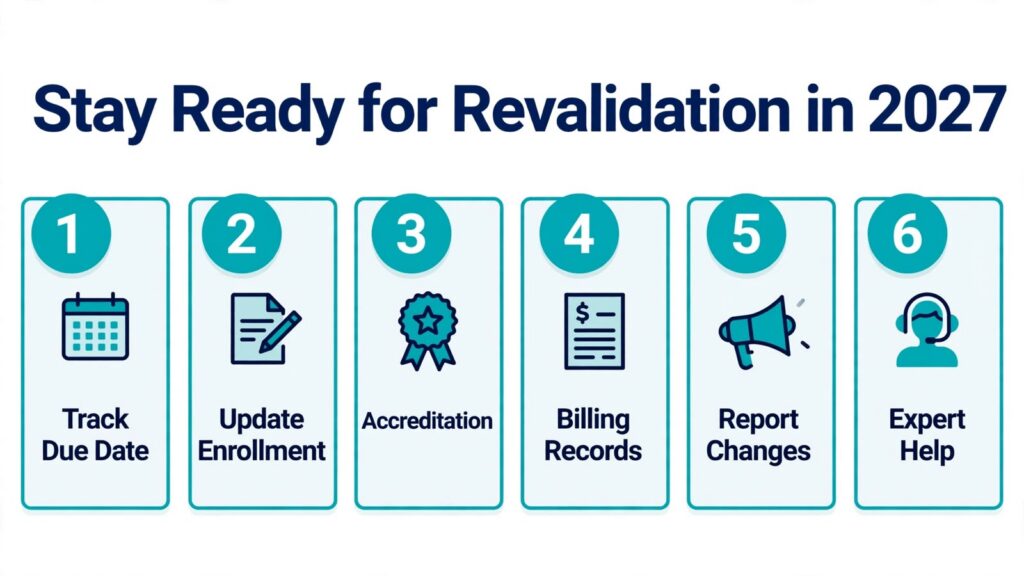
Track Your Revalidation Due Date
CMS publishes Medicare revalidation due dates through its online revalidation resources. Suppliers should monitor their records and keep their contact information updated.
CMS generally sends revalidation notices approximately three to four months before the due date. However, suppliers remain responsible for tracking their deadlines.
Submitting a revalidation too early, before the permitted window, may result in the application being returned.
4. Maintain DMEPOS Accreditation and Supplier Standards
Accreditation is an important requirement for many Medicare-enrolled DMEPOS suppliers. It demonstrates that a supplier meets applicable quality standards and operational requirements.
Prepare for Accreditation Surveys
DME suppliers should maintain organized business records, trained employees, proper equipment procedures, patient service documentation, and required policies.
CMS introduced significant accreditation changes effective January 1, 2026, including annual resurvey and reaccreditation requirements. However, the transition depends on the supplier’s existing accreditation cycle.
Suppliers should confirm their applicable survey schedule with their CMS-approved accrediting organization.
5. Keep Enrollment Information Accurate and Updated
Incorrect or outdated enrollment information can create problems during Medicare reviews and revalidation.
Report Business Changes on Time
DME suppliers should monitor changes involving ownership, business addresses, authorized officials, and other enrollment information.
Applicable changes generally must be reported to the enrollment contractor within the required reporting period, which can be 30 days for many DMEPOS supplier changes.
Keeping enrollment records accurate helps prevent inconsistencies between CMS records, business documents, and accreditation information.
6. Strengthen Medicare Billing and Documentation Compliance
Maintaining enrollment is only one part of operating a compliant DME business. Suppliers must also follow applicable billing and documentation requirements.
Organize Essential Business Records
Maintain appropriate documentation, including:
- Standard Written Orders (SWOs)
- Medical records supporting medical necessity
- Proof of delivery
- Patient eligibility information
- Claims and billing records
- Required licenses and accreditation documents
- Surety bond records, when applicable
Regular documentation reviews can help identify gaps before they create payment or compliance problems.
7. Work With Professional DME Enrollment and Compliance Consultants
Medicare enrollment and revalidation procedures can become complicated, especially when a supplier manages multiple locations or experiences ownership changes.
Professional DME consulting services can help suppliers review enrollment information, prepare revalidation applications, organize accreditation records, and identify compliance weaknesses.
Experienced consultants can also support new enrollment preparation, corrective action planning, and ongoing Medicare compliance management.
Conclusion
DME supplier revalidation, reenrollment, and compliance are essential components of maintaining Medicare participation in 2027. Suppliers must stay informed about enrollment deadlines, accreditation requirements, documentation standards, and reporting responsibilities.
A proactive approach can help prevent avoidable enrollment problems, reduce administrative delays, and support a more stable DME business. By maintaining accurate records and seeking professional guidance when needed, suppliers can build stronger operations and protect their Medicare billing privileges.
FAQs
1. How often must DME suppliers revalidate Medicare enrollment?
DMEPOS suppliers generally must revalidate their Medicare enrollment every three years.
2. What happens if a DME supplier misses revalidation?
Missing the deadline may result in a Medicare payment hold or deactivation of billing privileges.
3. What is the difference between revalidation and reenrollment?
Revalidation renews an existing enrollment record, while reenrollment generally involves submitting a new application when required, such as after certain deactivation or ownership situations.
4. Is DMEPOS accreditation required in 2027?
Accreditation is required for many DMEPOS suppliers, subject to applicable exemptions and CMS requirements.
5. How can DME suppliers check their revalidation dates?
Suppliers can use CMS’s Medicare Revalidation List and monitor communications from their enrollment contractor.
6. Can a DME consultant help with Medicare revalidation?
Yes. Consultants can help review enrollment information, organize supporting documents, and prepare applications.
7. Why is ongoing Medicare compliance important for DME suppliers?
It helps protect billing privileges, maintain accurate enrollment records, and reduce the risk of avoidable compliance problems.