
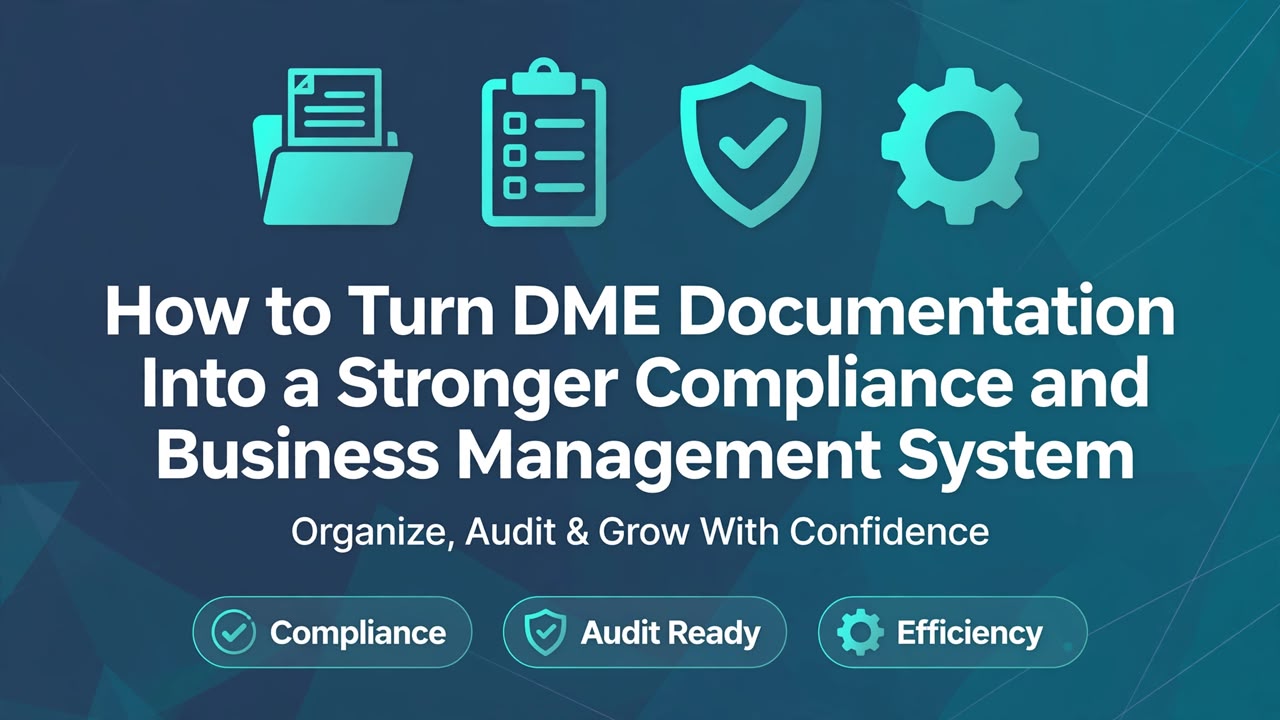
Durable Medical Equipment (DME) businesses depend on accurate documentation to maintain regulatory compliance, support daily operations, and deliver reliable patient services. However, documentation should do more than simply store records. When properly organized, it becomes a powerful business management system that helps DME suppliers improve efficiency, reduce compliance risks, and maintain operational control.
For Medicare-enrolled DME suppliers, maintaining complete and accessible records is particularly important. Documentation supports Medicare billing, supplier standards, accreditation requirements, patient records, and audit preparation. A structured documentation process can also help business owners identify operational weaknesses before they become costly problems.
Why Documentation Is Essential for DME Business Success
Documentation plays a central role in managing a DME business. Every stage of the equipment supply process involves records that demonstrate whether required procedures have been followed.
Maintaining Medicare and Regulatory Compliance
DME suppliers must maintain documentation that supports applicable Medicare requirements, including supplier standards, medical necessity, orders, delivery records, and billing practices.
Organized records make it easier to demonstrate compliance during Medicare reviews, accreditation surveys, and audits.
Reducing Administrative and Operational Errors
Incomplete patient files, missing signatures, and inconsistent delivery records can create unnecessary delays. Standardized documentation procedures help employees follow consistent processes and reduce preventable mistakes.
Building a Structured DME Documentation System
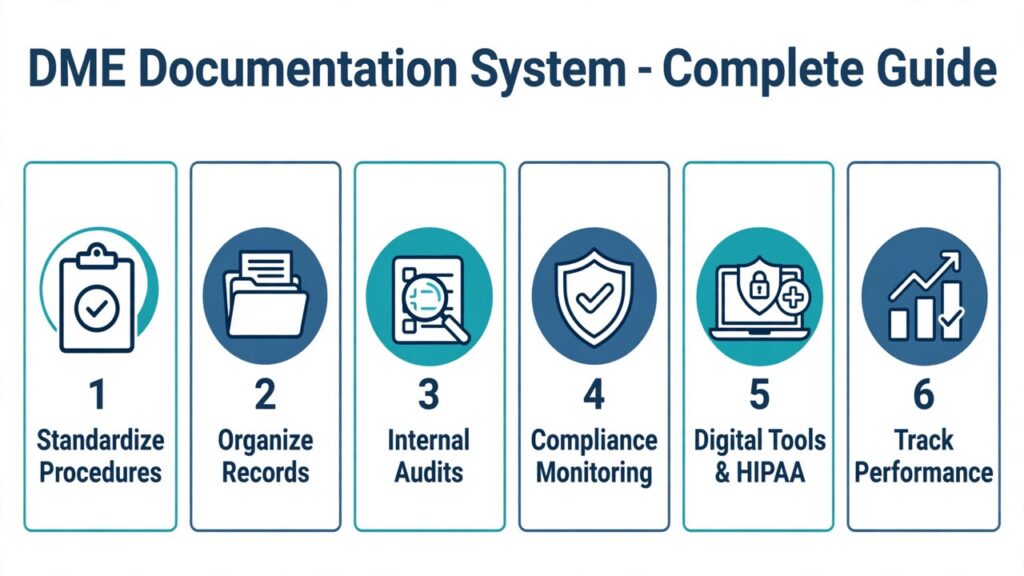
An effective documentation system should connect compliance responsibilities with everyday business operations.
Create Standardized Documentation Procedures
Develop consistent procedures for collecting, reviewing, approving, and storing business records. Use standardized templates for patient intake, equipment delivery, order verification, and internal compliance reviews.
Employees should understand which documents are required, who is responsible for maintaining them, and when records must be updated.
Organize Patient and Equipment Records
Maintain clearly organized patient files containing applicable documentation, such as:
- Patient intake and identification information
- Physician orders and supporting medical records
- Proof of delivery
- Equipment and service records
- Relevant billing documentation
- Patient communication records
A consistent filing structure improves record accessibility and supports accurate claim processing.
Using Documentation to Strengthen Compliance Management
Documentation becomes more valuable when businesses use it to monitor compliance rather than simply storing information.
Establish Internal Documentation Audits
Regular internal reviews help identify missing records, outdated forms, inconsistent information, and documentation gaps.
DME suppliers should review a sample of patient files, delivery records, billing documentation, and operational procedures. Findings should be documented, assigned to responsible employees, and corrected within defined timelines.
Develop a Compliance Monitoring Process
A compliance calendar can help management track important responsibilities, including policy reviews, employee training, accreditation activities, and applicable Medicare requirements.
This approach creates accountability and helps prevent important compliance tasks from being overlooked.
Integrating Technology Into DME Documentation Management
Digital documentation tools can improve how DME companies collect, store, retrieve, and review business information.
Use Centralized Digital Recordkeeping
A centralized document management platform allows authorized employees to access current records without searching through multiple folders or disconnected systems.
Useful features include document indexing, access controls, audit trails, secure storage, and automated reminders.
Protect Sensitive Patient Information
DME suppliers handling protected health information must implement appropriate safeguards under HIPAA. These may include role-based access, secure data transmission, employee training, and documented privacy procedures.
Technology should support compliance, not replace management oversight.
Turning Documentation Into a Business Performance Tool
Well-managed documentation can also provide valuable insight into business performance.
Track Operational Performance Indicators
Management can use documented information to monitor important business indicators, including:
- Missing or incomplete patient documentation
- Order processing delays
- Equipment delivery turnaround time
- Claim denials related to documentation
- Outstanding corrective actions
- Employee training completion
Tracking these indicators helps identify recurring problems and improve operational efficiency.
Improve Employee Accountability
Assign clear documentation responsibilities to employees and establish review procedures for critical records. Regular training ensures staff members understand documentation expectations and follow consistent workflows.
Conclusion
DME documentation should be treated as a core business management resource rather than an administrative responsibility. By establishing standardized procedures, maintaining organized records, conducting internal audits, and using appropriate digital tools, DME suppliers can strengthen compliance and improve operational performance.
A well-designed documentation system helps businesses prepare for audits, reduce preventable errors, and build a more organized and sustainable DME operation.