
Getting approved for Medicare is a major achievement for a DMEPOS business. It allows eligible suppliers to participate in the Medicare program and provide covered medical equipment, prosthetics, orthotics, and supplies to beneficiaries.
However, approval is only the beginning of a supplier’s regulatory responsibilities. Maintaining Medicare eligibility requires consistent oversight of accreditation, business operations, documentation, and federal supplier requirements.
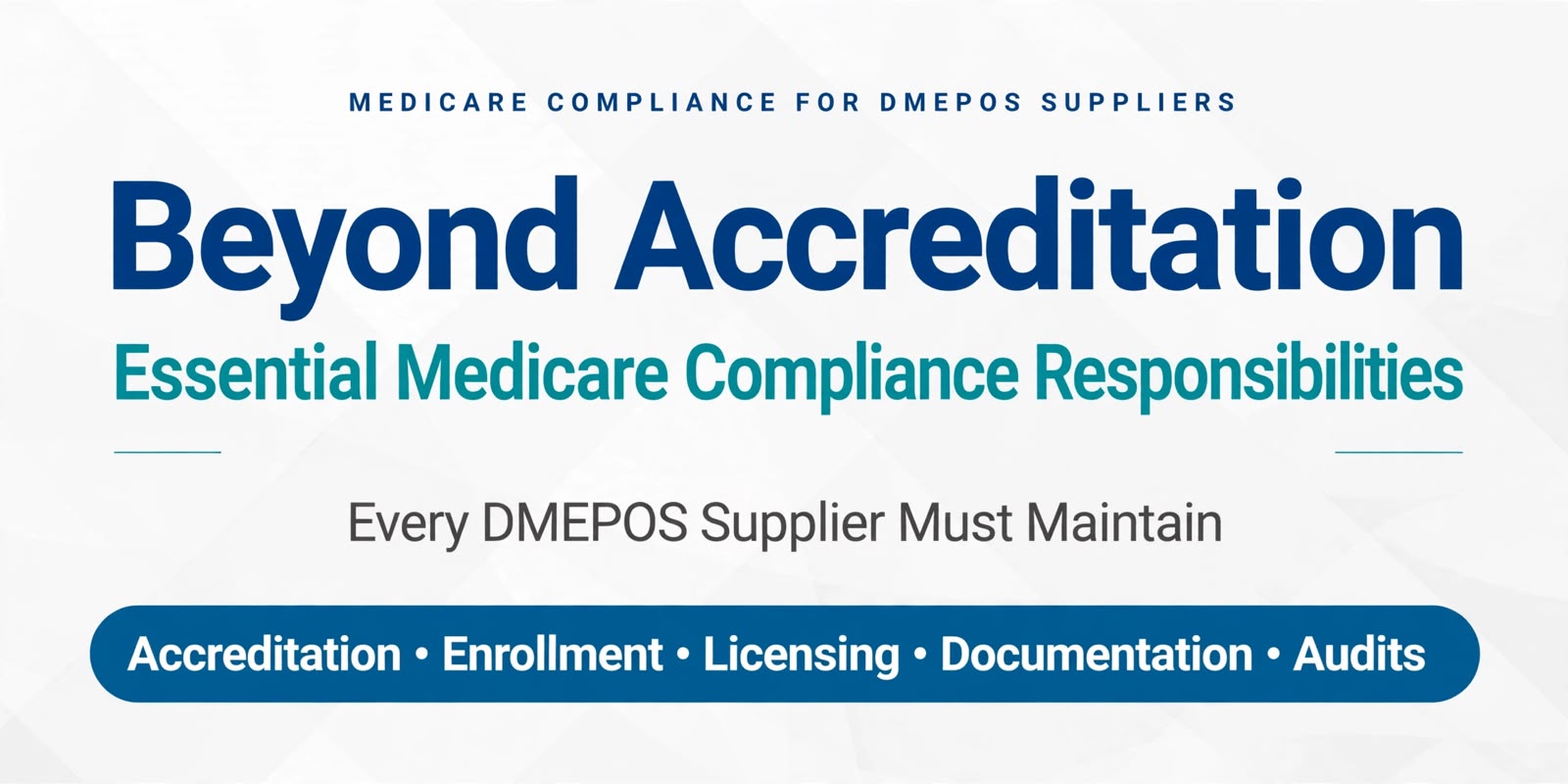
Many DMEPOS businesses focus heavily on passing their initial accreditation survey but underestimate the importance of ongoing compliance. Understanding what must be maintained after approval can help suppliers avoid preventable problems and protect their long-term business operations.
Why Medicare Approval Does Not Guarantee Ongoing Compliance
Medicare approval and DMEPOS accreditation are separate parts of the supplier qualification process.
A CMS-approved accreditation organization evaluates whether a supplier meets the applicable DMEPOS Quality Standards. Meanwhile, Medicare enrollment contractors review supplier eligibility and enrollment requirements.
This distinction is important because maintaining accreditation alone does not guarantee continued Medicare participation.
Suppliers must continue satisfying both sets of requirements throughout their operations.
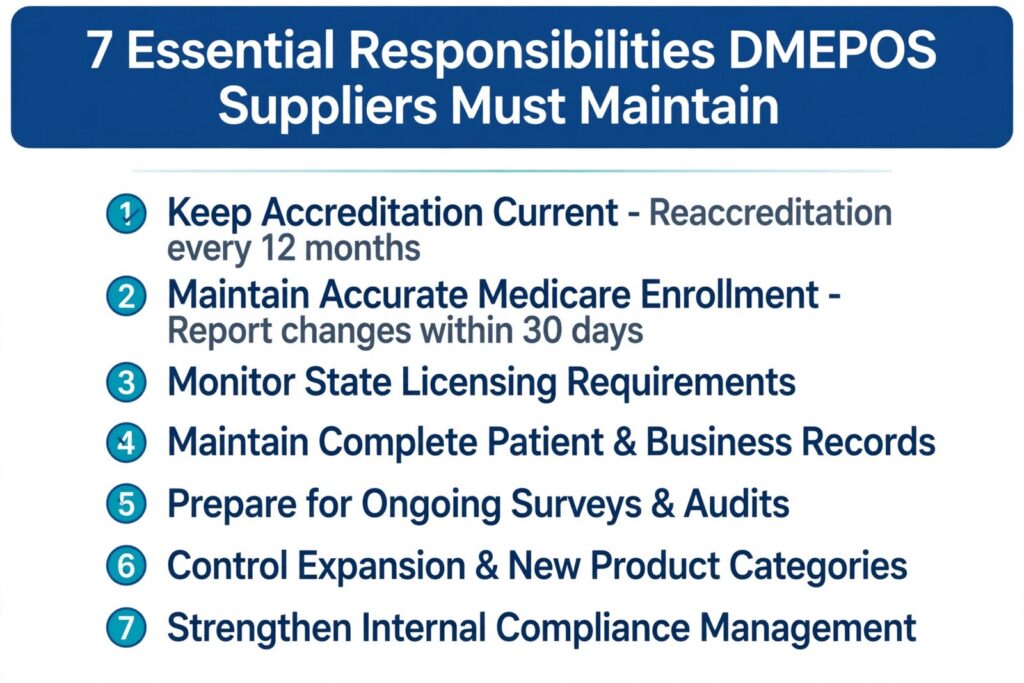
7 Essential Responsibilities DMEPOS Suppliers Must Maintain
1. Keep Accreditation Current and Active
Accreditation must remain valid and cover the specific products and services for which the supplier seeks Medicare reimbursement.
CMS implemented changes effective January 1, 2026, requiring DMEPOS suppliers to undergo surveys and reaccreditation at least once every 12 months. Suppliers should coordinate with their accrediting organization to confirm the applicable survey cycle.
Missing required surveys or failing to maintain accreditation can put Medicare billing privileges at risk.
2. Maintain Accurate Medicare Enrollment Records
Enrollment information must reflect the supplier’s actual business operations.
Suppliers should promptly review changes involving ownership, authorized officials, business addresses, practice locations, and other enrollment details.
Applicable changes generally must be reported to the National Provider Enrollment DMEPOS contractor within 30 days.
3. Monitor State Licensing Requirements
State licensing requirements can vary depending on the equipment and services provided.
For example, certain product categories may require specific licenses or permits before a supplier can legally operate.
Suppliers should regularly verify that all required licenses remain active and that their business activities fall within the scope of their authorizations.
4. Maintain Complete Patient and Business Records
Documentation is a critical part of Medicare compliance.
Suppliers should maintain organized records supporting their operations and Medicare claims, including:
- Patient intake and service documentation
- Required orders and supporting medical records
- Proof of delivery
- Billing and reimbursement records
- Employee training documentation
- Equipment maintenance records
- Written policies and procedures
Accurate records help demonstrate that the supplier follows applicable Medicare requirements.
5. Prepare for Ongoing Surveys and Audits
Passing an initial survey does not eliminate the possibility of future inspections.
Accreditation organizations conduct surveys, including unannounced site visits, while CMS may also conduct validation surveys.
Suppliers should maintain a survey-ready environment throughout the year rather than preparing documents only when an inspection is approaching.
6. Control Business Expansion and New Product Categories
Expanding into new products or opening additional locations can create additional compliance responsibilities.
Before introducing new product categories, suppliers should notify their accreditation organization and complete the necessary accreditation steps.
New locations must also meet applicable accreditation and Medicare enrollment requirements before billing Medicare.
7. Strengthen Internal Compliance Management
A successful DMEPOS business needs a structured compliance management process.
Management should regularly review internal procedures, identify documentation gaps, train staff, monitor complaints, and address deficiencies.
Assigning clear compliance responsibilities helps prevent small operational mistakes from becoming significant regulatory problems.
What Happens When DMEPOS Suppliers Ignore Ongoing Requirements?
Failure to maintain accreditation or comply with Medicare supplier standards can have serious consequences.
Depending on the circumstances, suppliers may face:
- Medicare claim denials
- Corrective action requirements
- Enrollment application denial
- Revocation of Medicare billing privileges
- Disruptions to business operations
- Financial and reputational damage
For this reason, compliance should be treated as an ongoing business responsibility rather than a one-time approval requirement.
Practical Strategies to Maintain Long-Term Medicare Compliance
DMEPOS suppliers can reduce compliance risks by establishing a consistent monitoring system.
A practical approach includes reviewing accreditation status, tracking license expiration dates, conducting internal documentation audits, monitoring Medicare enrollment records, and keeping employees informed about regulatory responsibilities.
Suppliers should also review CMS updates and maintain communication with their accreditation organization and enrollment contractor.
Professional DMEPOS consulting support can help businesses evaluate their existing compliance processes, identify weaknesses, and prepare for future surveys or regulatory reviews.
Final Thoughts
Medicare approval creates opportunities for DMEPOS suppliers, but maintaining that approval requires continuous effort. Accreditation, enrollment accuracy, state licensing, patient documentation, and operational standards must work together to support long-term compliance.
Businesses that establish strong internal procedures and monitor their regulatory responsibilities are better positioned to protect their Medicare billing privileges and maintain reliable services for beneficiaries.
The key to long-term DMEPOS success is not simply achieving accreditation. It is maintaining compliance every day after approval.
Frequently Asked Questions (FAQs)
1. What is the difference between DMEPOS accreditation and Medicare enrollment?
DMEPOS accreditation confirms that a supplier meets applicable quality standards. Medicare enrollment establishes the supplier’s participation and billing eligibility within the Medicare program.
2. Can a supplier lose Medicare approval after passing accreditation?
Yes. Suppliers may face Medicare enrollment revocation if they fail to maintain required accreditation or violate applicable supplier standards.
3. What records should DMEPOS suppliers maintain?
Suppliers should maintain patient records, orders, proof of delivery, billing documentation, employee records, equipment maintenance information, and required business policies.
4. Are DMEPOS suppliers subject to unannounced surveys?
Yes. Accreditation organizations may conduct unannounced site visits, and CMS may conduct validation surveys.
5. What should suppliers do before opening another location?
They should notify their accreditation organization, complete applicable accreditation requirements, and ensure the new location meets Medicare enrollment requirements.
6. Why is ongoing DMEPOS compliance important?
Ongoing compliance helps protect Medicare billing privileges, supports patient safety, reduces regulatory risks, and promotes stable business operations.