
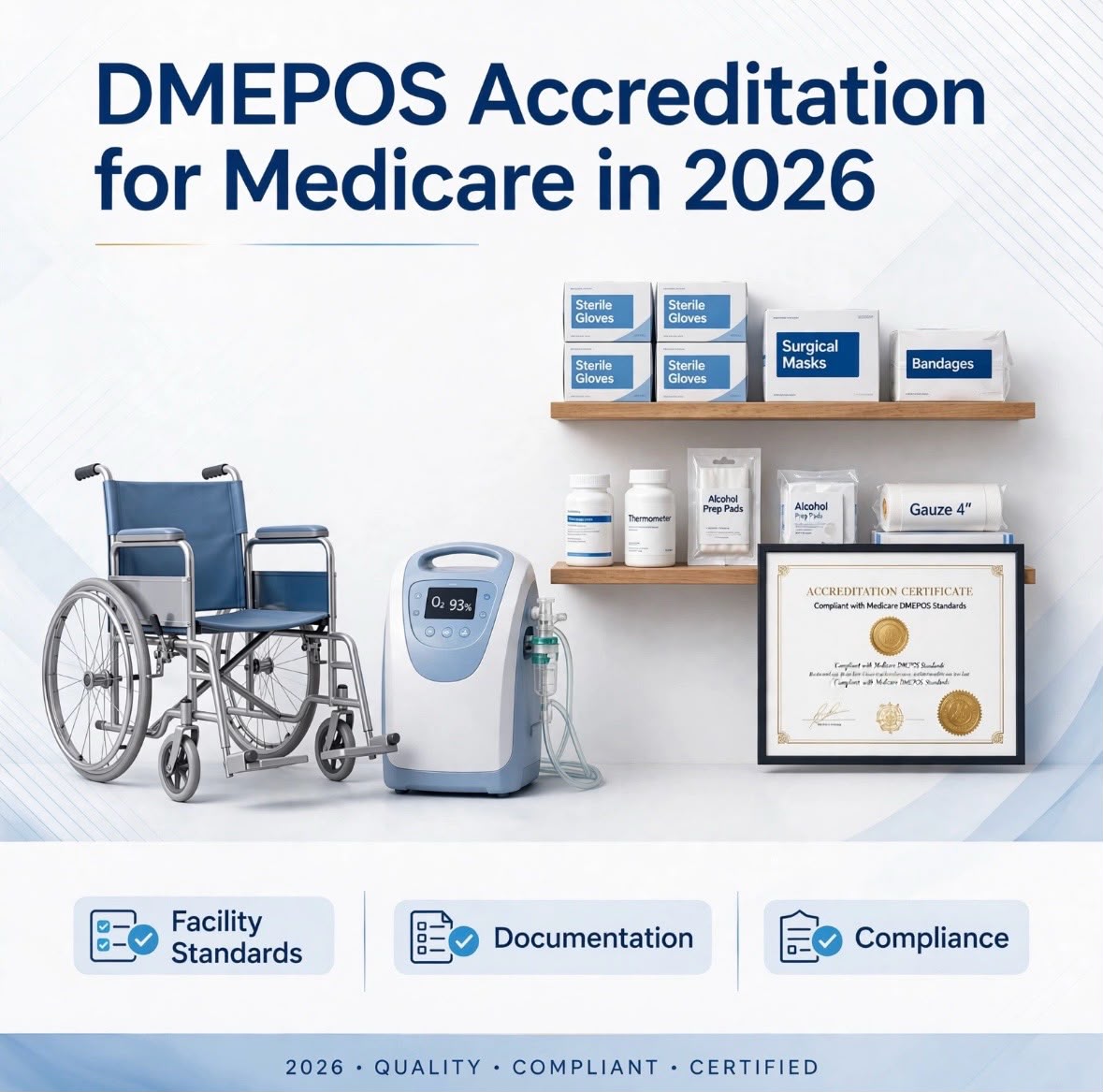
For businesses that provide durable medical equipment, prosthetics, orthotics, and supplies (DMEPOS), becoming a Medicare-enrolled supplier can open the door to serving millions of eligible beneficiaries. However, Medicare participation comes with specific regulatory, operational, and compliance requirements.
One of the most important areas for many suppliers is DMEPOS accreditation for Medicare. Accreditation demonstrates that a supplier has established appropriate processes for quality, patient safety, documentation, and business operations.
Whether you are starting a new DMEPOS company or preparing an existing supplier for Medicare participation, understanding the accreditation process can help you avoid unnecessary delays and compliance problems.
This 2026 guide explains how DMEPOS accreditation works, what suppliers should prepare, how the accreditation survey works, and what businesses need to do after accreditation to maintain compliance.
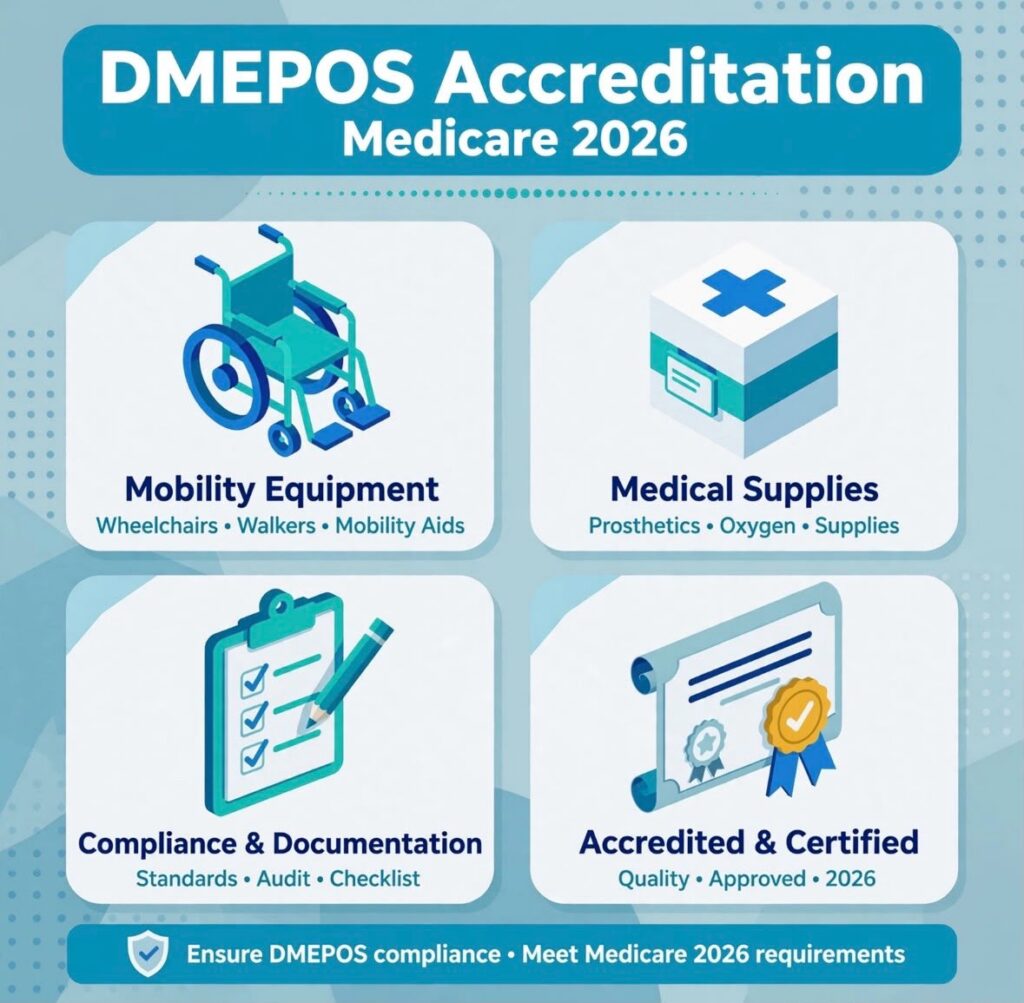
What Is DMEPOS Accreditation?
DMEPOS accreditation is a formal evaluation of a supplier’s operations against applicable standards established for Medicare DMEPOS suppliers.
During the process, an approved accreditation organization reviews areas such as business operations, documentation, patient services, staff responsibilities, equipment management, and quality procedures.
Accreditation is not simply a certificate. It is intended to demonstrate that a supplier has systems in place to provide DMEPOS products and services safely and consistently.
It is also important to understand that accreditation is only one part of Medicare enrollment. Suppliers may also need appropriate state licenses, a surety bond, enrollment documentation, and other requirements depending on their circumstances.
Who Needs DMEPOS Accreditation for Medicare?
Many suppliers that want to bill Medicare for covered DMEPOS products must meet applicable accreditation requirements unless a specific exemption applies.
The requirements can vary depending on:
- Products and services being provided
- Supplier location
- Business structure
- Applicable state regulations
- Medicare enrollment status
- Applicable accreditation exemptions
Before starting the process, suppliers should determine exactly which requirements apply to their business rather than relying on a generic checklist.
DMEPOS Accreditation Requirements in 2026
Although requirements can vary, a supplier should generally be prepared to demonstrate that it has appropriate systems for:
- Patient rights and communication
- Complaint management
- Quality assurance
- Equipment management
- Delivery and setup
- Recordkeeping
- Employee qualifications
- Staff training
- Infection control
- Emergency preparedness
- Beneficiary safety
- Privacy and confidentiality
Written policies should reflect the way the business actually operates. Simply having documents on file is not enough if employees do not follow the procedures described in those documents.
How to Get DMEPOS Accreditation for Medicare: Step-by-Step
Step 1: Identify Your DMEPOS Services
Begin by defining exactly what products and services your company will provide.
Different DMEPOS categories may involve different licensing, operational, and accreditation considerations. Establishing your scope of services at the beginning can help you identify the requirements that apply to your business.
Review:
- Product categories
- Service areas
- Medicare billing plans
- State requirements
- Facility requirements
- Applicable exemptions
Step 2: Verify State Licensing Requirements
Medicare requirements do not replace state or local licensing requirements.
Before applying for accreditation, confirm that your business has all applicable licenses and permits for the products and services it provides.
Depending on your location and business model, requirements may involve medical equipment, pharmacy, professional, facility, or other licenses.
Keeping licenses current is also important after accreditation.
Step 3: Choose an Approved Accreditation Organization
The next step is selecting an accreditation organization that is authorized to accredit DMEPOS suppliers for Medicare purposes.
When evaluating an organization, consider:
- Medicare approval status
- Applicable accreditation standards
- Application process
- Survey requirements
- Documentation expectations
- Fees
- Survey scheduling
- Renewal requirements
Choosing an organization early allows your business to prepare according to the correct standards.
Step 4: Develop Your Compliance Policies
Strong documentation is one of the foundations of successful DMEPOS accreditation.
Your policies and procedures should clearly explain how your business handles areas such as:
Patient Care and Rights
Document how patients receive information, communicate concerns, submit complaints, and receive appropriate services.
Equipment Management
Establish procedures for equipment inspection, maintenance, cleaning, storage, delivery, setup, and safety where applicable.
Quality Assurance
Create processes for monitoring service quality, identifying problems, documenting corrective actions, and improving operations.
Employee Responsibilities
Clearly define employee duties, qualifications, training requirements, and supervision.
Emergency Procedures
Maintain appropriate procedures for responding to emergencies and protecting beneficiaries and employees.
The most effective policies are practical, current, and consistent with daily operations.
Step 5: Organize Required Documentation
Before the survey, create an organized compliance file containing relevant business and operational documentation.
Depending on your circumstances, this may include:
- Business licenses
- Employee records
- Training records
- Policies and procedures
- Quality assurance documentation
- Patient records
- Equipment records
- Complaint logs
- Delivery documentation
- Emergency procedures
- Insurance documentation
Keeping records organized makes it easier to demonstrate compliance during the accreditation review.
Step 6: Prepare Your Facility
Your physical location should be ready before the accreditation survey.
Review the facility for:
- Safety concerns
- Equipment storage
- Accessibility
- Privacy
- Cleanliness
- Required signage
- Inventory organization
- Emergency preparedness
The facility should support the procedures described in your written policies.
Step 7: Train Your Employees
Employees should understand both their individual responsibilities and the company’s overall compliance procedures.
Training may include:
- Patient rights
- Privacy and confidentiality
- Equipment handling
- Delivery procedures
- Infection control
- Complaint management
- Emergency response
- Documentation
- Safety procedures
Keep evidence of completed training because surveyors may request employee records.
Step 8: Complete the Accreditation Application
Once your business is prepared, submit the required application and supporting documentation to your selected accreditation organization.
Review all information carefully before submission. Inaccurate or inconsistent information can create unnecessary delays.
Your accreditation organization will provide instructions regarding applicable forms, fees, documentation, and survey scheduling.
Step 9: Prepare for the Accreditation Survey
The accreditation survey is one of the most important stages of the process.
Surveyors may evaluate your:
- Facility
- Policies
- Employee files
- Training records
- Patient documentation
- Equipment procedures
- Quality systems
- Complaint processes
- Overall compliance
Conducting an internal mock survey before the official review can help identify gaps while there is still time to correct them.
Step 10: Correct Any Deficiencies
If the survey identifies deficiencies, review each finding carefully and determine what corrective action is necessary.
Corrective actions should address the underlying issue rather than simply fixing the immediate documentation problem.
Maintain records showing what was corrected and how the business will prevent the issue from recurring.
Step 11: Maintain Compliance After Accreditation
Receiving accreditation does not mean compliance efforts can stop.
DMEPOS suppliers should continue to:
- Update policies
- Maintain licenses
- Train employees
- Monitor quality
- Maintain accurate records
- Review operational procedures
- Conduct internal audits
- Prepare for future accreditation requirements
Ongoing compliance is essential for maintaining a strong Medicare supplier operation.
How Long Does DMEPOS Accreditation Take?
There is no universal timeline for DMEPOS accreditation in 2026.
The process can depend on the supplier’s business structure, licensing status, documentation, facility readiness, selected accreditation organization, and whether deficiencies are identified during the survey.
Suppliers that begin preparation early and address compliance gaps before applying may be better positioned for a smoother process.
Common Reasons DMEPOS Accreditation Gets Delayed
Incomplete Documentation
Missing or outdated policies, licenses, employee records, or training documentation can slow the process.
Poorly Prepared Employees
Employees should know the company’s procedures and understand how to perform their assigned responsibilities.
Facility Problems
Safety, accessibility, storage, privacy, or operational issues may need to be corrected before accreditation can be completed.
Policies That Do Not Match Actual Operations
Your written procedures should accurately reflect what employees do in practice.
Last-Minute Preparation
Waiting until the survey date is approaching can leave insufficient time to identify and correct compliance problems.
DMEPOS Accreditation vs. Medicare Enrollment
DMEPOS accreditation and Medicare enrollment are connected but are not the same process.
Accreditation focuses on demonstrating compliance with applicable quality and operational standards.
Medicare enrollment involves registering the supplier with Medicare and satisfying applicable enrollment requirements.
Depending on the business, suppliers may also need to address:
- State licensing
- Surety bond requirements
- Enrollment applications
- Application fees
- Site requirements
- Supplier standards
- Accreditation
Understanding these requirements together can help suppliers build a more complete Medicare compliance strategy.
Can a New DMEPOS Supplier Get Accredited?
Yes. New DMEPOS suppliers can prepare for accreditation and Medicare participation by establishing compliant business operations from the beginning.
Starting with proper policies, documentation, staff training, facility preparation, and licensing can make the process more manageable.
New suppliers should avoid treating accreditation as an afterthought. Building compliance into the business from day one can reduce the risk of expensive corrections later.
How Professional DMEPOS Accreditation Consulting Can Help
The accreditation process can involve detailed documentation, operational requirements, licensing considerations, and survey preparation.
A professional DMEPOS accreditation consultant can help suppliers:
- Understand applicable requirements
- Organize compliance documentation
- Review policies and procedures
- Identify potential compliance gaps
- Prepare employees
- Conduct pre-survey assessments
- Prepare for the accreditation survey
Professional assistance does not replace the supplier’s responsibility to meet Medicare and regulatory requirements, but it can make preparation more structured and efficient.
Frequently Asked Questions
What is DMEPOS accreditation for Medicare?
DMEPOS accreditation is a formal evaluation used to determine whether a supplier meets applicable standards for Medicare DMEPOS participation.
Is DMEPOS accreditation required for Medicare?
Many DMEPOS suppliers need accreditation to bill Medicare, although specific exemptions may apply depending on the supplier and circumstances.
How do I get DMEPOS accreditation?
The process generally involves determining applicable requirements, meeting state licensing requirements, selecting an approved accreditation organization, preparing policies and documentation, completing the application, passing the survey, and maintaining ongoing compliance.
How long does DMEPOS accreditation take?
The timeline varies based on business readiness, documentation, licensing, survey scheduling, and whether corrective actions are required.
What documents are needed for DMEPOS accreditation?
Requirements vary, but suppliers may need policies, licenses, employee and training records, patient documentation, equipment records, quality records, and other operational documents.
Does DMEPOS accreditation replace Medicare enrollment?
No. Accreditation and Medicare enrollment are separate requirements that may both apply to a DMEPOS supplier.
Can a new DMEPOS business become Medicare accredited?
Yes. New suppliers can prepare for accreditation by establishing compliant operations and meeting applicable Medicare, state, and accreditation requirements.
How can I prepare for a DMEPOS accreditation survey?
Review the applicable standards, organize documentation, train employees, inspect the facility, conduct an internal compliance audit, and correct potential deficiencies before the official survey.
Final Thoughts
Getting DMEPOS accreditation for Medicare in 2026 requires more than completing an application. Suppliers need to build reliable systems for documentation, patient care, employee training, equipment management, quality assurance, and ongoing compliance.
Starting early gives a business more time to identify potential gaps, correct deficiencies, and prepare employees for the accreditation survey.
For suppliers that are unfamiliar with Medicare DMEPOS requirements, professional accreditation support can provide a structured approach to preparation and help reduce avoidable delays.