

The durable medical equipment (DME) industry plays an essential role in modern healthcare. From wheelchairs and hospital beds to oxygen equipment and mobility aids, DME providers help patients maintain independence, manage medical conditions, and receive appropriate care at home.
However, building a successful DME business requires more than supplying medical products. Business owners must understand financial planning, inventory management, reimbursement procedures, operational efficiency, regulatory compliance, and long-term growth strategies. A well-managed business combines financial stability with reliable patient services.
Understanding the Durable Medical Equipment Business
A durable medical equipment business supplies medical products designed for repeated use. These products support patients recovering from illness, managing chronic conditions, or requiring assistance with everyday activities.
Common DME products include wheelchairs, walkers, hospital beds, oxygen equipment, patient lifts, mobility aids, and bathroom safety equipment.
Understanding the target market is essential for business success. Providers should evaluate local healthcare demand, customer requirements, supplier availability, insurance policies, and competition before developing their business strategy.
Financial Planning for a DME Business
Financial planning is one of the most important elements of operating a successful DME company. Businesses must manage startup investments, inventory costs, employee salaries, operational expenses, and reimbursement timelines.
Developing a Realistic Business Budget
A detailed business budget helps owners understand their financial responsibilities and plan for future expenses.
Startup expenses may include business registration, licensing, insurance, warehouse facilities, medical equipment inventory, delivery vehicles, billing software, and employee recruitment.
Ongoing expenses may include rent, salaries, transportation, equipment maintenance, marketing, utilities, and administrative costs.
Separating fixed and variable expenses allows business owners to monitor spending and identify opportunities to improve profitability.
Managing Cash Flow and Reimbursement Cycles
Cash flow management is particularly important in the DME industry because businesses may supply equipment before receiving insurance payments.
Delays caused by documentation requirements, insurance verification, claim processing, and reimbursement procedures can affect working capital.
DME providers should monitor accounts receivable, review unpaid claims, establish consistent billing procedures, and follow up on outstanding payments.
Improving Profit Margins
Profitability depends on understanding the financial performance of individual products and services.
Business owners should evaluate equipment purchasing costs, delivery expenses, maintenance requirements, reimbursement rates, and administrative costs.
Analyzing profitability by product category and payer helps management make better purchasing decisions and identify opportunities for financial improvement.
Improving Operational Efficiency in DME Operations
Operational efficiency helps DME companies deliver reliable services while controlling expenses. Organized workflows reduce delays, minimize errors, and improve employee productivity.
Streamlining Inventory Management
Inventory management plays a major role in daily DME operations.
Excess inventory ties up working capital, while insufficient stock can delay equipment deliveries and affect patient satisfaction.
Businesses should monitor inventory levels, establish reorder points, review product demand, and maintain accurate stock records.
Digital inventory management systems can improve product visibility and help employees track available equipment, pending orders, and purchasing requirements.
Strengthening Order Processing and Delivery
An effective order management process should include order intake, documentation review, insurance verification, inventory checks, equipment preparation, delivery scheduling, and confirmation of receipt.
Standardized procedures help employees complete tasks accurately and reduce unnecessary administrative delays.
Delivery route planning and timely communication also help reduce transportation costs and improve customer experience.
Using Technology to Improve Productivity
Technology can simplify several important DME business operations.
Modern management platforms can support billing, inventory tracking, customer records, order processing, documentation, and financial reporting.
Automation reduces repetitive administrative tasks and allows employees to focus more on patient support and business development.
Companies should select technology according to their operational requirements, security needs, and available budget.
Regulatory Compliance and Risk Management
Regulatory compliance is essential for maintaining a reliable DME business.
Requirements vary depending on the country, product category, insurance provider, and business model.
In the United States, DME suppliers participating in Medicare must understand applicable supplier standards, documentation requirements, accreditation obligations, and billing policies.
Businesses should maintain accurate records, protect patient information, verify coverage requirements, and provide regular employee training.
Internal audits can help identify documentation problems, billing inconsistencies, and operational risks before they become serious issues.
Building Strong Referral Relationships and Customer Service
Strong professional relationships can support long-term DME business development.
Providers may establish relationships with physicians, hospitals, rehabilitation centers, home health agencies, and healthcare professionals who help patients access appropriate medical equipment.
Customer service is equally important. Patients and caregivers should receive clear equipment instructions, timely deliveries, responsive support, and accurate information about available services.
Consistent service quality helps build trust, strengthen professional relationships, and improve business reputation.
Long-Term Growth Strategies for DME Companies
Sustainable business growth requires careful planning, financial discipline, and a clear understanding of market demand.
Expanding Product and Service Offerings
DME companies can explore opportunities to introduce additional equipment categories, rental programs, maintenance services, and specialized patient support.
Before expanding, business owners should evaluate customer demand, supplier availability, purchasing costs, reimbursement requirements, and expected profitability.
Investing in Employee Training
Employees are essential to successful DME operations.
Training should cover equipment knowledge, customer communication, documentation procedures, billing responsibilities, safety practices, and regulatory compliance.
Regular professional development helps employees maintain productivity and adapt to changing business requirements.
Monitoring Business Performance
Key performance indicators help business owners measure financial and operational progress.
Important KPIs include revenue growth, gross profit margin, accounts receivable days, claim denial rates, inventory turnover, order fulfillment time, delivery expenses, and customer satisfaction.
Regular performance reviews help management identify problems and make informed business decisions.
Common Challenges in the DME Industry
DME companies face several challenges, including changing reimbursement policies, rising supplier costs, insurance claim denials, staffing difficulties, inventory shortages, and increasing competition.
Businesses can address these challenges through accurate financial forecasting, reliable supplier relationships, employee training, improved inventory controls, and consistent compliance monitoring.
Developing flexible operational systems also helps companies respond to changing healthcare requirements.
Conclusion
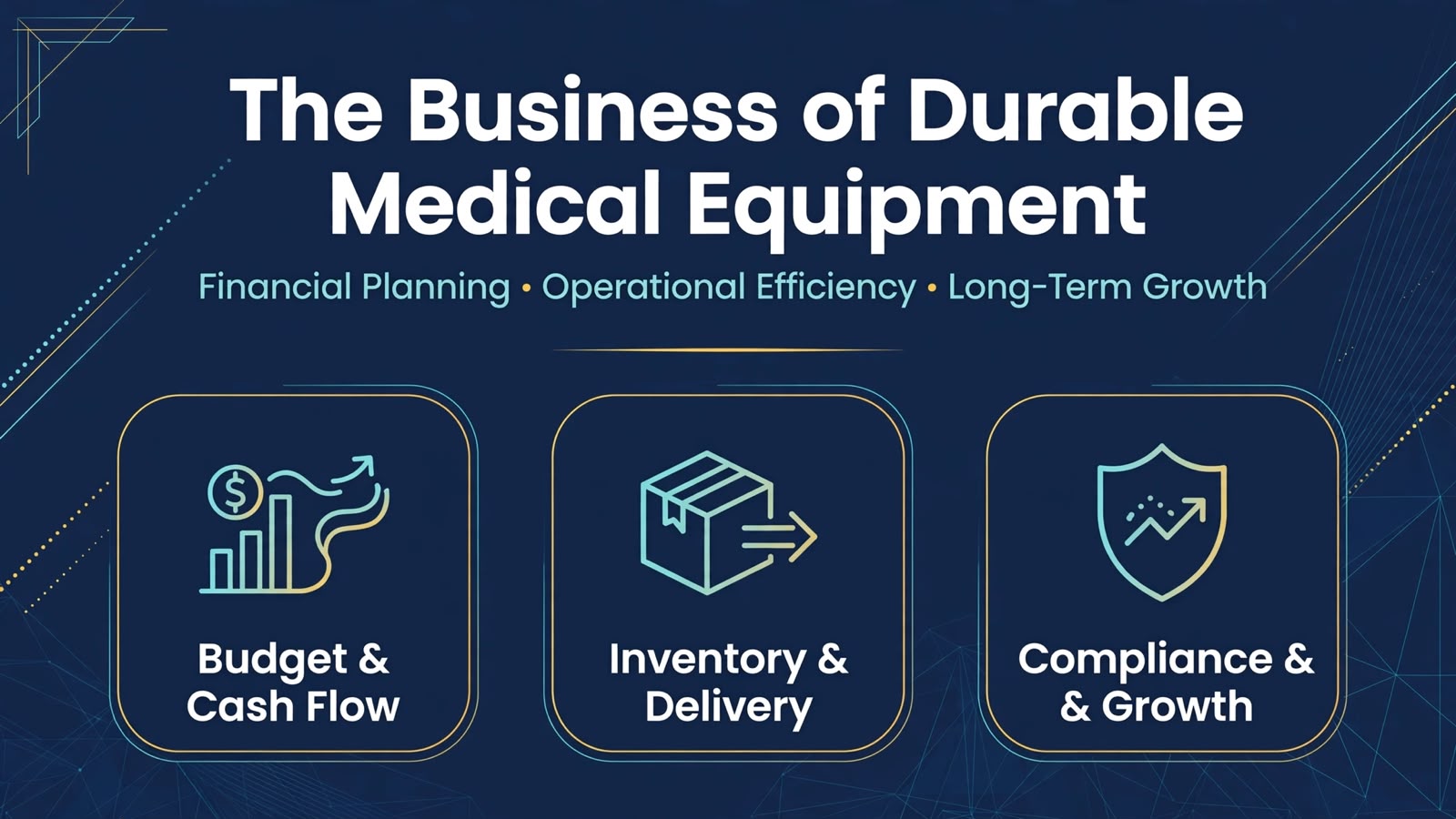
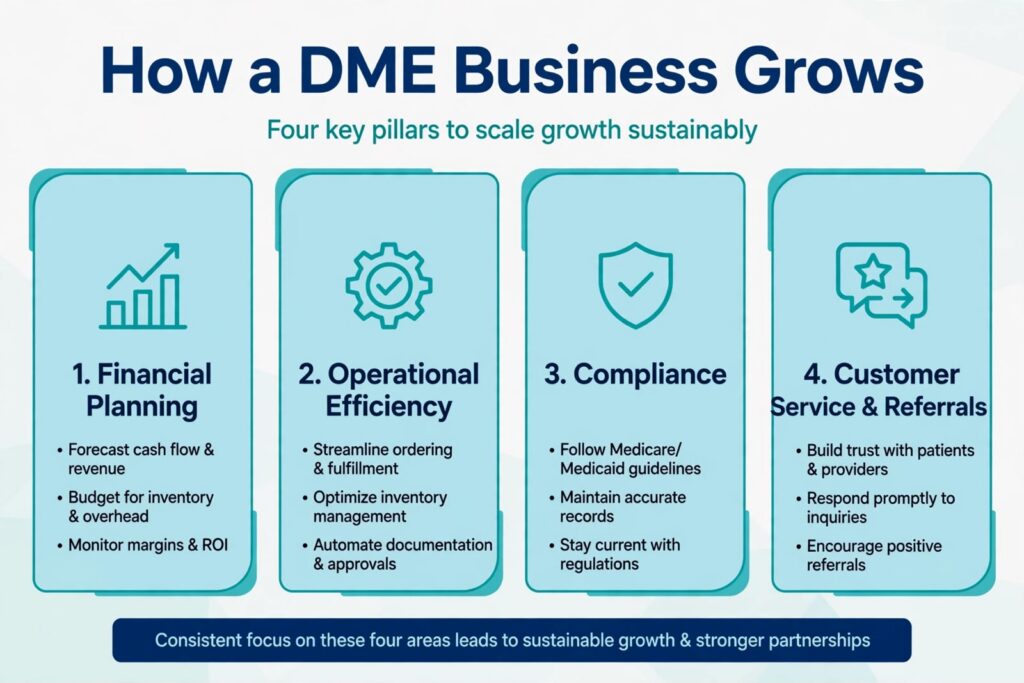
The business of durable medical equipment requires a combination of financial planning, operational efficiency, regulatory compliance, and long-term strategic development.
Companies that manage cash flow effectively, control inventory, adopt suitable technology, and prioritize customer service can build stronger and more sustainable operations.
Long-term success depends not only on increasing revenue but also on delivering reliable equipment, maintaining financial discipline, supporting patients, and adapting to changes in the healthcare industry.
Frequently Asked Questions (FAQs)
1. What is a durable medical equipment business?
A durable medical equipment business supplies medical products designed for repeated use, including wheelchairs, hospital beds, oxygen equipment, mobility aids, and other medically necessary supplies.
2. How do DME companies make money?
DME companies typically generate revenue through equipment sales, rentals, maintenance services, and eligible insurance reimbursements, depending on their business model.
3. Why is financial planning important for DME businesses?
Financial planning helps providers manage startup costs, inventory investments, payroll, operating expenses, reimbursement delays, and working capital.
4. How can a DME business improve operational efficiency?
Businesses can improve efficiency through better inventory management, standardized order processing, delivery planning, employee training, and appropriate business software.
5. What technology do DME providers need?
DME providers may benefit from software that supports billing, inventory management, order processing, documentation, customer records, and financial reporting.
6. What are the biggest challenges for DME companies?
Common challenges include reimbursement delays, claim denials, regulatory changes, supplier costs, inventory management, and market competition.
7. How can a DME company achieve long-term growth?
Sustainable growth requires financial discipline, customer service, operational improvements, employee development, market research, and carefully planned business expansion.
8. What KPIs should DME business owners monitor?
Important KPIs include revenue, gross profit margin, accounts receivable days, claim denial rates, inventory turnover, delivery performance, and customer satisfaction.