


Medicare compliance plays an important role in maintaining a successful Durable Medical Equipment (DME) business. When Medicare flags a DME supplier for unusual billing activity, missing documentation, or enrollment concerns, the business may face additional scrutiny. This can affect claim processing, reimbursement timelines, and overall operations.
Although a Medicare flag does not automatically mean that a supplier has lost its billing privileges, it should never be ignored. Understanding the reasons behind the review and taking corrective action can help DME suppliers protect their enrollment and maintain business stability.
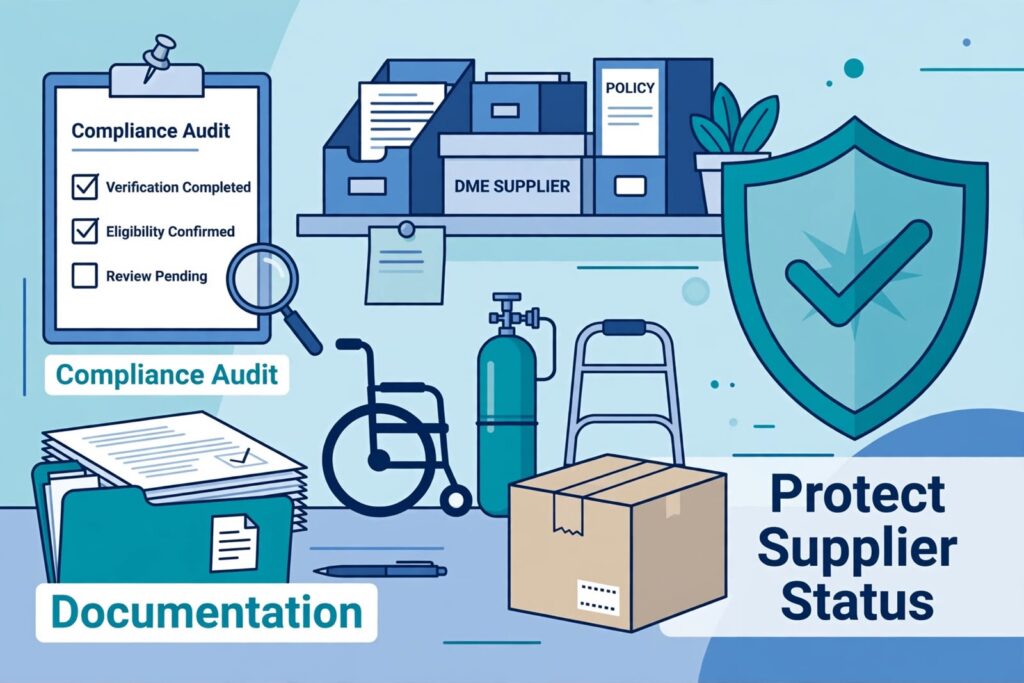
Common Reasons Medicare Flags a DME Business
Medicare monitors DME suppliers to ensure they follow applicable billing, documentation, and enrollment requirements. Certain issues may lead to additional reviews or compliance concerns.
Inaccurate Billing and Claim Submission
Incorrect HCPCS codes, duplicate claims, unusual billing patterns, or claims that do not meet Medicare coverage requirements can attract additional scrutiny. Suppliers should regularly review submitted claims to identify errors and prevent repeated billing problems.
Missing Patient Documentation
Incomplete medical records, missing physician orders, insufficient proof of medical necessity, and delivery documentation issues can create compliance risks. Every Medicare claim should have appropriate supporting records that demonstrate the equipment was medically necessary and properly furnished.
Enrollment and Accreditation Problems
Expired licenses, accreditation deficiencies, inaccurate ownership details, and outdated practice location information can affect supplier eligibility. DMEPOS suppliers must maintain applicable enrollment standards and keep their information current.
What Happens After Medicare Flags a Supplier
The consequences of a Medicare compliance concern depend on the issue identified and the type of review initiated. Some situations involve routine documentation requests, while others may lead to more serious administrative actions.
Additional Claims Review and Documentation Requests
Medicare contractors may request patient records, prescriptions, delivery confirmations, and other supporting documents. Suppliers should carefully review each request and organize the information according to the specified claims and deadlines.
Payment Delays and Possible Administrative Actions
Certain reviews may involve prepayment review, post-payment audits, or other claim scrutiny. In more serious circumstances, Medicare may take administrative action, including payment suspension or revocation of billing privileges when regulatory requirements are met.
These actions can create financial pressure and interrupt normal business operations.
Reviewing Official Notices and Deadlines
DME suppliers should identify the issuing contractor, understand the reason for the notice, and review any applicable response or appeal deadlines. Keeping copies of all correspondence and submitted records can also help establish a clear compliance history.
Practical Steps to Protect Your Medicare Supplier Status
A proactive compliance strategy can help DME businesses address problems early and reduce the risk of future enrollment issues.
Conduct Regular Internal Compliance Audits
Review patient files, physician orders, delivery records, billing codes, and submitted claims. Identify recurring errors and establish procedures to correct them. Regular audits can help businesses discover documentation gaps before they become larger problems.
Maintain Accurate Enrollment and Accreditation Records
Keep business ownership details, practice locations, licenses, accreditation information, and surety bond documentation updated. CMS requires DMEPOS suppliers to report applicable enrollment changes within 30 days.
Train Employees and Strengthen Documentation Procedures
Train billing specialists, administrative staff, and delivery teams on applicable Medicare requirements. Establish written procedures for recordkeeping, claim reviews, audit responses, and reporting compliance concerns.
Work With Experienced Compliance Professionals
When a supplier receives a formal notice, payment suspension, or revocation determination, professional guidance can help identify available options and applicable deadlines. A qualified healthcare attorney or Medicare compliance specialist can assist with preparing an appropriate response.
Frequently Asked Questions
1. What does it mean when Medicare flags a DME business?
It generally means that Medicare or one of its contractors has identified an issue that may require additional review. The term itself does not automatically mean that billing privileges have been revoked.
2. Can Medicare stop payments to a flagged DME supplier?
Depending on the circumstances, Medicare may conduct additional claim reviews or impose a payment suspension under applicable regulations. A flag alone does not automatically stop all payments.
3. What documents should DME suppliers maintain?
Suppliers should maintain appropriate physician orders, patient records, medical necessity documentation, delivery confirmations, billing records, licenses, and accreditation information.
4. Can a DME business lose its Medicare billing privileges?
Yes. CMS may revoke billing privileges when a supplier fails to meet applicable enrollment or supplier standards. The specific notice and regulatory basis determine the available response options.
5. How can DME suppliers reduce Medicare compliance risks?
Regular internal audits, accurate claim submissions, updated enrollment information, employee training, and complete patient documentation can help reduce preventable compliance problems.