
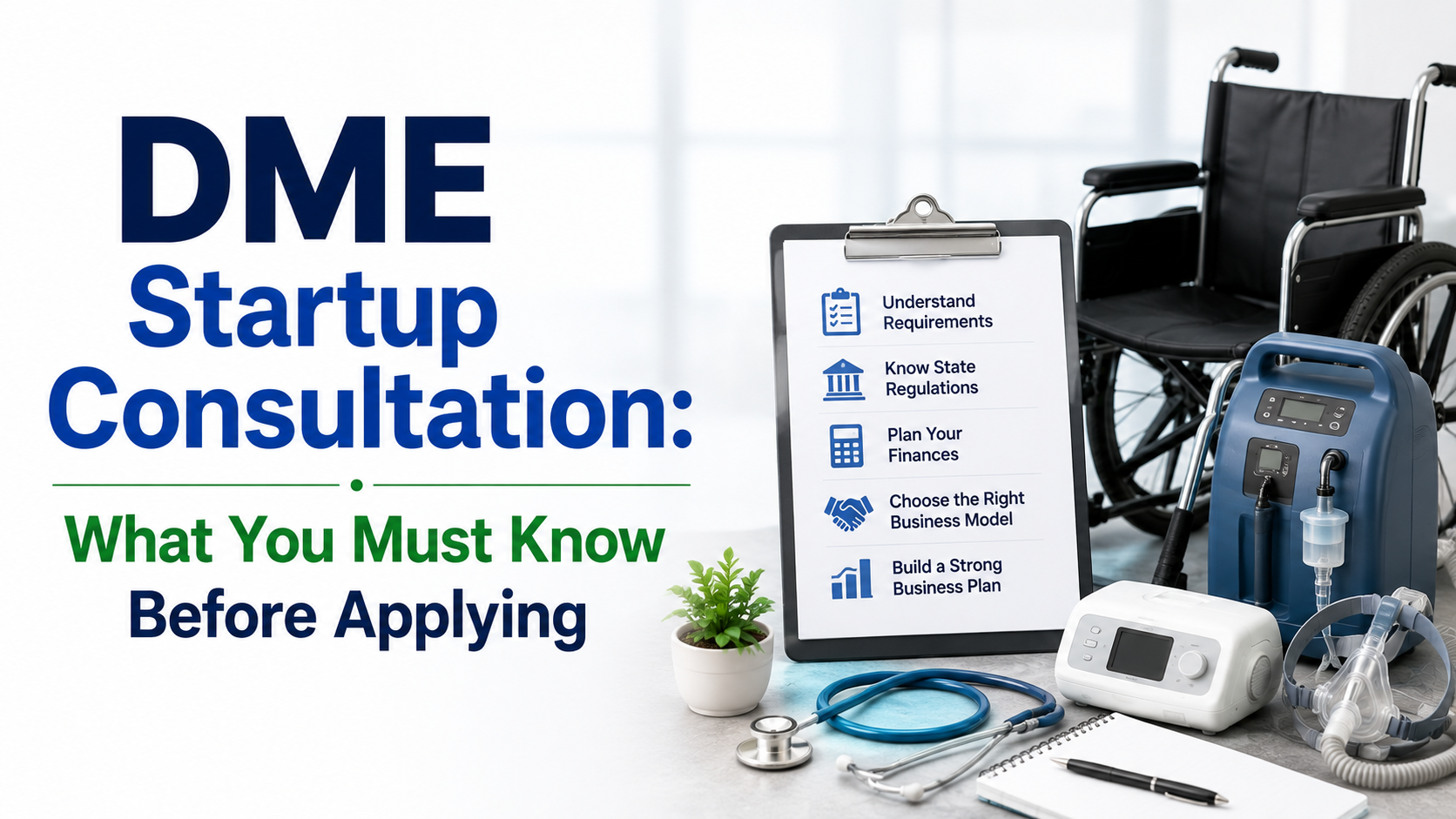
Starting a DME business can look simple from the outside. You find products, choose a location, and prepare to serve patients. Then the real process begins. Applications, licenses, supplier standards, accreditation, payer enrollment, site readiness, and billing rules all arrive together. Many new owners do not fail because demand is weak. They struggle because they apply before the business is ready. A DME startup consultation helps you slow down at the right moment. It helps you see what must be prepared before you submit forms, sign contracts, or spend money on the wrong setup. The goal is not to delay your launch. The goal is to prevent delays that happen when the first steps are done out of order.
Why DME Startups Need Careful Planning Before Applying
A DME startup is not only a retail or supply business. It is part of a regulated healthcare system. That means each step must support compliance, patient service, and payer requirements. Many new suppliers think the application is the starting point. In reality, the application should come after the business foundation is ready. Before applying, you need to understand your product category, location requirements, licensing rules, accreditation needs, payer goals, and documentation process.
Start DME explains that proper DME licensing research and application preparation can help reduce costly delays. QPI Healthcare Services also describes DME startup guidance as support for Medicare-compliant setup, accreditation, CMS paperwork, and billing readiness. These points show the same reality. Preparation matters before the application starts. If you rush, one missing item can hold everything back. A wrong address, incomplete ownership details, a missing bond, a weak policy, or a poor documentation process can create delays. These problems are frustrating because many are preventable.
Good planning helps you move in the right order. It also helps you avoid spending money twice.
What Happens During a DME Startup Review
A startup review should begin with your business idea. A consultant should ask what products you want to provide, who you want to serve, and which payers you want to bill. These answers shape the entire setup. A business focused on mobility equipment may need different planning from one focused on respiratory products. A supplier serving Medicare patients may need different preparation from a cash-pay model. A pharmacy adding DMEPOS may also have different needs from a new standalone supplier.
During a review, the consultant may look at your business entity, location, licensing needs, accreditation path, NPI setup, surety bond needs, insurance, payer strategy, and operational readiness. They may also review whether your timeline is realistic. A useful consultation should not feel like a sales call. It should give you clarity. You should leave with a better understanding of what comes first, what is missing, and what may slow you down.
This is where the DME startup consultation becomes practical. It turns a large process into a sequence of clear steps.
Know Your DME Business Model First
Before applying, define your model. Do not start with forms. Start with the type of supplier you want to become. Ask yourself what products you will offer. Decide whether you will carry inventory, ship equipment, deliver locally, or support patients in person. Think about whether you will work with physicians, discharge planners, pharmacies, clinics, or direct patients.
Your model affects your accreditation scope. It also affects staff training, policies, location setup, and payer enrollment. A broad model may sound attractive, but it can create more work at the startup stage. Many new suppliers benefit from a focused launch. Starting with fewer categories can make training easier. It can also make documentation, purchasing, and billing more manageable.
A consultant can help you compare product categories. They can explain which categories are more complex. They can also help you avoid choosing products only because demand looks high. Demand matters. Compliance, reimbursement, and operational capacity matter just as much.
Check Licensing and State Requirements Early
Licensing is one of the first areas to review. DME requirements can vary by state. Some states require a specific DME license. Others may require additional registration, insurance, or permits. You should also check local rules before signing a lease. A business location may need zoning approval or local business licensing. If the space is not acceptable, you may face delays after spending money.
Start DME highlights licensing research as part of helping DME businesses obtain proper licenses and prepare application packets. That is important because state requirements are not always obvious. They may also change based on product category or payer plan. Keep your legal name, tax ID, address, and ownership details consistent across all documents. Small mismatches can cause avoidable questions during applications. Licensing should never be treated as a last-minute task. It should be confirmed before you build the rest of the launch plan.
Understand Accreditation Before You Apply
Accreditation is a major step for many DME suppliers. If you plan to bill Medicare for DMEPOS items, accreditation is often part of the path unless an exemption applies. Accreditation is not only about passing a survey. It is about proving that your business can operate safely and consistently. You may need written policies, training records, complaint procedures, delivery processes, emergency plans, and quality systems.
QPI Healthcare Services describes DME startup guidance as support from initial enrollment through accreditation. Their content also mentions CMS paperwork, policy development, and readiness required before billing. This is why accreditation planning should start early. You should know which accrediting organization fits your business model. You should also know what standards apply to your product categories.
Many delays happen because owners collect documents late. A better plan prepares policies, staff training, location readiness, and records before the survey process becomes urgent. Accreditation can feel heavy, but it becomes easier when the business is built around the standards from day one.
Prepare Your Location Before Submitting Applications
Your location can help or hurt the application process. A DME supplier location may need to support storage, records, patient service, business hours, and operational standards. Do not choose a space only because the rent is low. Check whether it supports your model. Think about access, parking, signage, storage, delivery flow, and staff workspace.
A location that looks acceptable for a normal business may not fit a healthcare supplier. If changes are needed later, you may lose time and money. Before applying, confirm that your address is stable. Changing location details after documents are submitted can create confusion. It can also trigger more reviews.
Your location should match the business you described in your applications. If your paperwork says one thing but your site shows another, the process can slow. A consultant can review the site before you commit. That review can prevent expensive mistakes.
Get NPI, Bond, Insurance, and Business Records Ready
Before applying for payer enrollment, collect the core documents. This usually includes your legal business documents, EIN, NPI, insurance, lease, accreditation information, licenses, and surety bond if required. For Medicare DMEPOS suppliers, the CMS-855S application process often requires several supporting items. QPI Healthcare Services mentions CMS-855S, surety bonds, and PTAN acquisition as important startup steps. These pieces should be planned before submission.
The surety bond is especially important for many DMEPOS suppliers. If required, it must be arranged through an acceptable provider and match your business information. Insurance should also be ready. Some applications may require proof of liability coverage. Payers may ask for updated certificates. Create a clean document folder. Keep every file labeled and current. This simple habit can save hours during applications and follow-ups.
Understand Payer Enrollment Before You Depend on Revenue
Payer enrollment controls how quickly your business can start billing. New owners often underestimate how long approvals can take. Medicare, Medicaid, and commercial payers may each require different documents. Some payers may need accreditation proof, licenses, contracts, W-9 forms, NPI details, ownership records, and service descriptions.
QPI Healthcare Services notes that Medicare Part B enrollment may involve submitting CMS-855S and supporting documents. Their content also says commercial plans may take 60 to 120 days for contract activation. Those timelines show why planning cash flow matters.
Do not build your budget around instant approval. Rent, payroll, software, insurance, inventory, and consulting costs may begin before revenue starts. This is one of the most important reasons to seek DME startup consultation before applying. A consultant can help you understand the timeline and avoid unrealistic expectations.
Good payer planning also helps you choose contracts wisely. More payers do not always mean better profit. Some contracts may bring volume but create weak margins or heavy documentation work.
Build Documentation and Billing Workflows Early
A DME startup needs billing workflows before orders begin. Waiting until the first claim is risky. Documentation can make or break a payment. You may need written orders, proof of delivery, medical necessity records, prior authorization, eligibility checks, and product-specific documents.
A strong workflow starts at intake. Staff should know what information to collect before equipment is delivered. Billing staff should know what must be reviewed before a claim goes out. If documents are missing, claims may be denied. If claims are often denied, cash flow becomes unstable. This can hurt a new business quickly.
Build checklists for each product category. Train staff on those checklists. Store records in a way that makes audits and payer requests easier. A consultant can help design these workflows before errors become routine.
Train Your Team Before Launch
A DME company may start small, but every person still needs clear responsibilities. One employee may handle intake, billing, customer service, and delivery coordination. That makes training even more important. Training should cover documentation, patient communication, compliance, privacy, delivery records, complaint handling, and software use. Staff should know when to ask questions before taking action.
Accreditation and payer readiness also depend on staff understanding. A well-written policy is not useful if the team does not know how to follow it. Keep training records. Track dates, topics, and attendees. These records can support survey readiness and internal quality control. Good training reduces delays because fewer mistakes happen during daily work.
Know When to Use a Consultant
Not every owner needs the same level of support. Some need full startup guidance. Others need a review before applying. Some need help with licensing, accreditation, or payer enrollment only.
A DME consultant for startups can be useful when you are unsure about the correct order of steps. They can also help when you plan to bill Medicare, serve multiple payers, or handle product categories with complex documentation.
You should consider support if you are signing a lease, preparing accreditation, applying for Medicare, choosing software, or building billing workflows. These are areas where mistakes can create expensive delays.
A good consultant should not promise instant approval. They should explain the process honestly. They should also help you understand what your team must do. The right support saves time because it prevents rework. It also helps you make choices that fit your long-term business plan.
Questions to Ask Before Applying
Before you submit applications, ask yourself a few direct questions.
- Do I know which products I will provide?
- Do I understand my state licensing requirements?
- Is my location ready for DME operations?
- Do I know whether accreditation applies?
- Do I have my NPI, insurance, and bond ready?
- Are my business documents consistent?
- Do I understand Medicare and payer timelines?
- Do I have billing workflows in place?
- Is my staff trained before launch?
- Do I have enough working capital for delays?
These questions can reveal gaps before they become problems. They also give your consultant a clearer starting point if you need help.
Common Mistakes to Avoid
- The first mistake is applying too soon. If your documents are not ready, the process may stall.
- The second mistake is choosing a location without reviewing requirements. A poor site choice can create compliance and operational problems.
- The third mistake is ignoring accreditation until the last minute. Accreditation readiness takes planning and documentation.
- The fourth mistake is assuming payer approval will be fast. Many enrollments take weeks or months.
- The fifth mistake is building billing workflows after orders start. That often leads to denials.
- The sixth mistake is trying to offer too many products at launch. A focused start is often easier to manage.
- The seventh mistake is treating consulting as an expense only. Good guidance can prevent larger losses later.
Avoiding these mistakes can help your startup move with more confidence.
Final Thoughts
A DME startup can become a strong business, but only when the foundation is prepared. Applications are not the first step. They are the result of careful planning.
Before applying, understand your model, licensing requirements, accreditation path, location needs, payer timeline, documentation rules, and billing process. These areas shape how smoothly your business launches.
A DME startup consultation helps you see the full picture before you commit to the wrong order. It can reveal missing documents, weak assumptions, and costly risks before they slow your progress.
The best launch is not the fastest-looking launch. It is the one built to survive payer review, accreditation, documentation checks, and real daily operations. If you prepare before applying, you give your business a better chance to open cleanly. You also give it a stronger path toward long-term growth.