
Starting a home health care business in Texas can be highly profitable, but understanding the licensing and legal requirements is essential before launching your agency. Texas has specific rules for home healthcare providers, including licensing, compliance, caregiver policies, and optional Medicare certification.
In this guide, we explain the exact licenses, permits, certifications, and business requirements needed to legally start a home health care agency in Texas in 2026.
Quick Answer
To start a home health care business in Texas, you typically need:
- Texas HCSSA License
- Business Entity Registration (LLC or Corporation)
- EIN Number from the IRS
- Liability Insurance
- Policies & Procedures Manual
- Administrator & Alternate Administrator
- Office Setup
- State Compliance Documentation
- Medicare Certification (Optional)
- Accreditation (Recommended)
What Is an HCSSA License in Texas?
HCSSA stands for Home and Community Support Services Agency.
The Texas Health and Human Services Commission (HHSC) requires most home healthcare businesses to obtain an HCSSA license before providing services to patients.
This license applies to agencies offering:
- Skilled nursing
- Personal assistance services
- Physical therapy
- Occupational therapy
- Hospice care
- Home health aide services
Without an HCSSA license, operating a home healthcare agency in Texas may lead to penalties or license denial.
Step-by-Step Process to Start a Home Health Care Business in Texas
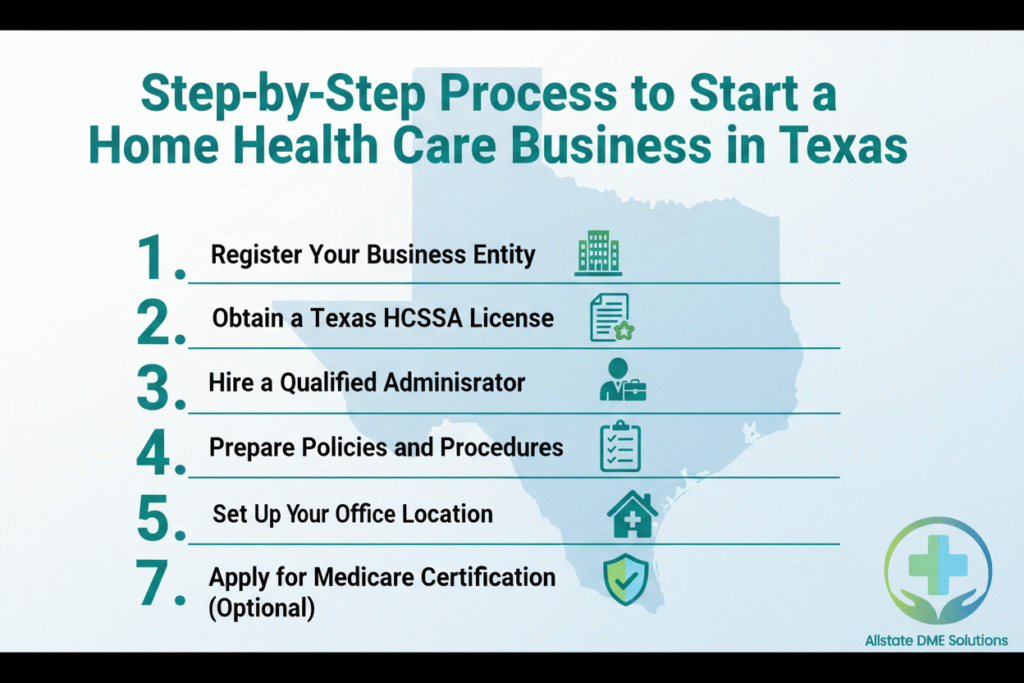
1. Register Your Business Entity
First, create your business legally in Texas.
Most agencies choose:
- LLC
- Corporation
You will also need:
- EIN Number from the IRS
- Business bank account
- Texas business registration
2. Obtain a Texas HCSSA License
You must apply through the Texas HHSC.
The application process usually includes:
- Ownership information
- Financial disclosures
- Administrator information
- Policies and procedures
- Background checks
- Licensing fees
3. Hire a Qualified Administrator
Texas requires agencies to appoint:
- Administrator
- Alternate Administrator
These individuals must meet state qualification requirements and oversee agency operations and compliance.
4. Prepare Policies and Procedures
Your agency must have written policies covering:
- Patient rights
- Infection control
- Emergency preparedness
- HIPAA compliance
- Staff training
- Clinical procedures
Proper documentation is critical for approval.
5. Set Up Your Office Location
Texas typically requires:
- Physical business address
- Secure patient records
- Office phone line
- Proper signage
- Compliance documentation
Your office may be inspected during the licensing process.
6. Obtain Liability Insurance
Most home healthcare agencies carry:
- General liability insurance
- Professional liability insurance
- Workers’ compensation coverage
Insurance helps protect your agency and may be required for contracts or Medicare enrollment.
7. Apply for Medicare Certification (Optional)
If you plan to bill Medicare, additional requirements apply.
This may include:
- Medicare enrollment
- Accreditation
- CMS compliance
- Survey inspections
Many agencies begin as private-pay providers before applying for Medicare certification.
Texas Home Health Care License Requirements Checklist
| Requirement | Required? |
|---|---|
| Texas HCSSA License | Yes |
| LLC or Corporation | Yes |
| EIN Number | Yes |
| Policies & Procedures | Yes |
| Office Location | Yes |
| Liability Insurance | Recommended |
| Medicare Certification | Optional |
| Accreditation | Recommended |
How Much Does It Cost to Start a Home Health Care Business in Texas?
Startup costs vary depending on services and business size.
Typical expenses include:
- State licensing fees
- Office setup
- Insurance
- Staff hiring
- Compliance documentation
- Marketing
- Accreditation (if applicable)
Many startups spend several thousand dollars before becoming operational.
How Long Does Texas Licensing Take?
The timeline depends on:
- Application completeness
- Background checks
- Documentation accuracy
- State processing times
Many agencies take several weeks or months to complete licensing and approval.
Common Mistakes That Delay Texas Home Health Licensing
Avoid these common issues:
- Incomplete applications
- Incorrect policies and procedures
- Missing compliance documents
- Unqualified administrators
- Poor office setup
- Inaccurate ownership disclosures
Proper preparation can significantly reduce delays.
Do You Need Medicare Certification?
No — Medicare certification is optional.
Some agencies operate as:
- Private-pay only
- Medicaid providers
- Medicare-certified agencies
Your business model determines which certifications you need.
Is Accreditation Required?
Accreditation is not always required for startup, but it is highly recommended for agencies seeking:
- Medicare enrollment
- Insurance contracts
- Industry credibility
Common accrediting organizations include:
- ACHC
- CHAP
- The Joint Commission
Why Texas Is a Strong Market for Home Healthcare
Texas continues to experience strong demand for home healthcare services due to:
- Aging population
- Increased home-based care
- Chronic disease management
- Growth in senior care services
This creates long-term opportunities for properly licensed agencies.
Frequently Asked Questions
Do I need a license to start a home health care business in Texas?
Yes. Most agencies must obtain an HCSSA license from Texas HHSC before providing services.
Can I start a home healthcare business from home?
In some cases, agencies may operate from a home office if state requirements are met.
How long does it take to get licensed in Texas?
The timeline varies based on application accuracy, documentation, and state processing.
Is Medicare certification required?
No. Medicare certification is optional unless you plan to bill Medicare.
What is the difference between home healthcare and home care?
Home healthcare typically involves skilled medical services, while home care focuses on non-medical assistance.
Final Thoughts
Starting a home health care business in Texas requires careful planning, licensing, compliance preparation, and operational setup. Understanding the Texas HCSSA licensing process early can help you avoid delays and build a compliant, successful agency.
If you need help with:
- Texas licensing
- Policies & procedures
- Medicare enrollment
- Accreditation
- Compliance setup
our consulting team can guide you through the complete startup process.