

The durable medical equipment (DME) industry continues to evolve as healthcare providers, patients, and insurance companies demand more efficient, accessible, and reliable medical equipment services. For business owners, 2027 presents opportunities to expand operations, improve patient experiences, strengthen compliance programs, and build more profitable businesses.
However, scaling a Durable Medical Equipment (DME) business involves more than increasing product sales or opening additional locations. Sustainable growth requires a well-trained workforce, efficient inventory management, reliable delivery systems, accurate billing processes, and a strong understanding of regulatory requirements.
Whether you operate a small DME supplier or manage an established DMEPOS organization, developing a structured growth strategy can help your business remain competitive.
This guide explores practical strategies for scaling a DME business in 2027, including staffing, operational improvements, compliance management, technology adoption, and long-term business development.
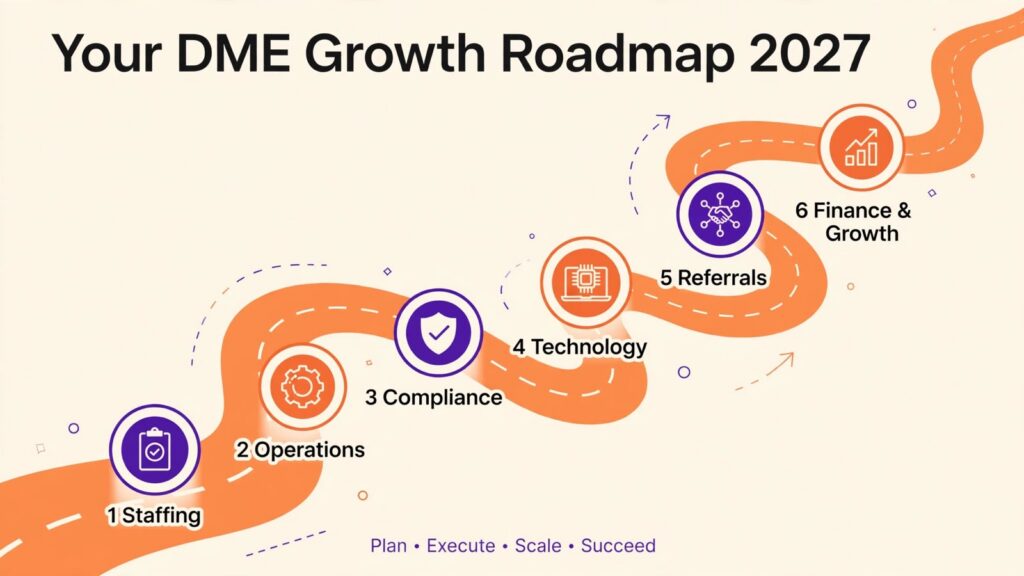
1. Understanding the DME Market and Identifying Growth Opportunities
Before expanding a DME business, owners should understand market demand, customer expectations, reimbursement challenges, and emerging healthcare needs.
Demand for medical equipment is influenced by factors such as an aging population, chronic health conditions, home healthcare services, and the growing preference for receiving care outside traditional healthcare facilities.
Identify High-Demand DME Product Categories
Businesses should evaluate which equipment categories align with their local market and operational capabilities.
Potential product categories include:
- Mobility equipment, including wheelchairs and walkers.
- Respiratory equipment and oxygen-related supplies.
- Hospital beds and patient support equipment.
- Diabetes management supplies.
- Orthopedic braces and support products.
- Urological and ostomy supplies.
- Home accessibility and rehabilitation equipment.
Rather than expanding into every available category, businesses should evaluate reimbursement rates, supplier relationships, licensing requirements, inventory costs, and local demand.
Research Your Target Market
Understanding your customer base helps determine which products and services deserve investment.
Consider researching:
- Local hospitals and healthcare facilities.
- Home health agencies.
- Rehabilitation centers.
- Physician practices.
- Senior care communities.
- Patient demographics and regional healthcare needs.
A focused market analysis helps identify underserved areas and opportunities to build stronger referral relationships.
2. Building a Skilled and Reliable DME Workforce
Staffing is one of the most important factors in successfully scaling a DME business. As order volumes increase, employees must manage customer inquiries, equipment preparation, documentation, delivery coordination, billing, and regulatory responsibilities.
Without adequate staffing, business expansion can create operational delays and reduce service quality.
Hire Employees for Essential Business Functions
A growing DME business should establish clear responsibilities across its major departments.
Important staffing positions include:
- Operations Manager: Oversees daily operations, workflow, and performance.
- Customer Service Representatives: Handle patient inquiries, orders, and service requests.
- Billing and Claims Specialists: Manage insurance claims, documentation, and reimbursement follow-ups.
- Inventory Coordinators: Monitor stock levels, purchasing, and equipment availability.
- Delivery Technicians: Coordinate equipment transportation, setup, and customer support.
- Compliance Personnel: Monitor internal policies, documentation standards, and regulatory requirements.
Smaller organizations may combine certain responsibilities, but each critical function should have an accountable owner.
Invest in Employee Training
Employees should receive ongoing training covering product knowledge, patient communication, documentation procedures, privacy requirements, and equipment handling.
Training should also address:
- Medicare and insurance billing workflows.
- HIPAA privacy and security responsibilities.
- Customer service standards.
- Equipment maintenance and safety procedures.
- Fraud, waste, and abuse prevention.
- Applicable state licensing requirements.
Regular training helps reduce avoidable errors and creates a more consistent customer experience.
Improve Employee Retention
High employee turnover can disrupt operations and increase recruitment costs.
DME businesses can improve retention by offering competitive compensation, clear career development opportunities, performance feedback, manageable workloads, and supportive management.
3. Streamlining DME Business Operations
Efficient operations allow businesses to serve more patients without unnecessarily increasing administrative costs.
As a DME organization grows, manual processes become harder to manage. Standardized workflows and appropriate technology can improve productivity.
Standardize the Order Management Process
A structured order management system should guide every order through clearly defined stages:
- Receive the customer or provider order.
- Verify required documentation.
- Confirm insurance eligibility and coverage.
- Review applicable medical necessity requirements.
- Obtain prior authorization when required.
- Prepare and deliver the equipment.
- Complete delivery documentation.
- Submit the claim and monitor reimbursement.
Clear procedures reduce confusion and make it easier to identify bottlenecks.
Improve Inventory Management
Inventory problems can affect customer satisfaction and profitability.
Businesses should implement inventory tracking systems that monitor product quantities, purchase orders, equipment availability, and expiration dates where applicable.
Useful inventory practices include:
- Establishing minimum stock levels.
- Monitoring fast-moving products.
- Reviewing supplier lead times.
- Conducting regular inventory audits.
- Tracking serialized and rental equipment.
- Reducing unnecessary inventory purchases.
Better inventory control helps prevent shortages, reduce waste, and improve cash flow.
Strengthen Delivery and Logistics
Timely equipment delivery is essential to patient satisfaction.
Businesses should develop efficient delivery schedules, maintain accurate delivery records, and establish procedures for equipment installation, maintenance, pickup, and returns.
Using route-planning tools and delivery management software can help reduce unnecessary transportation costs.
4. Maintaining Medicare and DMEPOS Compliance
Compliance is a fundamental requirement for DME businesses that participate in Medicare and other healthcare reimbursement programs.
Growth should never come at the expense of regulatory responsibilities.
Understand DMEPOS Enrollment Requirements
Businesses seeking Medicare reimbursement generally need to meet applicable DMEPOS supplier requirements.
These can include:
- Medicare enrollment.
- Accreditation by a CMS-approved accreditation organization, unless an applicable exemption applies.
- Required surety bond.
- Applicable state licenses.
- Compliance with DMEPOS supplier standards.
- Accurate enrollment and ownership information.
Requirements may vary depending on the supplier’s business structure, products, locations, and applicable exemptions.
Maintain Accurate Documentation
Documentation is essential for supporting claims and demonstrating compliance.
Businesses should maintain appropriate records, including:
- Physician orders and prescriptions.
- Proof of delivery.
- Medical necessity documentation.
- Prior authorization records.
- Patient communication records.
- Equipment maintenance records.
- Claims and payment information.
Documentation procedures should be reviewed regularly to identify missing information and reduce billing risks.
Prepare for Medicare Audits
DME suppliers should maintain organized records and establish internal review procedures.
Routine audits can help identify incorrect billing, incomplete documentation, coding errors, and other compliance concerns before they become larger problems.
Businesses should also monitor CMS updates and payer-specific policies because coverage and documentation requirements can change.
5. Using Technology to Improve DME Business Performance
Technology can help DME businesses manage growing workloads, reduce manual errors, and improve communication.
However, technology investments should address specific operational challenges rather than introduce unnecessary complexity.
Implement DME Management Software
A suitable DME management platform can help organize:
- Patient and customer records.
- Equipment orders.
- Inventory information.
- Insurance verification.
- Billing and claims.
- Delivery tracking.
- Rental equipment.
- Reporting and analytics.
Businesses should evaluate software based on usability, security, integration capabilities, reporting features, and regulatory needs.
Automate Repetitive Administrative Tasks
Automation can improve efficiency in areas such as appointment reminders, order status notifications, inventory alerts, and routine reporting.
Automation should include appropriate human review, especially for medical necessity decisions, billing exceptions, and patient-specific issues.
Protect Patient Information
Digital growth increases the importance of cybersecurity.
DME businesses handling protected health information should implement appropriate safeguards, access controls, employee training, secure systems, and incident response procedures consistent with applicable HIPAA requirements.
6. Developing Strong Referral and Business Partnerships
Building professional relationships can create opportunities for sustainable business growth.
DME suppliers often work with healthcare providers, discharge planners, rehabilitation professionals, home health agencies, and other organizations involved in patient care.
Build Relationships With Healthcare Providers
Develop a professional outreach strategy that explains your product categories, service coverage, delivery capabilities, and customer support processes.
Provide accurate information and make it easy for authorized providers to understand your ordering procedures.
Improve Patient Experience
Patient satisfaction can influence repeat business, reputation, and referrals.
Businesses should prioritize:
- Clear product information.
- Responsive customer support.
- Timely order updates.
- Reliable equipment delivery.
- Accessible complaint resolution.
- Appropriate follow-up services.
Referral relationships must comply with applicable federal and state laws, including restrictions on improper financial incentives and patient steering.
7. Managing Financial Performance While Scaling
Business growth can increase revenue while simultaneously creating cash flow challenges.
DME owners should evaluate profitability at the product, payer, and service-line levels.
Monitor Important Financial Metrics
Track key performance indicators (KPIs), including:
- Monthly revenue.
- Gross profit margin.
- Operating expenses.
- Accounts receivable aging.
- Claims denial rate.
- Inventory turnover.
- Delivery costs.
- Customer acquisition costs.
- Average reimbursement per order.
These indicators help management identify financial weaknesses and prioritize improvements.
Reduce Unnecessary Operating Costs
Review supplier agreements, shipping expenses, inventory purchasing, administrative workflows, and software costs.
Cost reduction should not compromise patient safety, product quality, or regulatory compliance.
Build a Sustainable Expansion Budget
Before opening another location or adding a product category, estimate staffing requirements, accreditation costs, licensing expenses, inventory investments, insurance, technology, and working capital.
A realistic financial plan reduces the risk of expanding faster than available resources allow.
8. Preparing for DMEPOS Competitive Bidding Changes in 2027
Medicare’s DMEPOS Competitive Bidding Program is an important consideration for suppliers planning their 2027 and 2028 business strategies.
CMS has announced the next round, known as Round 2028, with a nationwide Remote Item Delivery model for selected product categories.
The announced categories include:
- Class II continuous glucose monitors and insulin pumps.
- Urological supplies.
- Ostomy supplies.
- Hydrophilic urinary catheters.
- Off-the-shelf back braces.
- Off-the-shelf knee braces.
- Off-the-shelf upper extremity braces.
CMS has established a bidding registration period beginning December 1, 2026, and a bid submission window beginning January 5, 2027, and closing March 10, 2027.
Businesses interested in participating should review the official CMS bidding requirements, verify their enrollment information, and confirm that applicable locations and product categories meet accreditation and licensing requirements.
Suppliers should not assume that participating in the market automatically guarantees a competitive bidding contract.
9. Creating a Long-Term DME Business Growth Plan
A successful growth strategy should combine short-term operational improvements with long-term business goals.
Businesses can organize their expansion efforts into several stages.
Short-Term Priorities
- Review existing workflows.
- Identify staffing gaps.
- Improve documentation procedures.
- Evaluate inventory accuracy.
- Review billing performance.
- Update compliance training.
Medium-Term Priorities
- Implement appropriate management software.
- Strengthen referral relationships.
- Expand selected product categories.
- Improve delivery efficiency.
- Develop financial performance dashboards.
Long-Term Priorities
- Evaluate additional geographic markets.
- Consider additional locations where financially justified.
- Develop stronger supplier partnerships.
- Invest in employee development.
- Diversify appropriate payer and product channels.
- Establish continuous compliance monitoring.
Conclusion
Scaling a DME business in 2027 requires a balanced approach to staffing, operational efficiency, regulatory compliance, financial management, and customer service.
Businesses that invest in trained employees, reliable systems, accurate documentation, and sustainable financial planning are better positioned to manage increasing demand and changing industry requirements.
Rather than pursuing expansion based only on revenue targets, DME owners should focus on building an organization that can deliver reliable service while maintaining operational and regulatory standards.
With a clear strategy and consistent performance monitoring, DME businesses can create a stronger foundation for long-term growth in the evolving healthcare market.
Frequently Asked Questions (FAQs)
1. How can I scale a DME business in 2027?
Start by improving staffing, inventory management, billing accuracy, customer service, and compliance procedures. Then identify profitable product categories and evaluate opportunities for geographic or service expansion.
2. What employees does a growing DME business need?
Common roles include operations managers, billing specialists, customer service representatives, inventory coordinators, delivery technicians, and compliance personnel.
3. What are the biggest challenges when scaling a DME business?
Common challenges include staffing shortages, reimbursement delays, documentation errors, inventory costs, regulatory requirements, and increasing operational expenses.
4. Is accreditation required for a Medicare DME supplier?
Generally, Medicare DMEPOS suppliers must obtain accreditation from a CMS-approved organization unless an applicable exemption exists. Requirements depend on the supplier and its products or services.
5. How can technology improve DME operations?
DME management software can support order processing, inventory tracking, billing, delivery coordination, reporting, and customer communication.
6. What is the Medicare DMEPOS Competitive Bidding Program?
It is a Medicare program through which CMS selects contract suppliers for certain DMEPOS product categories under specified bidding and payment rules.
7. How can a DME business improve profitability?
Businesses can improve profitability by monitoring product margins, reducing avoidable denials, improving inventory turnover, managing operating expenses, and strengthening reimbursement processes.
8. What should a DME business prioritize before expanding?
It should evaluate financial stability, staffing capacity, compliance readiness, inventory systems, payer requirements, market demand, and available working capital.