
Receiving Medicare enrollment approval is an important step toward launching a Durable Medical Equipment (DME) business in the United States. However, many suppliers discover that operating successfully is far more challenging than completing the enrollment process.
A DME business must balance Medicare regulations, reimbursement procedures, accreditation, inventory, staffing, and customer service. When these areas are poorly managed, even an approved supplier can experience financial losses, compliance concerns, and business instability.
Understanding the reasons behind DME business failures can help suppliers make smarter decisions and protect their long-term investment.
The Hidden Challenges Behind DME Business Failure
Many DME suppliers enter the industry with strong business goals but without a clear post-enrollment strategy. The following challenges can prevent a newly approved business from achieving sustainable growth.
1. Treating Medicare Approval as the Finish Line
One common mistake is assuming that Medicare enrollment automatically creates a profitable business.
Enrollment provides an opportunity to participate in Medicare reimbursement, but suppliers must continue meeting applicable enrollment, licensing, accreditation, and quality requirements.
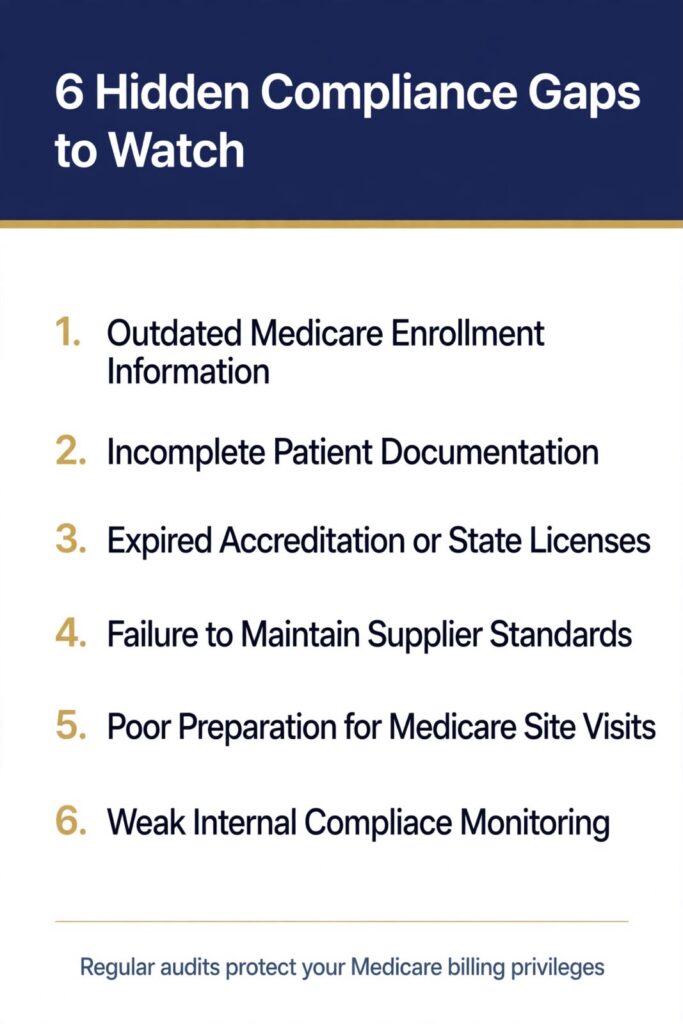
Without ongoing compliance management, businesses can expose themselves to claim denials and potential revocation of billing privileges.
2. Underestimating Medicare Reimbursement Challenges
Medicare billing requires accurate coding, appropriate documentation, and compliance with coverage policies.
New suppliers may experience reimbursement difficulties when they fail to understand:
- HCPCS coding and product classifications
- Medicare coverage and medical necessity requirements
- Documentation supporting claims
- Prior authorization requirements where applicable
- Claim submission and follow-up procedures
A strong revenue cycle management process helps suppliers identify billing problems, reduce avoidable denials, and maintain more predictable cash flow.
3. Expanding Without Understanding Compliance Requirements
Business expansion can create new opportunities, but opening additional locations or introducing new product categories without proper planning can create compliance risks.
DME suppliers should understand the accreditation, licensing, enrollment, and reporting requirements that apply to each location and product category.
Before expanding, owners should verify applicable requirements with their accreditation organization and Medicare enrollment contractor.
4. Ignoring Audits and Documentation Readiness
Some DME suppliers only organize their records when an audit or survey is approaching. This reactive approach can create unnecessary pressure and expose documentation gaps.
Businesses should maintain organized records throughout the year, including:
- Patient intake and delivery documentation
- Physician orders and medical necessity records
- Billing and reimbursement information
- Employee training records
- Complaint and incident documentation
- Accreditation and licensing records
Maintaining audit-ready documentation makes it easier to respond to information requests and identify weaknesses early.
5. Operating Without a Clear Business Strategy
A Medicare-enrolled DME supplier also needs a realistic business model. Focusing only on acquiring patients or increasing product sales without understanding operating costs can damage profitability.
Business owners should evaluate product demand, supplier relationships, inventory expenses, reimbursement timelines, staffing needs, and customer acquisition costs.
A clear business strategy helps prevent unnecessary spending and supports informed growth decisions.
Practical Strategies to Protect Your DME Business
Avoiding post-enrollment mistakes requires a structured approach that connects compliance with everyday business operations.
Establish a Proactive Compliance Program
Develop a compliance framework that assigns responsibilities, documents internal procedures, and establishes regular reviews.
Monitor changes to Medicare requirements and ensure employees understand their responsibilities.
Strengthen Revenue Cycle Management
Review claims before submission, track unpaid reimbursements, investigate denials, and identify repeated billing errors.
An organized billing workflow can help reduce revenue interruptions and improve financial visibility.
Maintain Accreditation and Licensing
Keep accreditation, state licenses, enrollment records, and other required documentation current.
When changing ownership, locations, or product offerings, review applicable reporting and accreditation requirements before making operational changes.
Improve Customer Experience and Service Quality
Patient satisfaction plays an important role in building a reliable DME business.
Suppliers should focus on timely equipment delivery, clear communication, complaint resolution, and responsive customer support.
Consistent service quality can strengthen business reputation and encourage long-term customer relationships.
Consider Professional DME Business Consulting
DME consulting can help suppliers identify operational weaknesses and develop practical solutions.
Experienced consultants may assist with Medicare compliance, accreditation preparation, billing workflows, enrollment updates, documentation management, and business development.
Professional guidance can be particularly valuable for new suppliers navigating complex industry requirements.
Building Long-Term Success in the DME Industry
The most successful DME suppliers understand that business growth and regulatory compliance must work together.
Rather than focusing exclusively on Medicare approval, owners should build systems that support accurate billing, efficient operations, financial stability, and consistent patient care.
A proactive approach helps businesses reduce preventable risks, improve operational performance, and establish a stronger foundation for long-term growth.
Frequently Asked Questions
What is the biggest reason DME businesses fail?
Poor financial planning, billing problems, compliance gaps, and weak operational management are common reasons DME businesses struggle after Medicare enrollment.
Can a DME business lose Medicare billing privileges after approval?
Yes. Medicare billing privileges can be revoked when a supplier fails to meet applicable enrollment and supplier requirements, including required accreditation and other compliance obligations.
How can new DME suppliers reduce Medicare claim denials?
Suppliers should verify beneficiary eligibility, understand coverage policies, use accurate HCPCS codes, maintain complete documentation, and review claims before submission.
Is DME accreditation important after Medicare enrollment?
Yes. Applicable DMEPOS suppliers must maintain required accreditation and meet CMS quality standards to retain Medicare billing privileges.
Should DME suppliers hire a compliance consultant?
Professional consulting may help suppliers strengthen compliance programs, prepare for accreditation surveys, improve documentation, and identify operational risks.
What should a DME business focus on after Medicare approval?
The main priorities should include compliance management, accurate billing, cash flow planning, inventory control, employee training, and patient service quality.
Conclusion
Medicare enrollment opens the door to operating a DME business, but long-term success depends on what happens afterward. Suppliers who overlook compliance, underestimate reimbursement challenges, or expand without proper planning can face expensive setbacks.
By investing in strong operational systems, maintaining accreditation, improving billing accuracy, and seeking professional guidance when needed, DME owners can avoid common mistakes and build a more sustainable business in the competitive US healthcare market.