
DMEPOS accreditation is an important step for suppliers that provide durable medical equipment, prosthetics, orthotics, and supplies to Medicare beneficiaries. For new suppliers, understanding the accreditation timeline helps with business planning, Medicare enrollment, document preparation, and compliance.
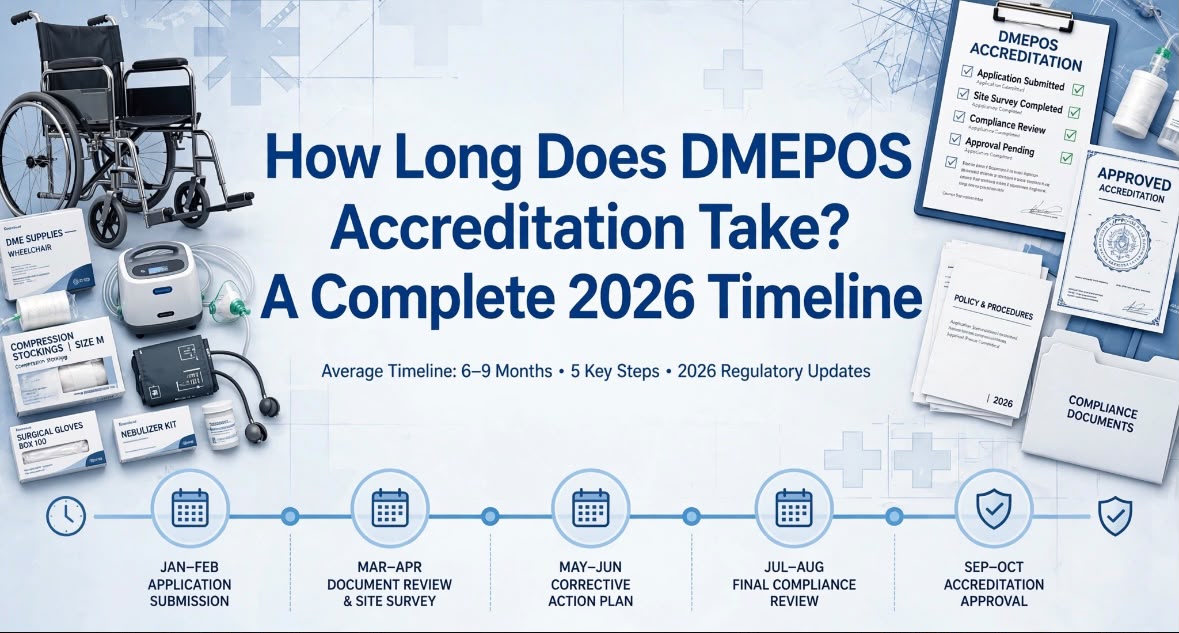
How long does DMEPOS accreditation take in 2026? The process can take several weeks to a few months, depending on the supplier’s readiness, documentation, accreditation organization, and whether corrective actions are required. Accreditation is only one part of the overall process; Medicare enrollment and other applicable requirements may add additional time before a supplier can begin billing Medicare.
This guide explains the DMEPOS accreditation timeline, the main steps involved, common causes of delays, and practical ways to prepare for a smoother process.
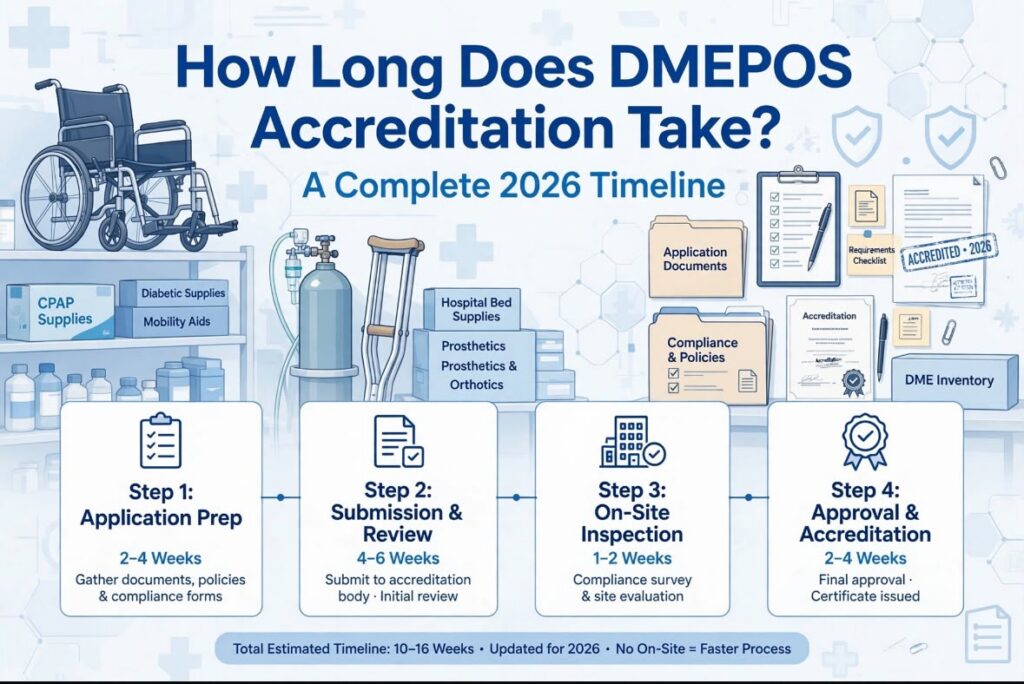
How Long Does DMEPOS Accreditation Take in 2026?
DMEPOS accreditation does not have one universal completion time for every supplier. The timeline depends on the business’s current compliance status, the type of equipment or services offered, the availability of required records, and the accreditation organization’s scheduling and review procedures.
For planning purposes, suppliers should allow several weeks to a few months for accreditation preparation and review. This is a planning estimate, not an official processing guarantee.
Estimated DMEPOS Accreditation Timeline
- Initial preparation: Organizing business documents, policies, and procedures.
- Application submission: Selecting an appropriate accrediting organization and submitting the required information.
- Survey scheduling: Coordinating the accreditation survey or assessment.
- Compliance review: Evaluating whether the supplier meets applicable quality and operational standards.
- Corrective actions, if needed: Addressing identified deficiencies and submitting supporting evidence.
- Final decision: Receiving the accreditation organization’s determination after the required review is complete.
The actual duration can vary significantly. Suppliers should confirm current timelines and survey requirements directly with their chosen accrediting organization.
What Is DMEPOS Accreditation?
DMEPOS stands for Durable Medical Equipment, Prosthetics, Orthotics, and Supplies. Accreditation evaluates whether a supplier meets applicable quality standards for its operations and the services it provides.
For suppliers subject to Medicare’s accreditation requirements, accreditation is generally an important prerequisite for Medicare enrollment or continued participation, subject to applicable exceptions.
Why Is DMEPOS Accreditation Important?
Accreditation helps suppliers demonstrate that they have appropriate procedures for serving beneficiaries and managing their operations.
Key benefits include:
- Demonstrating compliance with applicable quality standards.
- Establishing documented business and operational procedures.
- Supporting applicable Medicare supplier enrollment requirements.
- Improving staff accountability and recordkeeping.
- Identifying compliance gaps before they create larger problems.
Accreditation alone does not guarantee Medicare enrollment, approval to bill, or reimbursement.
Step-by-Step DMEPOS Accreditation Timeline
Step 1: Prepare Your Business and Documentation
Estimated planning time: 1–3 weeks
Preparation is one of the most important stages. Before applying, suppliers should review their business operations and identify any missing documentation.
Common preparation tasks include:
- Reviewing business registration and ownership information.
- Confirming applicable state and local licensing requirements.
- Preparing written policies and procedures.
- Organizing employee training and qualification records.
- Establishing complaint-handling and incident-reporting procedures.
- Reviewing beneficiary service, delivery, and recordkeeping processes.
- Confirming applicable insurance and location requirements.
The preparation period may be shorter for an established supplier with complete documentation or longer for a new business building its compliance program from the beginning.
Step 2: Choose an Approved Accreditation Organization
Estimated planning time: Several days to 2 weeks
Suppliers should identify an accreditation organization authorized to accredit the relevant DMEPOS supplier type and confirm that it can evaluate the services they intend to provide.
Before selecting an organization, compare:
- Accreditation scope and eligibility requirements.
- Application and survey procedures.
- Current fees and payment terms.
- Survey availability.
- Documentation requirements.
- Procedures for correcting deficiencies.
Do not select an organization based on speed alone. Confirm that its accreditation is appropriate for your supplier category and Medicare requirements.
Step 3: Submit the Accreditation Application
Estimated planning time: Several days to 2 weeks
Once the required documents are ready, the supplier submits the application and any supporting information requested by the accrediting organization.
The application may require details about ownership, business locations, services, personnel, licenses, and operating procedures.
Incomplete information can delay the review. Carefully check every application field, ensure that supporting documents are current, and respond promptly to requests for clarification.
Step 4: Complete the Accreditation Survey
Estimated planning time: Several weeks, depending on scheduling
The accrediting organization reviews the supplier’s compliance with applicable standards. The assessment process and format depend on the organization, supplier category, and current requirements.
During the survey or assessment, the organization may review:
- Written policies and procedures.
- Employee training and competency records.
- Beneficiary complaint procedures.
- Equipment handling and delivery documentation.
- Required business records.
- Quality assurance practices.
- Applicable physical location and operational requirements.
Suppliers should make sure that their documented procedures match their actual business practices. A policy document alone may not demonstrate compliance if staff cannot follow the process in daily operations.
Step 5: Correct Any Identified Deficiencies
Estimated planning time: A few days to several weeks or longer
If the survey identifies deficiencies, the supplier may need to submit a corrective action plan and evidence that the issues have been resolved.
Examples of possible corrective actions include:
- Updating incomplete policies.
- Providing missing staff training records.
- Improving complaint documentation.
- Correcting inconsistencies in business records.
- Strengthening quality assurance procedures.
The time required depends on the seriousness of the findings, the work needed to address them, and the accrediting organization’s review process.
Suppliers should follow the organization’s instructions and deadlines rather than assume that a fixed correction period applies to every case.
Step 6: Receive the Accreditation Decision
Estimated planning time: Depends on review completion
After the required assessment and any corrective-action review, the accrediting organization determines whether the supplier meets the applicable standards.
The supplier should retain its accreditation records and confirm the accreditation status, effective dates, scope, and any ongoing obligations.
If additional information is requested, responding accurately and promptly can help avoid unnecessary delays.
What Can Delay DMEPOS Accreditation?
Several issues can extend the accreditation timeline.
Incomplete Documentation
Missing policies, outdated licenses, incomplete training records, or inconsistent business information can lead to requests for additional documentation.
Limited Survey Availability
Survey scheduling depends on the accrediting organization, location, and assessment requirements. Delays may occur when available appointments are limited.
Unprepared Staff
Employees should understand the procedures relevant to their responsibilities. Unfamiliarity with complaint handling, recordkeeping, delivery documentation, or quality procedures may reveal compliance gaps.
Corrective Action Requirements
Deficiencies identified during the assessment may require additional work and a follow-up review before a decision can be made.
Business-Specific Requirements
Suppliers offering different product categories or operating across multiple locations may face additional documentation, licensing, or assessment requirements.
How to Speed Up the DMEPOS Accreditation Process
Although no supplier can guarantee a specific approval date, careful preparation can reduce avoidable delays.
Use a Compliance Checklist
Create a checklist covering required policies, business records, employee training, licenses, insurance, and operational procedures applicable to your supplier type.
Review Your Documents Before Applying
Check that names, addresses, ownership information, dates, and other details are consistent across all relevant documents.
Prepare Employees for the Survey
Ensure that employees understand the procedures they are expected to follow and can locate the records relevant to their duties.
Respond Quickly to Requests
Monitor communications from the accrediting organization and provide complete, accurate responses within the requested deadlines.
Seek Professional Guidance When Needed
A DMEPOS compliance consultant may help identify documentation gaps, organize policies, and prepare the business for assessment. However, consultants cannot guarantee accreditation or override the accrediting organization’s requirements.
DMEPOS Accreditation Timeline Checklist for 2026
Before starting the process, review the following checklist:
- ☐ Confirm whether accreditation is required for your supplier type.
- ☐ Identify an appropriate, currently authorized accrediting organization.
- ☐ Review applicable licensing and location requirements.
- ☐ Prepare policies and procedures.
- ☐ Organize employee training and qualification records.
- ☐ Check business documentation for consistency.
- ☐ Submit the application and required supporting documents.
- ☐ Schedule and prepare for the survey.
- ☐ Address any identified deficiencies.
- ☐ Confirm accreditation status and applicable Medicare enrollment requirements.
Frequently Asked Questions
1. How long does DMEPOS accreditation take?
The process may take several weeks to a few months, depending on preparation, documentation, survey availability, and corrective actions. Confirm current processing estimates with the selected accrediting organization.
2. Can I get DMEPOS accreditation in 30 days?
It may be possible in some circumstances, but it is not guaranteed. A supplier with complete documentation and an available survey appointment may progress faster than a new or unprepared business.
3. Is DMEPOS accreditation required for Medicare billing?
Many DMEPOS suppliers must meet accreditation requirements to enroll in or maintain participation in Medicare, subject to applicable exemptions and supplier-specific rules. Accreditation alone does not authorize billing.
4. What documents are needed for DMEPOS accreditation?
Requirements vary, but commonly requested records include business information, applicable licenses, written policies, staff training records, operational documentation, and quality-related records.
5. What happens if a supplier fails the accreditation survey?
The accrediting organization will explain the findings and any applicable corrective-action requirements. The supplier should follow the specified procedures and deadlines. The outcome and additional timeline depend on the deficiencies and the organization’s rules.
6. Can I apply for Medicare enrollment before accreditation is complete?
The appropriate sequence depends on current Medicare enrollment instructions and the supplier’s circumstances. Confirm the applicable requirements with the Medicare enrollment contractor and the accrediting organization before submitting applications or assuming that enrollment can be finalized.
7. Does DMEPOS accreditation need to be renewed?
Accreditation is subject to continuing requirements and applicable renewal or reaccreditation procedures. Suppliers should confirm their accreditation term, monitoring obligations, and renewal deadlines with their accrediting organization.
8. Can a DMEPOS consultant help reduce delays?
Yes. A qualified consultant may help organize documentation, review policies, identify compliance gaps, and prepare staff. However, the accrediting organization controls its assessment and decision.
Final Thoughts
DMEPOS accreditation in 2026 requires careful planning, complete documentation, and preparation for the applicable compliance assessment. Although many suppliers should plan for a process lasting several weeks to a few months, the exact timeline depends on individual circumstances and the accrediting organization’s procedures.
Start by confirming the requirements for your supplier category, preparing your compliance documentation, and checking current survey availability. A structured approach can help reduce preventable delays and make the accreditation process more manageable.