
The healthcare industry continues to grow rapidly across the United States, creating significant opportunities for entrepreneurs interested in the medical supply sector. With an aging population, increased demand for home healthcare, and growing reliance on medical equipment outside traditional healthcare facilities, starting a medical supply company can be both rewarding and profitable.
However, launching a successful business in this industry involves much more than purchasing products and finding customers. To legally operate and serve patients, you must understand licensing requirements, compliance standards, accreditation processes, and Medicare regulations.
In this guide, we’ll walk you through everything you need to know to Become a Licensed Medical Supply Company, including the requirements for Durable Medical Equipment (DME) providers, business setup, accreditation, and ongoing compliance.
What Is a Medical Supply Company?
A medical supply company provides healthcare products and equipment to patients, healthcare facilities, clinics, hospitals, nursing homes, and home healthcare providers.
These companies typically distribute:
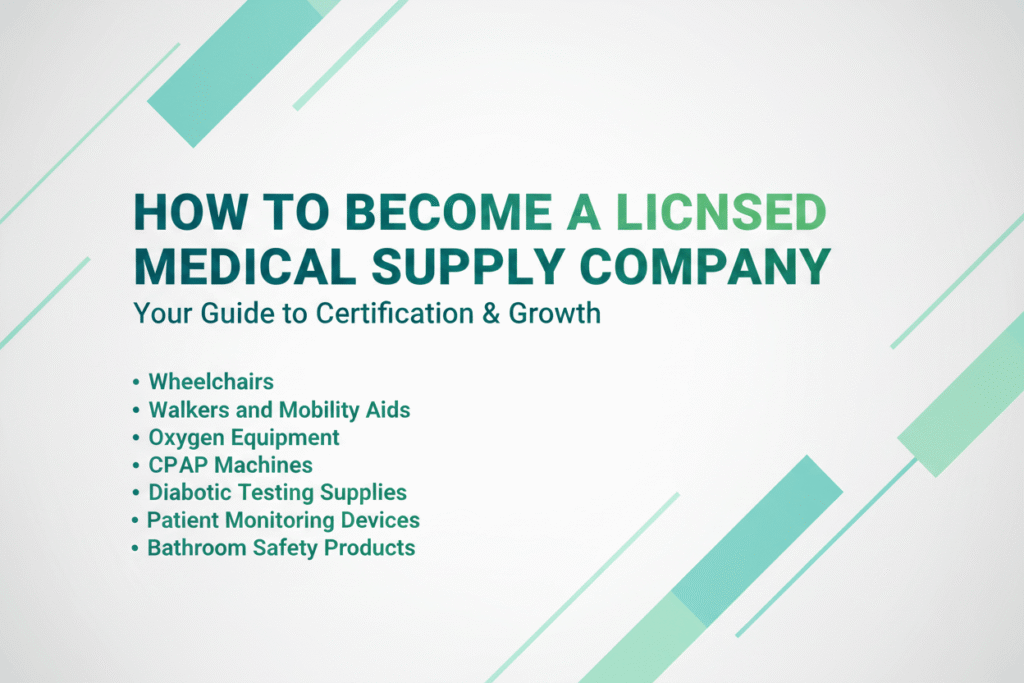
Many businesses in this industry operate as Durable Medical Equipment (DME) Providers, supplying equipment that can withstand repeated use and is medically necessary for patients.
Why Start a Medical Supply Company?
The U.S. healthcare market presents strong opportunities for new DME businesses.
According to federal healthcare data, millions of Americans rely on home medical equipment every year due to chronic illnesses, disabilities, recovery needs, and aging-related conditions.
Benefits of entering the industry include:
- Growing demand for home healthcare services
- Recurring revenue opportunities
- Medicare and insurance reimbursement options
- Ability to serve both healthcare facilities and individual patients
- Long-term industry stability
However, success requires proper licensing, accreditation, and regulatory compliance.
Step 1: Create Your Business Structure
Before applying for any licenses or certifications, establish your company legally.
Common business structures include:
LLC (Limited Liability Company)
Most new DME companies choose an LLC because it provides:
- Personal liability protection
- Flexible taxation
- Simpler administration
Corporation
A corporation may be suitable for businesses planning to attract investors or operate multiple locations.
Sole Proprietorship
Generally not recommended due to limited liability protection.
Additional Setup Requirements
You’ll also need:
- Employer Identification Number (EIN)
- Business bank account
- Business insurance
- State registration
- Operating agreements and legal documents
Step 2: Obtain Required State Licenses
Licensing requirements vary by state.
Many states require medical supply companies to obtain:
- Medical Device Distributor License
- Home Medical Equipment License
- DME Provider License
- Sales Tax Permit
- Local Business License
Failure to obtain proper licensing can result in fines, application delays, or denial of Medicare enrollment.
Before opening your doors, review all state-specific regulations and healthcare licensing requirements.
Step 3: Secure a Physical Business Location
To become a licensed medical supply company, you’ll need a compliant physical location.
Your facility should include:
- Dedicated office space
- Secure inventory storage
- Customer service area
- Business signage
- Phone and internet service
- Compliance documentation storage
Many accreditation organizations and government agencies will inspect your facility before approval.
Step 4: Develop Policies and Procedures
One of the most overlooked requirements for new DME businesses is documentation.
You’ll need written policies covering:
Patient Services
- Equipment delivery
- Product setup
- Customer education
- Complaint handling
Compliance Programs
- HIPAA privacy standards
- Fraud prevention
- Billing compliance
- Record retention
Operational Procedures
- Inventory management
- Equipment maintenance
- Staff responsibilities
- Emergency preparedness
Proper documentation demonstrates professionalism and regulatory readiness.
Step 5: Obtain DME Accreditation
Accreditation is one of the most important steps for businesses planning to bill Medicare.
Accreditation confirms that your company meets recognized healthcare quality standards.
Several accrediting organizations evaluate:
- Business operations
- Patient care practices
- Documentation
- Equipment management
- Compliance programs
Benefits of accreditation include:
- Medicare eligibility
- Increased credibility
- Competitive advantage
- Improved operational standards
Without accreditation, many companies cannot participate in Medicare reimbursement programs.
Step 6: Enroll as a Medicare Supplier
For many Durable Medical Equipment (DME) Providers, Medicare billing represents a major revenue source.
After accreditation, you’ll typically proceed with Medicare supplier enrollment.
This process includes:
- Completing supplier enrollment applications
- Providing business documentation
- Passing site inspections
- Meeting supplier standards
- Submitting ownership disclosures
Approval allows qualified suppliers to bill Medicare for covered equipment and services.
Step 7: Understand Medicare Supplier Standards
Medical supply companies must maintain compliance with Medicare supplier standards.
These standards cover:
- Business operations
- Patient interactions
- Documentation
- Advertising practices
- Equipment delivery
- Complaint resolution
Maintaining compliance is essential for preserving enrollment status and avoiding penalties.
Step 8: Build Relationships With Referral Sources
A successful DME company depends on a steady stream of referrals.
Potential referral sources include:
- Physicians
- Hospitals
- Home health agencies
- Rehabilitation centers
- Assisted living facilities
- Skilled nursing facilities
Building professional relationships can significantly increase business growth.
Effective Referral Strategies
- Educational outreach
- Networking events
- Provider partnerships
- Community healthcare involvement
- Digital marketing campaigns
Step 9: Implement a Compliance Program
Healthcare regulations continue to evolve, making compliance a top priority.
Your compliance program should address:
- HIPAA requirements
- Medicare regulations
- Billing practices
- Patient privacy
- Internal audits
- Employee training
Regular compliance reviews help reduce risk and improve operational efficiency.
Step 10: Invest in Marketing and Business Growth
Once licensed and operational, focus on growing your brand.
Effective marketing strategies include:
Search Engine Optimization (SEO)
Ranking for local healthcare searches can generate qualified leads.
Examples:
- DME provider near me
- Medical supply company in [city]
- Home medical equipment supplier
Website Optimization
Your website should include:
- Services pages
- Product categories
- Contact information
- Referral forms
- Educational resources
Reputation Management
Encourage satisfied customers to leave reviews and testimonials.
Positive reviews build trust and improve local visibility.
Common Challenges New Medical Supply Companies Face
Many entrepreneurs underestimate the complexity of the DME industry.
Common obstacles include:
- Licensing delays
- Accreditation preparation
- Medicare enrollment issues
- Insurance credentialing
- Compliance management
- Inventory control
Working with experienced consultants can help streamline the process and avoid costly mistakes.
Why Work With AllStateDMEConsultants?
Starting a DME business involves multiple regulatory requirements, documentation processes, and compliance obligations.
At All State DME Consultants, we help entrepreneurs and healthcare organizations navigate every stage of the process, including:
- Business formation guidance
- State licensing assistance
- Accreditation preparation
- Medicare enrollment support
- Compliance consulting
- Policy and procedure development
- Ongoing operational guidance
Our team helps simplify the journey so you can focus on building a successful medical supply business.
Final Thoughts
Learning how to Become a Licensed Medical Supply Company requires careful planning, regulatory compliance, and a clear understanding of the healthcare industry. From establishing your business structure and obtaining state licenses to securing accreditation and Medicare enrollment, every step plays a critical role in your long-term success.
The demand for home healthcare and medical equipment continues to grow, making this an excellent time to enter the industry. By following the proper process and working with experienced professionals, you can build a compliant, profitable, and sustainable DME business.
Ready to Start Your DME Business?
All State DME Consultants provides expert guidance for entrepreneurs and healthcare organizations looking to launch or expand a medical supply company. Contact our team today to learn how we can help you navigate licensing, accreditation, Medicare enrollment, and compliance with confidence.
FAQs
Q1: What is a licensed medical supply company?
A licensed medical supply company is a business authorized to sell or distribute medical equipment and supplies while meeting state and federal regulatory requirements.
Q2: Do I need accreditation to become a DME provider?
Yes. Accreditation is generally required before enrolling as a Medicare DME supplier and billing Medicare for covered products.
Q3: How long does it take to start a DME company?
The process can take several months depending on state licensing requirements, accreditation timelines, and Medicare enrollment processing.
Q4: What products can DME providers sell?
DME providers commonly supply wheelchairs, walkers, hospital beds, oxygen equipment, CPAP machines, diabetic supplies, and mobility aids.
Q5: Can I start a medical supply company from home?
Most states and Medicare regulations require a compliant business location that meets supplier and accreditation standards