
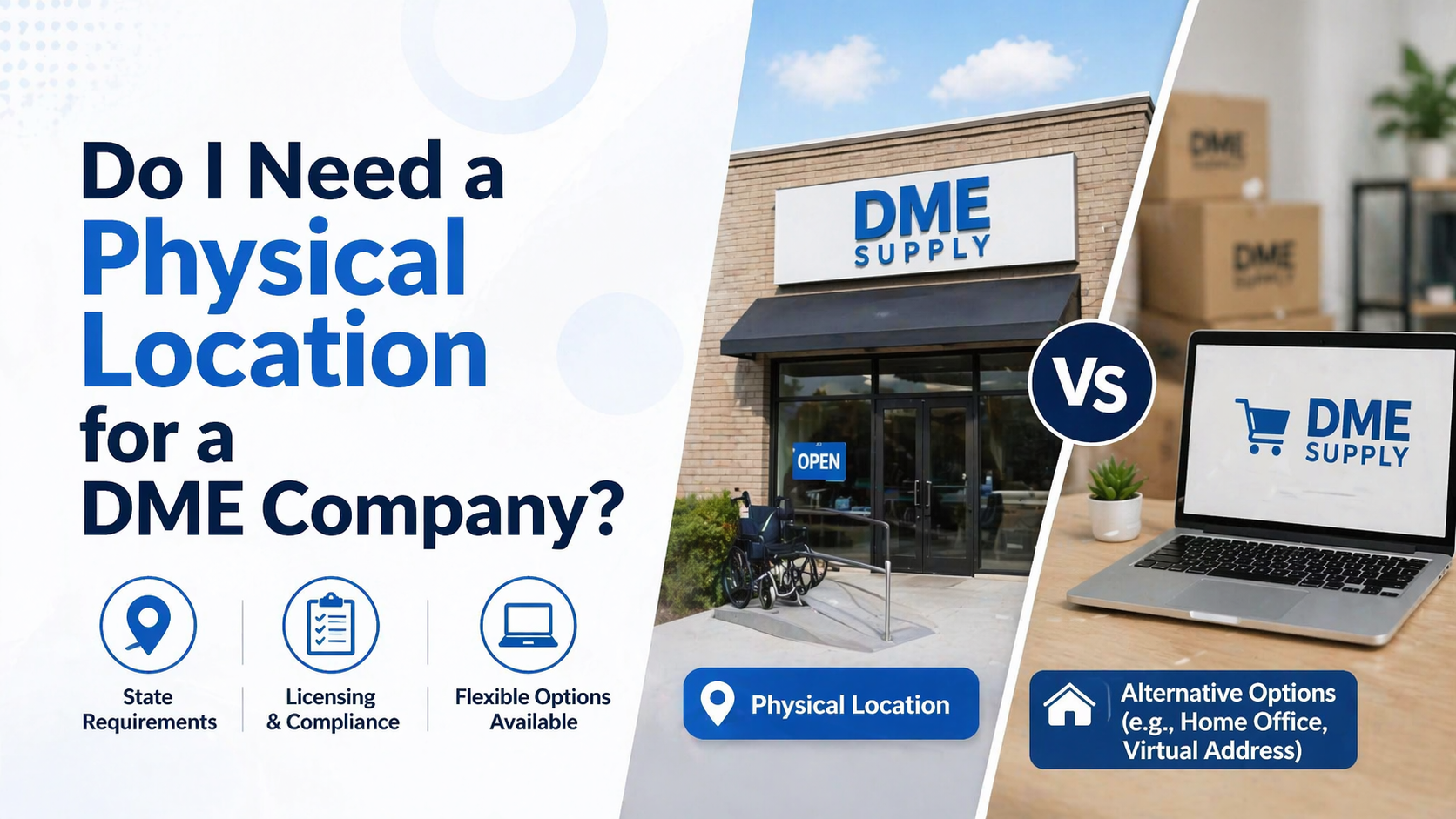
Starting a DME business sounds simple at first. You find products, connect with patients, and begin billing. But many new owners hit one big question early. Do you really need a physical setup to run everything? The answer is not always obvious. Regulations, compliance rules, and patient trust all play a role. If you plan to work with Medicare or insurance providers, requirements become stricter. This is where understanding the physical location for a DME company becomes essential. It is not just about having a place. It is about meeting standards that keep your business active and compliant. Before you invest or skip this step, you need a clear idea of what is required and why it matters.
What Does a Physical Location Mean for a DME Company?
A physical location is more than just an office address. It is a registered place where your business operates. This space must be accessible, organized, and suitable for handling medical equipment. In most cases, it is where inventory is stored, records are maintained, and inspections take place.
For businesses planning to bill Medicare, this location must meet strict guidelines. It should be a real commercial space, not just a virtual office. Inspectors may visit to confirm that your business is active and functioning properly.
The idea behind this requirement is simple. Authorities want to ensure that patients receive safe and reliable equipment. A verified location adds trust and accountability to your business operations.
Do You Need a Physical Location for a DME Company to Get Approved?
If you plan to enroll as a Medicare supplier, the answer is yes. A physical location for a DME company is usually required to complete the application process. Medicare suppliers must follow supplier standards. One of the key standards includes having a legitimate business address.
This location must be open during posted business hours. It should also have clear signage and a working phone line. Inspectors may check your space before approval. If your location does not meet expectations, your application can be denied.
Even outside Medicare, many states follow similar rules. Licensing bodies often require proof of a physical address. Insurance companies also prefer working with businesses that have a stable presence.
This is where DME business location requirements come into play. These rules help maintain quality and prevent fraud. Without meeting them, it becomes difficult to operate legally and grow your business.
What Are the Key Requirements for a DME Business Location?
A DME location must meet certain standards to stay compliant. These requirements are practical and focused on patient safety.
First, the space must be commercial. Residential addresses are rarely accepted unless specific conditions are met. The location should also be accessible to the public during working hours.
Second, you need proper storage. Medical equipment must be kept in a clean and organized environment. This ensures product safety and prevents damage.
Third, documentation must be handled properly. Patient records, billing details, and compliance documents should be stored securely.
Fourth, the location should reflect an active business. This includes signage, business hours, and staff availability. Inspectors look for signs that your operations are real and consistent.
Finally, safety standards must be followed. Equipment should be stored according to guidelines, and the space should meet basic health and safety rules.
Meeting these requirements may seem strict, but they protect both your business and your customers.
Can You Run a DME Company Without a Physical Location?
Some business owners look for ways to operate without a physical setup. While this might work for certain industries, DME is different. Regulations make it difficult to run a fully remote operation, especially if you plan to bill Medicare.
In limited cases, small businesses may use shared spaces or compliant home offices. However, these setups must still meet inspection standards. They should function like a real business location, not just a mailing address.
Running without a proper location can create serious risks. Your application may be rejected, or your license could be revoked later. It can also affect your credibility with patients and partners.
Instead of avoiding this requirement, many successful businesses start with a small but compliant space. This keeps costs manageable while meeting legal standards.
Final Thoughts
A physical setup is not just a formality. It is a key part of building a reliable DME business. From compliance to patient trust, every aspect connects back to your location.
If you plan to grow and work with insurance providers, securing the right space is a smart move. The physical location for a DME company helps you meet regulations, pass inspections, and build credibility.
Take time to understand the rules before you start. A well-prepared location can save you from delays and costly mistakes. In the long run, it sets a strong foundation for your business success.