
Start a DME Business in Texas (2026 Complete Guide)
Starting a DME business in Texas can be a highly profitable opportunity for entrepreneurs entering the healthcare industry. With the growing demand for home healthcare services, aging populations, and chronic care support, the durable medical equipment industry continues to expand rapidly across the United States.
However, many new business owners underestimate the complexity of launching a successful DME company. From understanding Texas DME license requirements and Medicare enrollment to inventory planning, accreditation, credentialing, and compliance, there are several important steps involved before opening your business.
If you are wondering how to start a DME business in Texas, this guide will walk you through everything you need to know, including licensing requirements, startup costs, accreditation, insurance credentialing, inventory planning, and operational setup.
At All State DME Consultants, we help entrepreneurs nationwide with DME startup consulting, accreditation, licensing, Medicare enrollment, credentialing, and complete turnkey DME business solutions.
Quick Answer: How to Start a DME Business in Texas
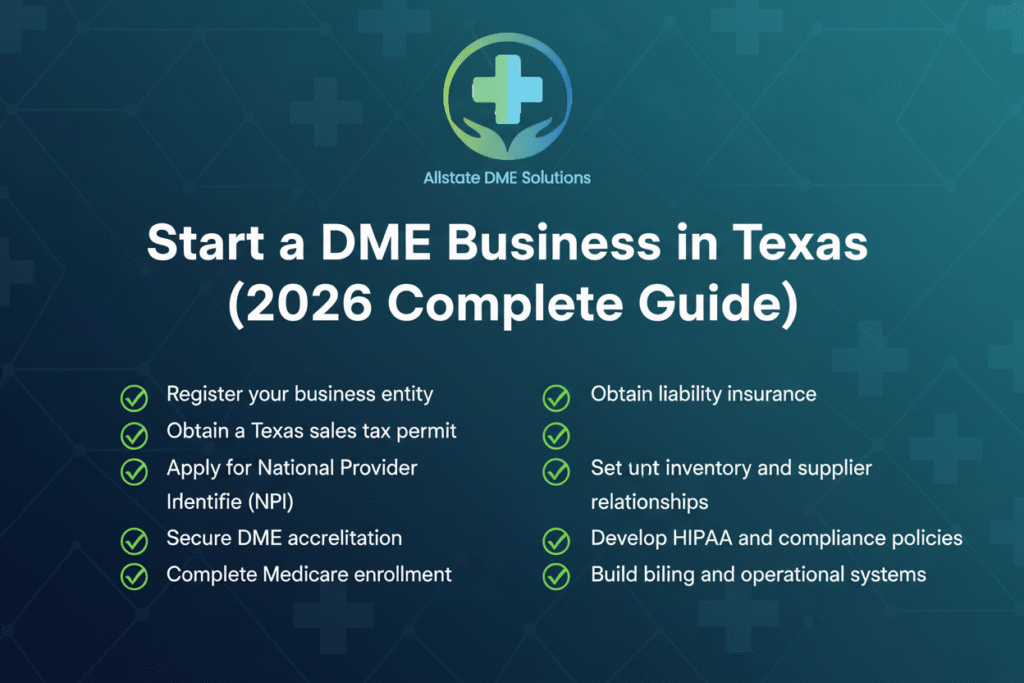
To start a DME company in Texas, you typically need to:
- Register your business entity
- Obtain a Texas sales tax permit
- Apply for a National Provider Identifier (NPI)
- Secure DME accreditation
- Complete Medicare enrollment
- Obtain liability insurance
- Set up inventory and supplier relationships
- Develop HIPAA and compliance policies
- Build billing and operational systems
Depending on your business model and product categories, the total cost to start a DME company can range from $15,000 to over $150,000.
Why Start a DME Business in Texas?
Texas is one of the largest healthcare markets in the United States. The growing elderly population, expanding home healthcare industry, and increasing demand for medical equipment make Texas an excellent state for starting a DME business.
A successful DME business may provide products such as:
- Wheelchairs
- CPAP machines
- Hospital beds
- Oxygen equipment
- Walkers
- Orthopedic supplies
- Mobility scooters
- Diabetic supplies
Many entrepreneurs enter the DME industry because of recurring revenue opportunities through Medicare, Medicaid, and private insurance reimbursements.
Understanding Texas DME License Requirements
One of the most common questions entrepreneurs ask is:
Do You Need a Texas DME License?
Texas does not issue a single standalone “DME license” like some states. However, DME companies in Texas must still meet several legal, operational, and Medicare compliance requirements before serving patients.
Texas DME license requirements often include:
- Business registration
- Tax permits
- Medicare enrollment
- Accreditation approval
- Insurance credentialing
- HIPAA compliance
- Supplier standards compliance
Depending on your products and services, additional permits or certifications may also be required.
Because regulations frequently change, working with experienced DME consultants can help reduce delays and compliance risks.
Step-by-Step Guide to Starting a DME Business in Texas
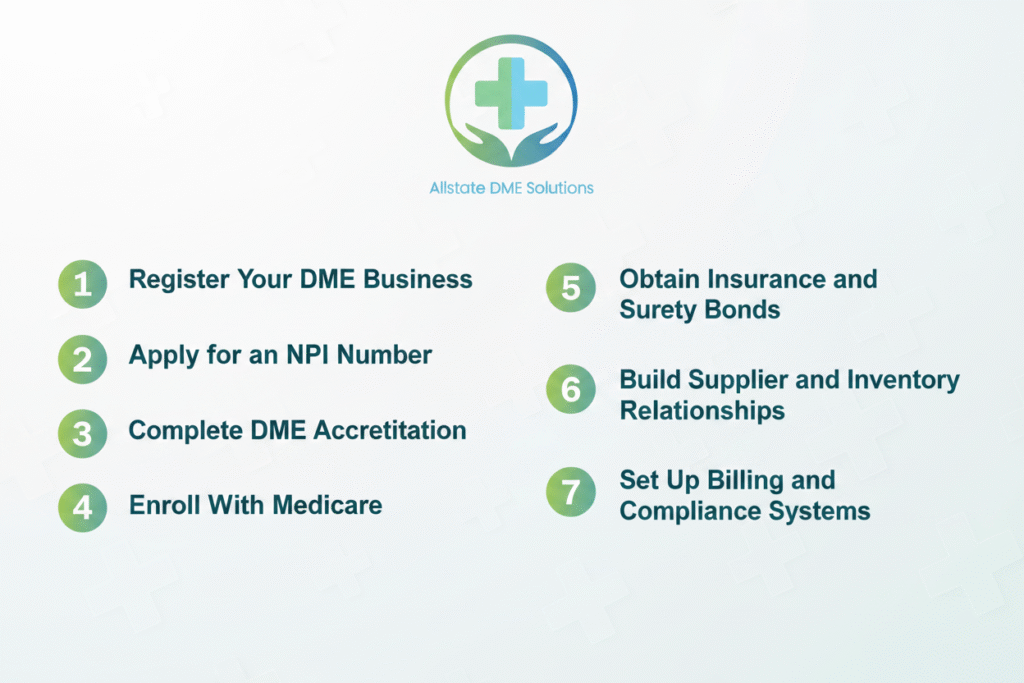
1. Register Your DME Business
The first step is forming your legal business entity.
Most DME companies choose structures such as:
- LLC
- Corporation
- Partnership
You’ll also need:
- EIN number
- Business bank account
- Texas sales tax permit
- Business operating agreements
Choosing the right business structure can help protect your assets and simplify tax planning.
2. Apply for an NPI Number
A National Provider Identifier (NPI) is required for billing Medicare and insurance companies.
The NPI is used to identify your DME business during healthcare transactions and claims processing.
Without an NPI number, you cannot complete Medicare enrollment.
3. Complete DME Accreditation
Accreditation is one of the most important steps when starting a DME company.
Most DME businesses seeking Medicare reimbursement must obtain accreditation through an approved accrediting organization.
Accreditation evaluates:
- Business operations
- Patient policies
- HIPAA compliance
- Inventory management
- Safety standards
- Quality assurance procedures
Preparing for accreditation can be challenging without proper guidance, especially for first-time DME business owners.
4. Enroll With Medicare
After accreditation, you must complete Medicare enrollment to become a Medicare-approved DME supplier.
This process involves:
- CMS applications
- Background checks
- Site inspections
- Surety bond requirements
- Compliance documentation
Many startups experience delays during Medicare enrollment because of incomplete paperwork or missing compliance policies.
5. Obtain Insurance and Surety Bonds
Operating a DME business requires multiple forms of insurance protection.
Common coverage includes:
- General liability insurance
- Professional liability insurance
- Workers’ compensation
- Product liability coverage
Many DME suppliers also need a Medicare surety bond before enrollment approval.
6. Build Supplier and Inventory Relationships
Your inventory strategy will significantly impact your startup costs and profitability.
DME businesses often work with suppliers for:
- Mobility equipment
- Respiratory products
- Orthopedic supplies
- Home healthcare equipment
- Diabetic products
Proper supplier relationships help improve inventory pricing, reimbursement margins, and operational stability.
7. Set Up Billing and Compliance Systems
Efficient billing systems are essential for long-term success.
Your DME business may require:
- Billing software
- Inventory management systems
- HIPAA-compliant documentation
- Patient intake systems
- Claims processing workflows
Technology plays a major role in reducing billing errors and improving cash flow.
How Much Does It Cost to Start a DME Company?
One of the most searched questions is:
The cost to start a DME company can range from approximately $15,000 for smaller niche operations to over $150,000 for larger full-service DME providers.
Common Mistakes New DME Businesses Make
Many startups fail because they underestimate the complexity of the DME industry.
Common mistakes include:
- Ignoring compliance requirements
- Choosing the wrong product categories
- Poor billing systems
- Weak documentation processes
- Underestimating startup capital
- Failing accreditation inspections
- Incomplete Medicare applications
Avoiding these mistakes early can save significant time and money.
AI and Technology in the Modern DME Industry
AI and automation are rapidly changing the healthcare industry, including DME operations.
Modern DME businesses now use AI-powered systems for:
- Claims processing
- Inventory forecasting
- Patient communication
- Billing automation
- Customer support
- Workflow optimization
Businesses that integrate modern technology often improve operational efficiency and reduce administrative overhead.
Strong digital systems also help improve patient satisfaction and reimbursement management.
Marketing Strategies for DME Businesses
Building a successful DME company requires more than just accreditation and inventory.
You also need strong marketing strategies to attract referral sources and patients.
Effective DME marketing strategies include:
- Local SEO optimization
- Google Business Profile setup
- Referral partnerships
- Physician outreach
- Healthcare networking
- Paid advertising
- Social media marketing
- Content marketing
Healthcare-focused SEO is especially important because many patients and caregivers now search online for medical equipment providers.
Why Work With DME Consultants
Starting a DME business involves multiple complex steps including accreditation, licensing, Medicare enrollment, supplier setup, and compliance management.
Working with experienced DME consultants can help:
- Reduce delays
- Improve compliance
- Simplify accreditation
- Avoid costly mistakes
- Accelerate Medicare approval
- Improve operational setup
All State DME Consultants provides nationwide DME consulting services including:
- DME accreditation support
- Medicare enrollment
- DME startup consulting
- Compliance documentation
- Billing setup
- Policy development
- Turnkey DME business solutions
Our consultants help entrepreneurs successfully launch and grow compliant DME companies across the United States.
Final Thoughts
Starting a DME business in Texas can be a profitable long-term opportunity when approached strategically.
Understanding Texas DME license requirements, accreditation standards, Medicare enrollment rules, and startup costs is essential before launching your company.
Whether you are starting a small niche DME company or building a large medical equipment operation, proper planning, compliance, and operational systems will play a major role in your success.
If you are planning to start a DME company in Texas, working with experienced consultants can help simplify the process and reduce costly mistakes.
If you are planning to start a DME company in Texas, working with experienced consultants can help simplify the process, reduce costly mistakes, and accelerate your Medicare approval process. Contact today for expert guidance on DME accreditation, Medicare enrollment, compliance, licensing support, and complete turnkey DME business solutions across the United States.
FAQs
What are the Texas DME license requirements?
Texas does not issue one standalone DME license, but businesses must complete registration, accreditation, Medicare enrollment, insurance, and compliance requirements before operating legally.
How much does it cost to start a DME company?
Startup costs typically range from $15,000 to over $150,000 depending on inventory, accreditation, office setup, and operational goals.
Do I need accreditation to start a DME business?
Yes, accreditation is usually required if you want to bill Medicare and many insurance providers.
Is a DME business profitable?
Yes, DME businesses can be highly profitable when properly managed with strong billing systems, compliance processes, and referral relationships.
How long does Medicare enrollment take for a DME company?
The process may take several months depending on documentation accuracy, inspections, and compliance readiness.
Can I start a DME business from home?
Some DME businesses may initially operate with smaller office setups, but Medicare and accreditation requirements often require compliant commercial locations.