
DME Training and Consulting: Everything You Need to Know in 2026
The Durable Medical Equipment (DME) industry continues to grow as healthcare providers expand their services to meet increasing patient demand. Whether you’re start a new DME company, adding medical equipment to your existing practice, or looking to improve Medicare compliance, DME training and consulting can help you build a successful, compliant, and profitable business.
Many providers struggle with Medicare regulations, accreditation requirements, supplier enrollment, billing errors, documentation, and audit preparation. Professional DME consultants simplify the entire process by providing expert guidance, customized training, and ongoing support.
What Is DME Training and Consulting?
DME training and consulting is a professional service designed to educate and support healthcare providers, medical equipment suppliers, pharmacies, clinics, physicians, and entrepreneurs entering the Durable Medical Equipment industry.
These services provide practical knowledge and step-by-step guidance on every aspect of operating a compliant DME business.
Rather than learning through trial and error, providers receive expert instruction that helps them launch and manage their business correctly from day one.
Why DME Training Is Important
The healthcare industry is heavily regulated, and DME suppliers must comply with strict federal and state requirements.
Even small documentation or billing mistakes can result in:
- Medicare claim denials
- Payment delays
- Costly audits
- Financial penalties
- Loss of accreditation
- Supplier enrollment issues
Professional training helps healthcare providers understand these regulations before problems occur, saving both time and money.
What Does a DME Consultant Do?
A DME consultant works closely with healthcare organizations to improve operations, maintain compliance, and maximize profitability.
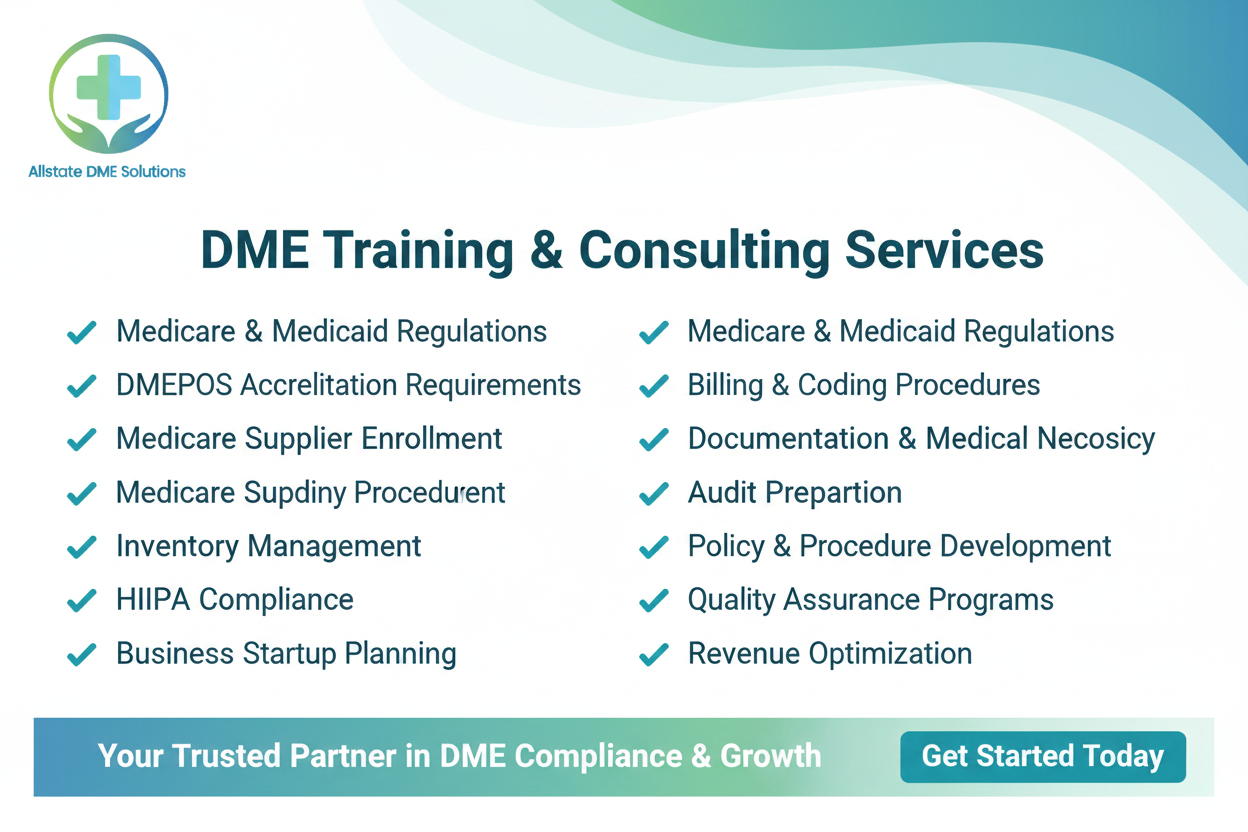
Services often include:
DME Business Startup Assistance
Consultants help entrepreneurs establish a new DME company by assisting with:
- Business formation
- Licensing requirements
- State-specific regulations
- Medicare enrollment
- Supplier registration
- Accreditation preparation
Medicare Billing Training
One of the most valuable services is teaching providers how to bill Medicare correctly.
Training includes:
- HCPCS coding
- Claim submission
- Medical documentation
- Prior authorization
- Billing compliance
- Appeals and denials management
Accurate billing helps reduce rejected claims while improving cash flow.
Accreditation Preparation
Most DME suppliers seeking Medicare reimbursement must obtain DMEPOS accreditation.
Consultants prepare providers by helping them:
- Develop policies and procedures
- Organize documentation
- Prepare for onsite surveys
- Meet CMS quality standards
- Maintain ongoing compliance
Compliance Audits
A consultant can review your existing operations to identify compliance risks before regulators or accreditation organizations do.
This proactive approach helps prevent expensive mistakes and keeps your business audit-ready.
Staff Training
Every employee involved in DME operations should understand compliance requirements.
Training programs often include:
- Intake procedures
- Documentation standards
- Billing workflows
- Customer service
- Equipment delivery
- Record management
- Medicare updates
A well-trained staff creates smoother operations and better patient experiences.
Who Needs DME Training and Consulting?
Professional consulting is beneficial for:
- New DME business owners
- Existing DME suppliers
- Independent pharmacies
- Home healthcare agencies
- Physician practices
- Medical clinics
- Rehabilitation centers
- Hospitals
- Respiratory equipment providers
- Orthotics and prosthetics suppliers
Whether you’re starting from scratch or expanding an established business, expert guidance helps reduce risk and improve efficiency.
Benefits of DME Training and Consulting
Stay Medicare Compliant
Healthcare regulations frequently change. Professional consultants help ensure your business remains compliant with current Medicare and CMS guidelines.
Increase Revenue
Accurate billing and proper documentation reduce claim denials, allowing providers to receive reimbursements faster and more consistently.
Reduce Costly Errors
Mistakes in coding, documentation, or enrollment can be expensive. Proper training minimizes these risks and protects your business.
Prepare for Accreditation
Accreditation surveys become significantly easier when your policies, procedures, and documentation are professionally organized.
Improve Operational Efficiency
Consultants help streamline workflows, improve staff performance, and eliminate unnecessary administrative delays.
Better Patient Care
When operational processes run smoothly, providers spend more time focusing on patients instead of paperwork and compliance issues.
What Topics Are Covered During DME Training?
Comprehensive DME training programs often include:
- Medicare supplier standards
- CMS regulations
- DMEPOS accreditation
- Medical documentation
- Billing and coding
- Inventory control
- Compliance management
- HIPAA requirements
- Audit readiness
- Fraud prevention
- Policy creation
- Customer service
- Business development
- Marketing strategies
- Revenue cycle management
Choosing the Right DME Consulting Company
When selecting a consulting partner, look for:
- Extensive industry experience
- Medicare expertise
- Accreditation knowledge
- Proven success with DME startups
- Ongoing compliance support
- Staff training programs
- Transparent pricing
- Positive client testimonials
The right consultant becomes a long-term partner in your business growth.
Common Mistakes New DME Suppliers Make
Many new providers struggle because they:
- Submit incomplete Medicare applications
- Fail accreditation inspections
- Use incorrect billing codes
- Maintain poor documentation
- Ignore compliance updates
- Lack written policies
- Train staff inadequately
Professional consulting helps avoid these issues before they impact your business.
Final Thoughts
Building a successful Durable Medical Equipment business requires much more than selling medical equipment. Providers must understand Medicare regulations, accreditation standards, billing procedures, compliance requirements, and documentation best practices.
Professional DME training and consulting gives healthcare providers the confidence, knowledge, and support needed to launch, grow, and maintain a compliant DME business. Whether you’re opening a new medical equipment company or improving an existing operation, expert guidance can save time, reduce risk, increase revenue, and position your business for long-term success.
Investing in quality DME consulting today can help create a stronger, more profitable healthcare business tomorrow.
Frequently Asked Questions (FAQs)
What is DME training?
DME training teaches healthcare providers how to operate a compliant Durable Medical Equipment business. Topics include Medicare billing, accreditation, documentation, compliance, supplier enrollment, and operational best practices.
Who should use DME consulting services?
DME consulting is ideal for entrepreneurs, pharmacies, physician practices, home healthcare agencies, hospitals, clinics, rehabilitation centers, and existing DME suppliers looking to improve compliance and profitability.
How long does DME training take?
The duration depends on your business goals. Basic training may take a few days, while complete startup consulting and accreditation preparation can take several weeks or months.
Can DME consulting help with Medicare accreditation?
Yes. Most consulting firms assist with DMEPOS accreditation, policy development, survey preparation, documentation, and Medicare enrollment.
Will DME consulting improve revenue?
Absolutely. Proper billing practices, accurate documentation, reduced claim denials, and compliance improvements can significantly increase reimbursements and overall business profitability.
Is DME consulting worth it for new businesses?
Yes. New DME companies often avoid expensive mistakes by working with experienced consultants who guide them through licensing, accreditation, Medicare enrollment, billing, and compliance from the beginning.