
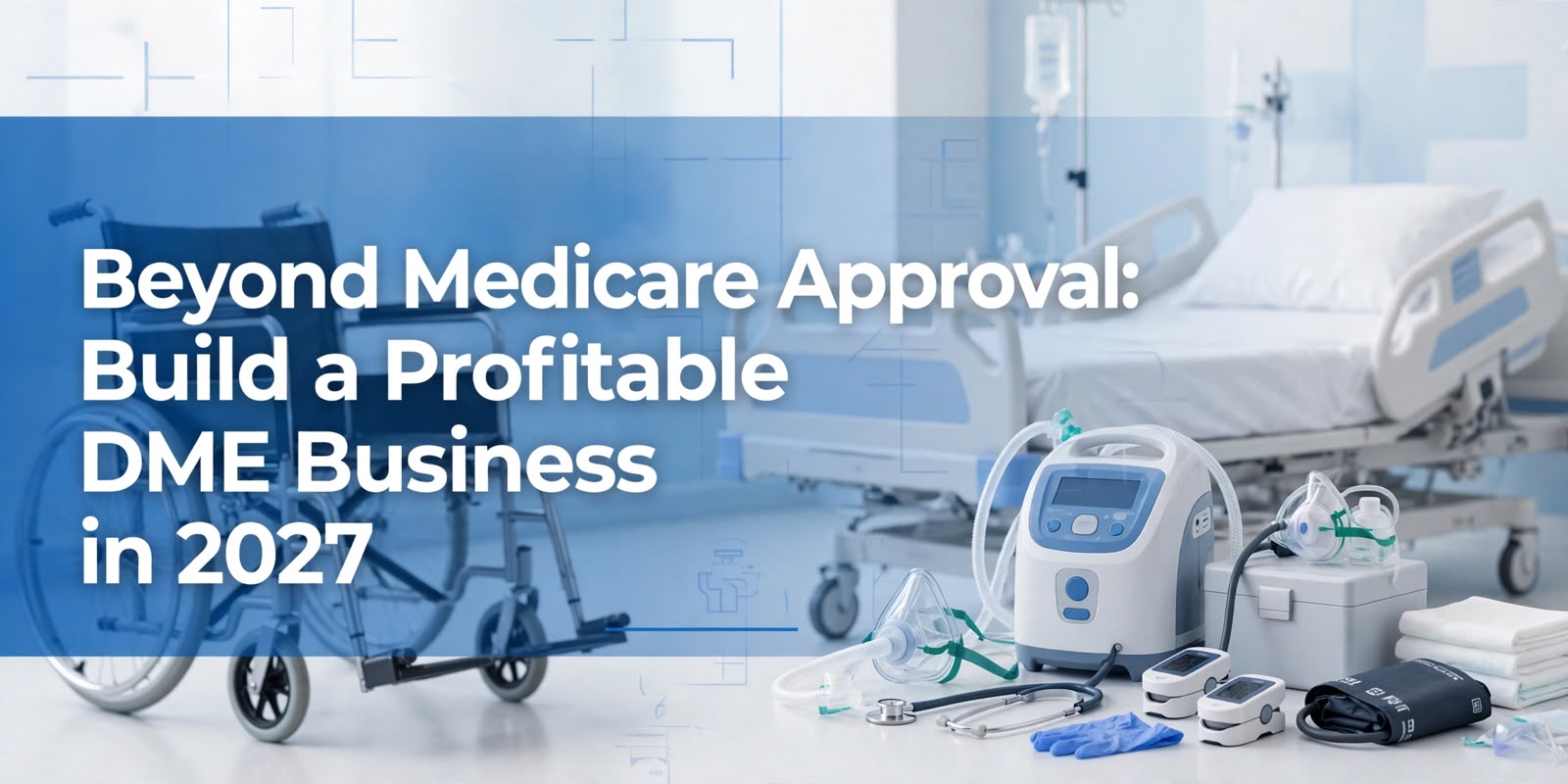
Getting Medicare approval is an important milestone for any Durable Medical Equipment (DME) business, but it is only the beginning of long-term success. In 2027, DME suppliers must focus on more than enrollment and accreditation. Building a profitable and sustainable business requires strong operational management, regulatory compliance, financial planning, efficient billing practices, and excellent patient service.
The U.S. DME industry continues to evolve with changing healthcare regulations, growing demand for home-based care, and increasing expectations for quality service. Suppliers who develop a well-organized business model can improve profitability, strengthen provider relationships, and create sustainable growth.
Whether you are launching a new DME company or managing an established operation, understanding what comes after Medicare approval can help you build a business that performs well in a competitive healthcare market.
1. Develop a Strong DME Business Strategy
Medicare approval gives suppliers an opportunity to serve eligible beneficiaries, but a clear business strategy determines how effectively they operate.
Identify Your Target Market
Start by identifying the patient populations and healthcare providers your business intends to serve. Consider specializing in product categories such as:
- Mobility equipment and wheelchairs
- Respiratory equipment and oxygen supplies
- Hospital beds and patient support equipment
- Diabetic testing supplies
- Orthopedic and rehabilitation products
Choosing appropriate product categories helps suppliers manage inventory, understand reimbursement requirements, and develop focused marketing strategies.
Understand Your Local Market
Research local healthcare demand, competitors, referral sources, and service gaps. Understanding these factors can help your company identify opportunities without investing unnecessarily in products or services that have limited demand.
2. Maintain Medicare Compliance Beyond Initial Approval
Medicare enrollment is not a one-time responsibility. DME suppliers must continue meeting applicable supplier standards and maintaining accurate documentation.
Stay Updated on Regulatory Requirements
Suppliers should regularly review applicable CMS requirements, DMEPOS supplier standards, accreditation obligations, and Medicare Administrative Contractor (MAC) guidance.
Important compliance areas include:
- Maintaining required business licenses.
- Keeping accreditation current when required.
- Updating enrollment information when changes occur.
- Maintaining accurate patient records.
- Following applicable documentation and billing requirements.
- Meeting supplier location and operational standards.
Prepare for Audits and Surveys
Regular internal compliance reviews help identify documentation gaps before they become serious problems. Maintain organized records, written policies, employee training documentation, and evidence of quality assurance activities.
3. Build a Profitable DME Product and Service Portfolio
A sustainable DME business needs a product portfolio that balances customer demand, operational costs, and reimbursement opportunities.
Choose Products Based on Demand and Profitability
Not every medical equipment category offers the same business opportunities. Evaluate product acquisition costs, reimbursement rates, delivery expenses, maintenance requirements, and ongoing patient support.
Expand Complementary Services
Consider adding services that support your existing product categories, such as equipment setup, patient education, maintenance, repairs, and replacement coordination where applicable.
These services can improve the overall patient experience while creating additional business opportunities.
4. Improve Billing, Claims Management, and Cash Flow
Financial management is one of the most important factors in DME business sustainability. Even companies with consistent patient demand can experience financial difficulties when claims are submitted incorrectly or payments are delayed.
Reduce Claim Denials
Develop a structured billing process that verifies eligibility, medical necessity, physician documentation, coding, and applicable coverage requirements before submitting claims.
Monitor Financial Performance
Track important business indicators, including:
- Claim approval and denial rates
- Accounts receivable aging
- Average reimbursement timelines
- Inventory costs
- Operating expenses
- Revenue by product category
Regular financial reviews help business owners identify problems early and make informed decisions.
5. Build Strong Referral Relationships
Referral relationships can play an important role in DME business growth. Healthcare providers, discharge planners, rehabilitation centers, and other appropriate referral partners can help suppliers connect with patients who need medical equipment.
Establish Professional Partnerships
Focus on building relationships with:
- Hospitals and discharge planning teams
- Physicians and medical practices
- Home healthcare agencies
- Rehabilitation facilities
- Skilled nursing facilities
Prioritize Patient Experience
Provide timely communication, reliable equipment delivery, clear instructions, and responsive customer support. A positive patient experience can strengthen your reputation and encourage long-term professional relationships.
6. Use Technology to Improve Business Operations
Technology can help DME suppliers reduce administrative work, improve accuracy, and manage daily operations more efficiently.
Invest in the Right Business Software
Consider solutions that support:
- Inventory and order management
- Electronic documentation
- Billing and claims tracking
- Patient communication
- Delivery scheduling
- Compliance monitoring
Automate Repetitive Tasks
Automating routine administrative processes can reduce manual errors and allow employees to focus on patient support, compliance, and business development.
7. Control Operating Costs and Manage Inventory
Profitability is not determined by revenue alone. Suppliers must control expenses while maintaining the quality and availability of their products.
Avoid Excess Inventory
Use sales history and demand forecasts to determine appropriate inventory levels. Excessive stock can tie up capital, increase storage expenses, and create unnecessary financial pressure.
Review Vendor and Delivery Costs
Compare supplier pricing, delivery arrangements, equipment maintenance costs, and purchasing agreements regularly. Efficient procurement can improve profit margins without compromising service quality.
8. Create a Long-Term Growth Plan for 2027 and Beyond
Sustainable growth requires a business model that can adapt to changing healthcare needs and industry regulations.
Set Measurable Business Goals
Develop realistic goals for revenue, patient satisfaction, operational efficiency, compliance, and market expansion.
Expand Strategically
Before entering new product categories or geographic markets, evaluate demand, staffing requirements, regulatory obligations, and financial resources.
A gradual expansion strategy can help suppliers avoid unnecessary risks while building a stronger market position.
Conclusion
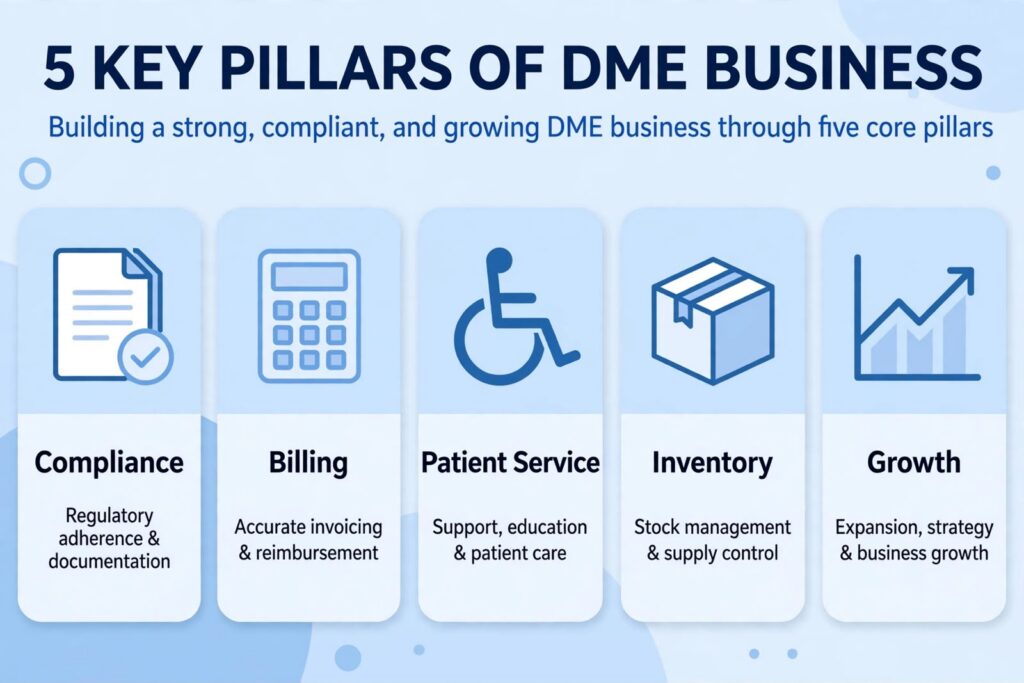
Medicare approval opens the door to operating a DME business, but long-term success depends on what happens afterward. Suppliers must focus on ongoing compliance, effective billing, financial management, reliable patient service, and strategic growth.
In 2027, successful DME companies will be those that combine regulatory readiness with efficient operations and a patient-centered approach. By investing in the right systems, managing costs, and developing strong healthcare relationships, suppliers can build a profitable and sustainable DME business for the future.
Frequently Asked Questions
1. Is Medicare approval enough to run a successful DME business?
No. Medicare approval is an important starting point, but suppliers also need ongoing compliance, effective billing, financial planning, inventory management, and quality patient services.
2. How can a DME business become more profitable in 2027?
Suppliers can improve profitability by controlling operating costs, reducing claim denials, selecting appropriate product categories, improving inventory management, and strengthening referral relationships.
3. What are the biggest challenges for DME suppliers?
Common challenges include Medicare compliance, changing reimbursement requirements, claim denials, documentation errors, cash flow management, and competition.
4. How important is DMEPOS accreditation?
DMEPOS accreditation is an important requirement for many Medicare-enrolled DME suppliers. Applicable accreditation requirements must be maintained to support continued Medicare participation.
5. How can technology help a DME business grow?
Technology can improve billing accuracy, inventory tracking, patient communication, delivery coordination, and compliance documentation.
6. What is the best way to expand a DME business?
Start by analyzing market demand, reviewing financial performance, strengthening existing operations, and identifying complementary product or service opportunities before expanding.