
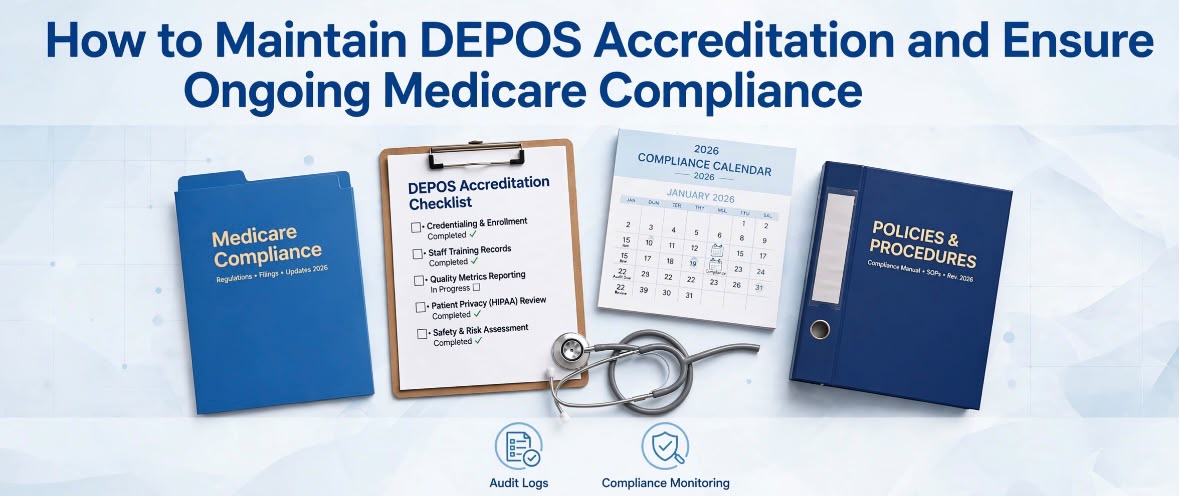
For DMEPOS suppliers in the United States, maintaining accreditation requires a structured approach to quality management, regulatory awareness, and operational consistency. Completing the initial accreditation process is only the beginning. Suppliers must continue demonstrating that their business practices meet applicable standards while fulfilling Medicare enrollment and billing obligations.
A well-organized compliance program helps businesses identify documentation gaps, prepare for future surveys, and respond effectively to changing operational needs. Rather than treating accreditation as a one-time achievement, suppliers should build a repeatable system for monitoring performance and maintaining readiness throughout the year.
Understanding Ongoing DEPOS Accreditation Requirements
Accreditation requirements depend on the accrediting organization, the services provided, and the standards applicable to the supplier. Maintaining accreditation involves consistently following established procedures and keeping evidence that those procedures are being implemented.
Establish a Compliance Calendar
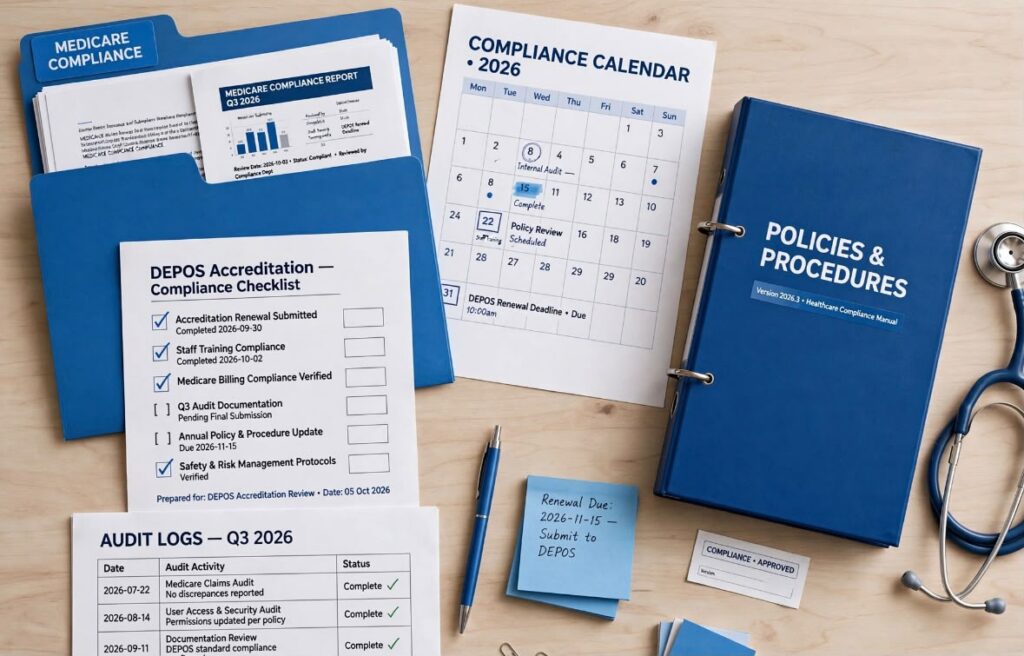
A compliance calendar helps prevent missed reviews, training activities, and renewal deadlines. It should include applicable accreditation milestones, policy reviews, employee training, internal audits, and required business documentation updates.
Assign a responsible person to monitor each task and maintain evidence of completion.
Monitor Changes That Affect Compliance
Changes in ownership, locations, services, staffing, or equipment offerings may affect a supplier’s obligations. Before implementing significant changes, determine whether the accrediting organization or Medicare requires notification, additional documentation, or other action.
Check current official guidance rather than relying solely on older checklists or informal advice.
Create a Reliable Documentation System
A strong documentation system makes it easier to demonstrate compliance and respond to survey requests.
Organize Records by Compliance Category
Maintain a consistent filing structure for policies, employee records, patient documentation, complaints, quality improvement activities, and applicable licenses.
Electronic systems can help authorized employees locate current documents quickly. Access controls, backup procedures, and appropriate retention practices should also be established.
Control Policy Versions
Outdated policies can lead to inconsistent practices. Each policy should have a clear owner, revision date, and review schedule where appropriate.
When a policy changes, communicate the update to affected employees and document any required training. Remove obsolete versions from routine use while retaining records as required.
Use Internal Audits to Identify Compliance Gaps
Internal audits provide an opportunity to identify weaknesses before an external review.
Develop a Risk-Based Audit Plan
Prioritize areas with a higher potential for compliance problems, such as incomplete documentation, inconsistent delivery records, billing errors, staff training gaps, and unresolved complaints.
The audit process should reflect the supplier’s actual services and the requirements that apply to its operations.
Track Corrective Actions
Identifying a problem is only the first step. A useful corrective action process should document:
- The issue identified during the review
- The underlying cause, where established
- The corrective steps and responsible employee
- The target completion date
- Evidence that the action was completed
- Follow-up verification of effectiveness
Recurring issues should trigger a review of whether existing policies, training, or supervision need improvement.
Prepare for Accreditation Surveys Throughout the Year
Survey readiness is easier to maintain when records and procedures are reviewed continuously.
Perform Periodic Readiness Reviews
Use applicable accreditation standards to evaluate whether policies, records, staff knowledge, and operational practices remain aligned. Include relevant employees in these reviews so that procedures are understood beyond the management team.
Keep evidence of review activities and document any issues that require follow-up.
Prepare Staff for Survey Questions
Employees should understand their responsibilities and know where to find current procedures. Training should focus on accurate explanations of actual work practices rather than memorized answers.
Staff members should never be encouraged to conceal deficiencies or provide inaccurate information during a survey.
Maintain Medicare Compliance Beyond Accreditation
A supplier may maintain accreditation and still face Medicare compliance issues if other applicable requirements are not met. An effective program must address both areas.
Review Medicare Enrollment Obligations
Ensure that enrollment records remain accurate and that reportable changes are handled within applicable deadlines. Review current requirements relating to supplier locations, ownership, licensing, and other relevant enrollment information.
Strengthen Claim Review Procedures
Billing staff should understand the documentation and coverage requirements relevant to the items being billed. Depending on the item and circumstances, requirements may involve valid orders, medical necessity documentation, proof of delivery, and other supporting records.
Periodic claim reviews can help identify errors, inconsistencies, and opportunities for staff training.
Protect Patient Information
Establish appropriate safeguards for patient information, including role-based access, secure record handling, and staff education. Applicable privacy and security requirements should be incorporated into written policies and daily workflows.
How to Manage Accreditation Deficiencies Effectively
A deficiency should be treated as an opportunity to correct a weakness and prevent recurrence.
Follow a Documented Resolution Process
First, understand the finding and the standard involved. Then determine why the issue occurred, identify the necessary corrective measures, and assign responsibility for completing them.
Follow the accrediting organization’s instructions regarding response formats, evidence, and deadlines. Retain supporting documentation and verify that the corrective measures work as intended.
Prevent the Same Issue From Returning
A sustainable solution addresses the underlying cause rather than correcting only an individual record. For example, repeated documentation errors may require a revised workflow, clearer instructions, additional training, or improved supervisory review.
Common Challenges for DMEPOS Suppliers
Suppliers may struggle with fragmented records, staff turnover, changing procedures, missed review dates, or inconsistent communication between departments.
These challenges can be reduced by assigning clear responsibilities, maintaining a central compliance calendar, reviewing high-risk processes regularly, and ensuring that employees receive updates when procedures change.
For smaller suppliers, a simple but consistently maintained system may be more effective than a complex program that is rarely used.
Frequently Asked Questions
How can a DMEPOS supplier stay ready for an accreditation survey?
Maintain current policies, organized records, trained staff, and a documented internal review process. Address identified gaps promptly instead of waiting for a survey announcement.
What is the difference between accreditation and Medicare compliance?
Accreditation evaluates a supplier against the standards of its accrediting organization. Medicare compliance also includes applicable enrollment, supplier, billing, and other program requirements.
How should suppliers track corrective actions?
Use a centralized log that records each finding, its cause, assigned responsibility, target date, supporting evidence, and verification of completion.
Do operational changes affect accreditation?
They may. Changes to locations, ownership, services, or other business details can create additional obligations. Suppliers should check the relevant accrediting organization’s procedures and applicable Medicare requirements before making changes.
Who should oversee accreditation maintenance?
A designated compliance lead can coordinate reviews, documentation, training, and corrective actions. Management should remain involved and ensure that sufficient resources are available.
Can accreditation deficiencies be prevented completely?
No process can guarantee that every deficiency will be avoided. However, routine audits, effective training, accurate records, and timely corrective action can reduce preventable problems and strengthen compliance.