
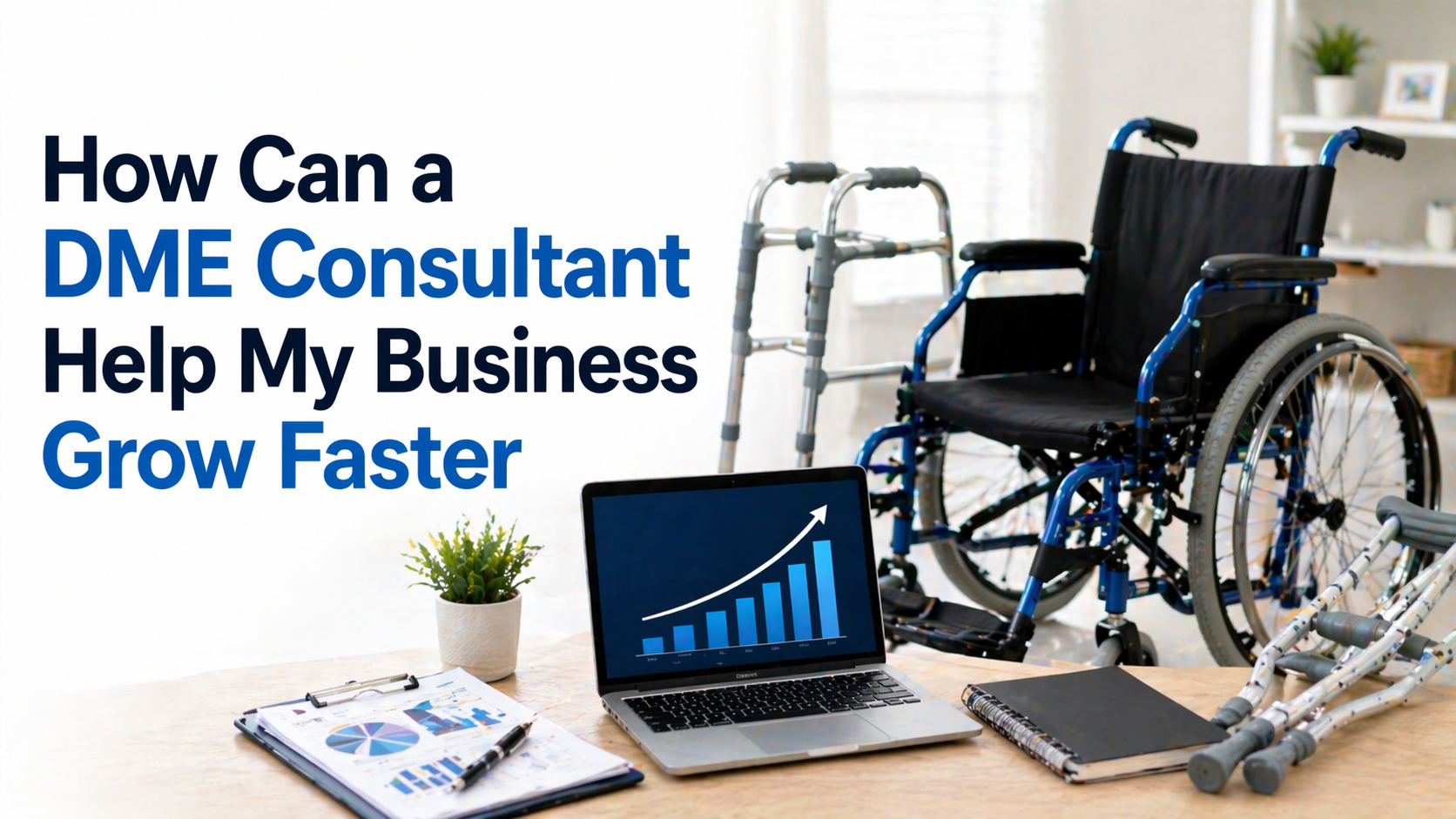
Growth in the DME industry rarely happens by luck. A supplier may have strong products, a good location, and real patient demand, yet still move slowly. The reason is simple. DME growth depends on compliance, payer access, accreditation, billing, documentation, and daily operations working together. If one part breaks, growth slows. This is where a consultant becomes valuable. A DME consultant for business growth helps owners avoid trial-and-error decisions. They bring structure to a business that often feels complex from the first application. They can help a startup open correctly. They can also help an existing supplier fix weak points that limit revenue. Faster growth usually starts with fewer mistakes, cleaner systems, and better planning.
Why DME Businesses Often Struggle to Grow
Many DME owners start with a clear goal. They want to help patients and build a profitable medical equipment company. The challenge starts when they discover how many rules shape the business.
A DME company cannot grow only by selling more products. It must meet supplier standards, secure accreditation, enroll with payers, manage documentation, and bill correctly. Each step affects cash flow. Each delay can slow down the entire business.
New suppliers often struggle with setup because they do not know the right order of tasks. They may choose products before checking payer requirements. They may lease a location before understanding supplier standards. They may buy inventory before accreditation planning is complete. These mistakes cost time and money.
Established suppliers face different problems. They may have denials, slow payments, weak referral systems, or messy files. Some businesses grow sales but lose profit because their backend process cannot keep up. Others miss expansion chances because they do not know which payer contracts or product lines make sense.
A consultant studies the business from a practical angle. They look at where growth is blocked. Then they help create a plan that protects compliance while improving revenue.
How a Consultant Helps Build the Right Foundation
The first way a consultant helps is by building a better foundation. A DME business must be set up correctly before it can grow with confidence. That includes business structure, licensing, accreditation planning, location readiness, payer enrollment, policies, and operating procedures.
Many consulting firms focus on helping new suppliers move from idea to launch. Some guide owners from scratch to accreditation readiness. Others support credentialing, contracting, consulting, and operational setup. The common value is the same. They help business owners understand what must happen before the company can bill and operate smoothly.
A strong foundation helps prevent painful setbacks. For example, a supplier may need the right physical location, visible signage, business hours, patient records, insurance, supplier policies, and delivery procedures. If these items are missing, accreditation or enrollment can take longer.
A consultant also helps owners think ahead. They can review whether the business model fits the owner’s budget and goals. They can help decide whether the supplier should focus on respiratory equipment, mobility products, orthotics, diabetic supplies, or another niche. That matters because each category may involve different documentation, service needs, and payer rules.
This early guidance can save months of confusion. It also keeps owners from spending money on systems, leases, or inventory that do not support long-term growth.
Credentialing and Payer Access Can Speed Up Revenue
A DME company needs payer access to grow. Without payer enrollment and contracts, even strong demand may not turn into steady income. This is one of the biggest reasons owners look for expert help.
Credentialing can be slow and detailed. Medicare, Medicaid, and commercial payer enrollment often require accurate documents, business details, ownership information, licenses, insurance, accreditation proof, and ongoing updates. One missing item can delay approval.
A consultant can help organize the process. They know what documents are commonly needed. They can help complete applications more carefully. They can also help track deadlines, follow-ups, and recredentialing needs.
This matters because payer access affects how fast a business can bring in revenue. If enrollment takes longer than expected, the business may still have rent, staff costs, software costs, and inventory expenses. A smoother credentialing process can protect cash flow.
A DME consultant for business growth also helps owners understand which payer opportunities fit their model. Not every contract is equally valuable. Some payers may have low rates, strict rules, or difficult claim requirements. Others may open the door to stronger referral relationships and better volume.
Good payer planning does not only focus on approval. It focuses on sustainable billing, fewer denials, and better revenue quality.
Compliance Support Reduces Risk and Protects Growth
Compliance is not the exciting part of growth, but it protects everything. A DME supplier can lose time, money, and trust when compliance is weak.
DME companies must follow rules for supplier standards, patient documentation, order requirements, delivery records, privacy, billing, and product-specific policies. These requirements can change. They can also vary by payer and state.
A consultant helps owners understand which rules apply to their business. They can review policies, train staff, prepare records, and help the company stay survey-ready. This is especially important for businesses planning accreditation or expansion.
Compliance also affects reputation. Referral sources want to work with suppliers who can deliver equipment correctly and document care properly. Payers want clean files. Patients want a reliable provider. Weak compliance can damage all three relationships.
A consultant can also help spot problems before they become bigger. They may review claim patterns, documentation gaps, staff workflows, or internal procedures. These reviews can reveal issues that owners may not notice during daily operations.
Growth is safer when the business can handle more volume without creating more risk. That is the purpose of compliance support. It keeps expansion from becoming chaos.
Better Billing Systems Improve Cash Flow
A DME business can make sales and still struggle with money. This usually happens when billing systems are weak. Claims may get denied. Payments may come late. Staff may spend too much time fixing errors. Documentation may not support the claim.
A consultant can help improve the revenue cycle. That includes intake, eligibility checks, prior authorization, order review, delivery proof, claim submission, denial tracking, and payment follow-up.
Clean billing starts before the claim is sent. Staff need to collect the right information at the start. They need to confirm coverage, product requirements, and documentation rules. If the intake process is weak, billing problems appear later.
Consultants can also help create simple workflows. For example, they may help build checklists for each product category. They may train staff on required documents. They may help owners choose software or improve how current systems are used.
Better billing does not only increase revenue. It also lowers stress. When the team knows what to do, claims move faster. When denials are tracked, patterns become easier to fix. When payments improve, the business can invest in growth with more confidence.
Operational Planning Helps the Business Scale
Growth puts pressure on daily operations. More orders mean more calls, deliveries, paperwork, billing tasks, and customer service needs. A business that feels fine at low volume may struggle when demand increases.
A consultant can help design operations that scale. This may include staffing plans, delivery routes, inventory control, vendor relationships, patient intake systems, and quality checks.
Inventory is one area where planning matters. Too much inventory ties up cash. Too little inventory causes delays and unhappy patients. A consultant can help owners review product demand and create a smarter purchasing plan.
Staffing is another key area. Employees need clear roles. Intake staff, billing staff, delivery staff, and management should understand their responsibilities. When roles are unclear, errors increase and service slows.
A consultant may also help owners prepare for expansion. That could include adding new products, opening another location, entering a new payer network, or improving referral outreach. Each growth move should be planned around compliance, capacity, and profitability.
This is where DME consulting services can make growth feel more controlled. They turn growth into a managed process instead of a series of rushed decisions.
Strategy Helps Owners Choose the Right Growth Path
Not every growth opportunity is worth taking. A supplier may see demand in several areas, but each direction carries different costs and risks.
A consultant can help owners compare options. Should the business add a new product category? Should it pursue Medicaid? Should it invest in commercial payer contracts? Should it target physician referrals, hospital discharge planners, clinics, or online leads?
These choices shape the business. A product line with high demand may still be difficult if documentation is complex. A payer contract may bring volume but weak margins. A referral source may create steady orders but require excellent delivery response.
Strategic planning helps owners avoid growth that looks good on paper but hurts profit in real life.
A consultant can also help create realistic goals. Instead of chasing every opportunity, the business can focus on the steps that create the strongest return. That might mean fixing denials first. It might mean improving accreditation readiness. It might mean building a stronger referral process before adding more products.
A DME consultant for business growth helps connect daily decisions to long-term results. That is important because fast growth without direction often creates more problems than profit.
Marketing and Referral Growth Need the Right Message
DME companies often think marketing is only about ads or websites. In reality, referral trust matters just as much. Physicians, clinics, case managers, discharge planners, and therapy offices need confidence in the supplier.
A consultant can help shape the business message. They can help owners explain what products they provide, what areas they serve, how fast they respond, and how they handle documentation. Clear messaging makes it easier for referral partners to understand the value.
Marketing should also match operations. A supplier should not promise fast delivery if the team cannot handle it. It should not promote product categories that are not ready for billing. A consultant helps keep marketing connected to real capacity.
For some companies, growth starts with better local visibility. For others, it starts with stronger referral relationships. Some need a better intake process before increasing lead volume. The right path depends on the business stage.
Smart marketing supports growth only when the backend can handle the demand. That is why consulting often connects marketing, operations, and billing together.
How to Know If Your DME Business Needs a Consultant
A consultant may help if your business feels stuck, delayed, or uncertain. Startups may need support before opening. Existing suppliers may need help when revenue is flat, denials are high, or compliance feels unclear.
Warning signs include slow credentialing, payer delays, repeated claim denials, poor documentation, unclear staff roles, weak referral growth, and difficulty passing accreditation requirements. These problems usually do not fix themselves.
A consultant can also help when the owner is planning a major change. That may include adding Medicare billing, expanding product lines, preparing for accreditation, opening another location, or improving operations.
The best time to get help is before mistakes become expensive. Early guidance can prevent delays. Later guidance can repair systems that are holding the business back.
A DME consultant for business growth is not just for struggling companies. It can also help ambitious owners move faster with fewer wrong turns.
Final Thoughts
A DME business can grow faster when the right systems are in place. Growth depends on more than demand. It needs payer access, compliance, clean billing, good documentation, strong operations, and a clear strategy.
A consultant helps bring those pieces together. They help owners avoid mistakes, prepare for accreditation, improve payer access, reduce denials, and build workflows that support scale. They also give business owners a clearer view of what to fix first.
The real value is not only advice. It is direction. DME owners often lose time because they are forced to learn every rule through trial and error. A consultant shortens that learning curve.
For a startup, that can mean a smoother launch. For an existing supplier, it can mean stronger cash flow and better systems. For a growing company, it can mean safer expansion.
If your goal is to grow faster without creating more risk, expert guidance can be one of the smartest investments you make.