
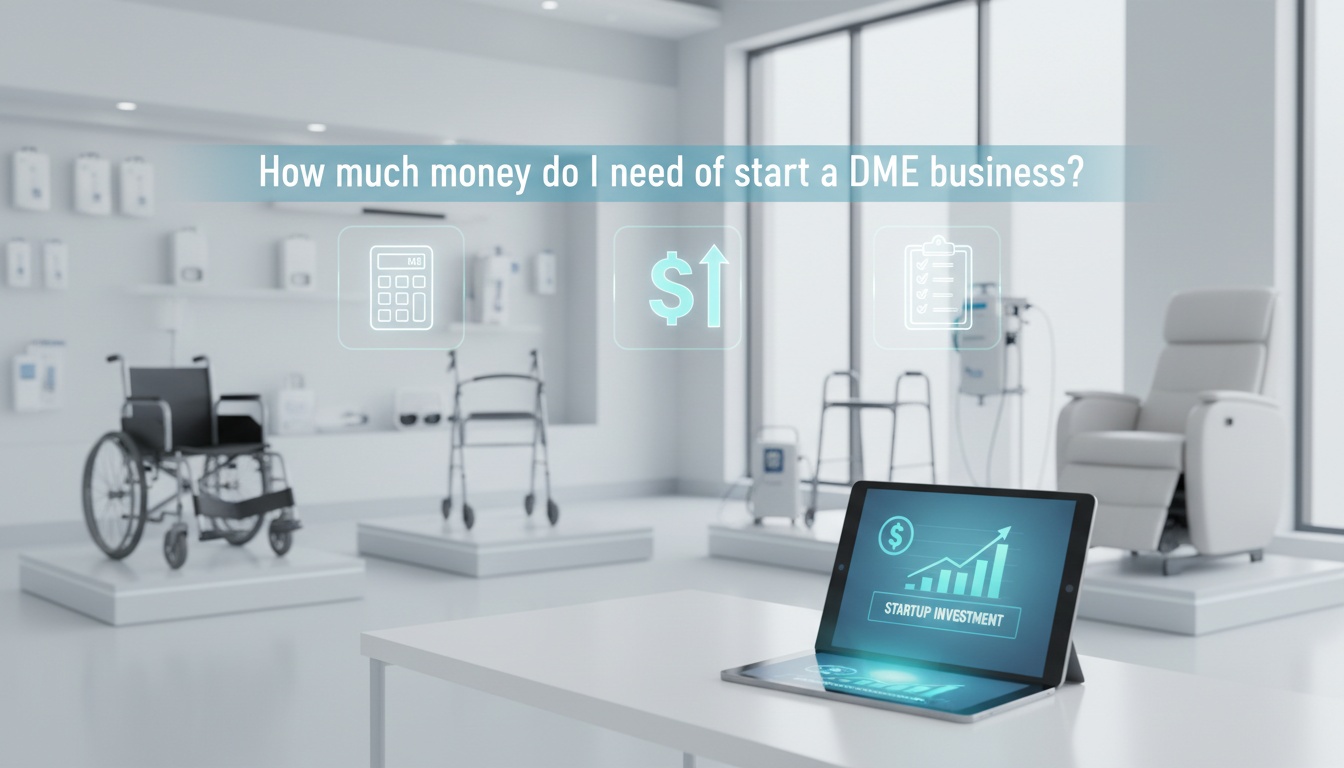
Opening a DME company sounds simple at first. You find products, register the business, and start selling. The real picture is wider than that. You need licenses, systems, insurance, and enough cash to operate before revenue becomes steady. You also need a clear plan for inventory and billing. If you want to start a DME business, your budget should cover both setup costs and the first few months of operations. That is where many new owners make mistakes. They focus on filing fees and forget rent, software, delivery, and staff time. A small lean model may start with a lower budget. A full-service company with inventory and billing goals will need much more. The right number depends on your state, product mix, and business model.
What it takes to start a DME business
Business registration and legal setup
The first cost is the business setup itself. This includes forming the company, getting a tax ID, opening a bank account, and meeting local registration rules. Recent industry guides place state business registration at about $50 to $500, with separate state DME licensing often adding about $200 to $2,000, depending on the state. Those guides also note that many businesses must secure insurance before they begin operations.
Medicare, bonding, and accreditation
The next major step is Medicare-related preparation if you plan to bill Medicare. CMS says DMEPOS suppliers must enroll through PECOS, pay the Medicare application fee, and post a $50,000 surety bond for each NPI. The Federal Register notice sets the 2026 application fee at $750 for covered institutional providers and suppliers.
Accreditation is another key cost. Industry guides place accreditation fees commonly in the low thousands, though the exact price depends on the accrediting body and your readiness. One recent guide estimates accreditation at about $2,000 to $5,000, while another puts many year-one accreditation-related costs several thousand dollars higher, including preparation and survey costs.
Why startup costs vary
This is why the answer to how much money to start a DME business is never one flat number. A lean company may launch on a modest budget. A more complete setup needs more room from day one.
The real cost to start a DME business
Low-budget startup range
A basic startup budget often begins around $15,000 to $30,000 for a small operation with limited products, according to recent industry guidance. That range usually covers company formation, licensing, a bond premium, insurance, software, and light inventory.
Mid-size and full-service cost range
The number climbs fast when you add stock, office space, or delivery support. Recent industry sources estimate initial inventory alone at about $5,000 to $50,000 or more, depending on what you plan to sell. Software and operating systems can add roughly $300 to $2,000 or more per month. Insurance may start at around $1,500 to $5,000 per year.
That is why many full-service operators plan for a much bigger launch budget. One recent DME guide says the DME business startup cost for a full-fledged company often falls between about $50,000 and $150,000, especially when inventory, staffing, and office needs are included. Another recent source notes that even a clean startup with careful planning can still land near $20,000 to $25,000 before growth costs begin.
Inventory, software, and insurance costs
A simple way to think about it is this. If you run lean, stay focused, and limit product lines, you may start closer to the lower end. If you want a facility, broader inventory, and payer billing, expect the number to rise quickly.
What changes your DME business investment
Your business model
Your business model drives the budget more than anything else. An online-first company with limited stock usually needs less cash than a business with a showroom, warehouse, and delivery team. Product choice matters too. Wheelchairs, hospital beds, respiratory items, and other larger products can tie up much more money in stock and storage.
State rules and licensing
Your state also changes the budget. Some states have lighter entry requirements. Others require extra licensing, inspections, or added compliance steps. Recent industry guidance notes that state DME rules vary widely, and some states may ask for separate permits, bonds, or compliance personnel.
Medicare billing and timing
Payer strategy matters as well. If your plan centers on Medicare billing, the compliance path is more demanding. CMS requires enrollment through PECOS and the surety bond process, and certain professionals may still need to check whether exemptions apply. CMS also says changes in ownership or practice location must be reported quickly to keep billing privileges active.
Timing also matters in 2026. CMS announced a nationwide temporary moratorium on some new DMEPOS enrollments in early 2026. That does not stop a company from forming, but it can affect when some suppliers can bill Medicare in affected categories or locations. If Medicare billing is part of your plan, that timing issue should be part of your budget planning.
This is the point many owners miss while starting a durable medical equipment business. Startup cost is not only about opening the doors. It is also about staying stable while approvals, billing, and contracts catch up.
How to plan your budget before starting a DME business
Separate setup and operating costs
Start with a simple two-part budget. First, list setup costs. Include registration, state licenses, accreditation, the application fee, surety bond premium, insurance, software, and basic marketing. Next, list three to six months of operating costs. Include rent, payroll, phones, internet, fuel, storage, and restocking.
Start small and protect cash flow
After that, decide what kind of launch you want. A narrow launch with a few core products is easier to fund and manage. It also lowers waste from slow-moving stock. A wide launch may look stronger on paper, but it often puts pressure on cash flow early.
Keep a reserve for delays
Keep a separate reserve for delays. Claims can take time. Contracts can take time. Patient volume may grow more slowly than expected. A reserve helps you keep serving customers without cutting corners. That is a safer way to manage your early DME business investment.
So, how much do you need? A small and careful setup may begin around $15,000 to $30,000. A stronger inventory-based operation often needs $50,000 to $150,000 or more. The smart move is not chasing the lowest number. The smart move is building a budget that fits your model, your state, and your first six months of reality.